Last updated: November 23, 2026
Drainage for a flat roof works by guiding rainwater across a slightly sloped surface to an internal drain, a parapet scupper, or an edge gutter. Some roofs also need a separate overflow route in case the primary outlet cannot carry water away. At Gastelum Roofing, our flat roofing service includes drainage planning as well as waterproofing.
How Does Drainage for a Flat Roof Work?
The roof’s slope and membrane do different jobs: the slope moves water toward an outlet, while the membrane keeps rain out of the building. The outlet needs a clear discharge path that carries runoff away from the structure.
Are flat roofs actually flat?
No. A low-slope roof needs a planned path for water to reach an outlet. The slope may come from the deck, tapered insulation, or another part of the roof assembly. Even a sound membrane cannot make water flow out of a low spot.
Where does rainwater go after it reaches the roof edge or drain?
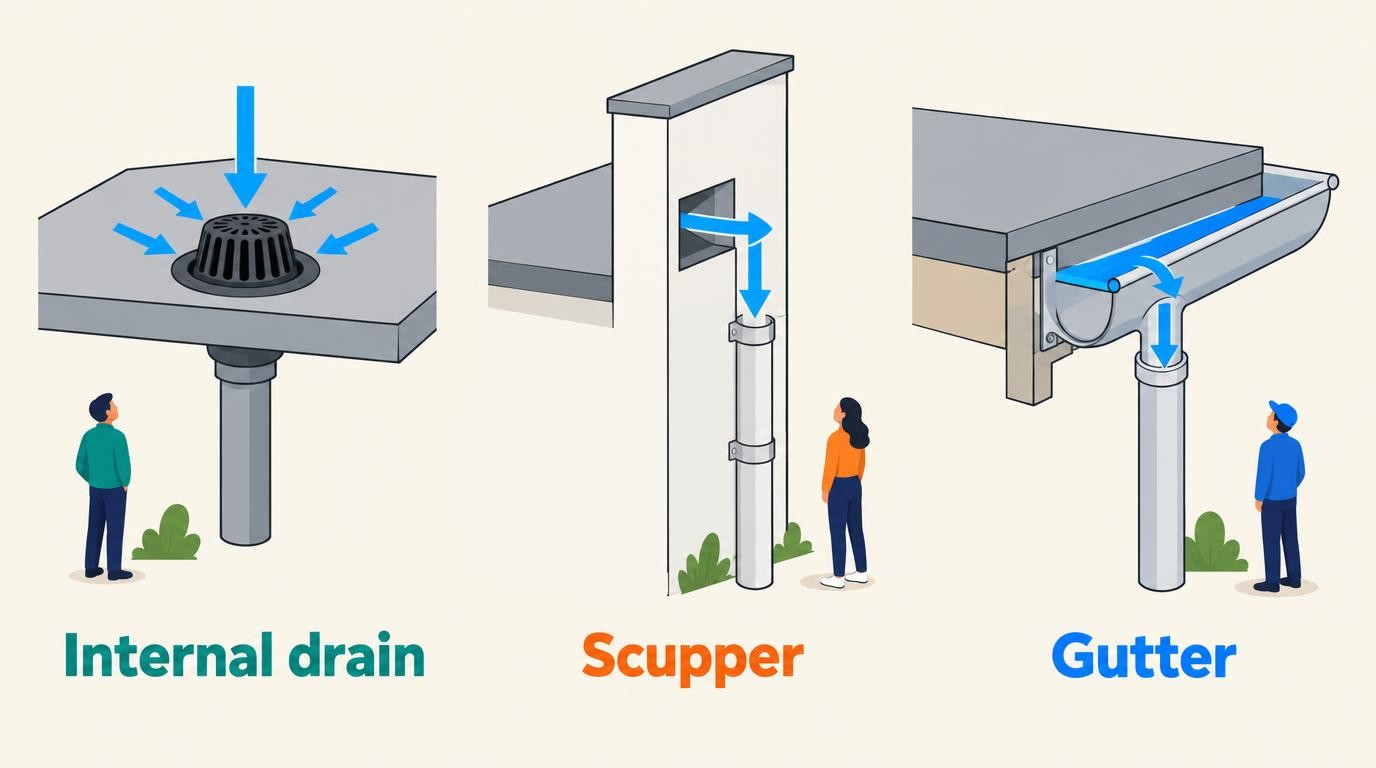
An internal drain sends water into piping. A scupper passes water through a parapet wall, often into a downspout. An edge gutter collects runoff where the roof has an open edge. From there, pipes and downspouts need to carry runoff to a suitable site-drainage or stormwater discharge location allowed for the property, not release it against the building. The final route depends on the site and applicable local requirements.
Which Flat Roof Drainage System Fits Your Building?
Internal drains can serve low points connected to drainage piping. Scuppers provide an outlet through a parapet wall, while gutters collect runoff at an open roof edge. Outlet placement, safe discharge, drainage-system sizing, and applicable requirements determine the final design; a roofer should assess the complete route, not just the visible outlet.
How do internal drains and scuppers differ?
Internal drains typically have strainers that keep larger debris out of connected piping. Flat roof scuppers are openings through parapet walls and may connect to downspouts. Both need clear inlets and watertight membrane and flashing details around the opening.
The main arrangements differ in where they collect water and what must remain clear:
| System | Water route | Inspection focus |
|---|---|---|
| Internal drain | Into a drain and connected piping | Strainer, drain connection, and piping |
| Parapet scupper | Through a wall opening, often to a downspout | Opening, flashing, and downspout |
| Edge gutter | Off an open roof edge into a gutter | Gutter, outlets, and edge details |
Do flat roofs need guttering?
Not every flat roof needs an edge gutter. A roof bounded by parapets may drain through internal drains or scuppers instead. Where gutters are part of the design, they must remain clear; the CDC Healthy Housing Reference Manual includes cleaning clogged roof gutters and draining flat roofs among steps to eliminate standing water.
What Causes Water to Pond on a Flat Roof?
Ponding water on flat roofs can result from a blocked outlet, debris-filled gutter, low spot, settlement, or slope that does not direct water to the drain. The location and pattern of standing water provide clues, but a view from the ground cannot establish the cause or confirm that the roof is safe to walk on.
What signs suggest a blocked outlet or inadequate slope?
Water remaining after rain, debris lines around a strainer, and a visibly obstructed scupper can point toward a restricted outlet. Water repeatedly collecting in the same area despite a clear outlet may point toward a low spot or slope problem. Leaks near seams and penetrations, or water reaching an overflow opening, are also worth documenting.
When does standing water need a professional inspection?
Arrange an inspection when water repeatedly remains, a leak appears, an outlet seems blocked, or overflow drainage starts carrying water. Do not step onto a wet or potentially weakened roof to investigate. The CDC’s construction fall-control guidance identifies weather-affected walking surfaces and fragile roof areas as hazards that require appropriate planning and controls.
Why Does a Flat Roof Need a Separate Overflow Path?
A separate overflow path gives rainwater another exit when the primary drain or scupper cannot carry water away. An emergency scupper or secondary roof drain is not a substitute for maintaining the primary system. Whether a particular San Diego project requires one, and how the overflow system must be sized, depends on the applicable code and building design.
How is an emergency scupper different from a primary drain?
The primary outlet handles routine runoff. An emergency scupper or secondary drain provides an independent route when water rises beyond the primary outlet’s working level. A separate opening is useful only if its downstream discharge path also remains clear and directs water to an appropriate location.
How should design rainfall be considered for overflow sizing?
Overflow sizing is a design calculation, not a judgment based on how wide an opening looks. Ask a qualified designer which rainfall criterion and secondary-system provisions apply to the project, and whether the proposed overflow route is sized independently of the primary route. An existing roof should not be labeled noncompliant solely because it reflects an older design approach.
Why might an overflow inlet sit above the primary inlet?
A raised overflow inlet allows ordinary rain to reach the primary drain before the backup route begins carrying water. The appropriate height depends on the roof, drainage design, and applicable requirements. A qualified designer should confirm both inlet elevations and the amount of water the roof can safely hold.
How Does a Roofer Diagnose and Correct a Drainage Problem?
A roofer diagnoses drainage trouble by tracing water from the roof’s low areas through its outlets and discharge paths, while checking the membrane for leaks or deterioration. Clearing an obstruction and repairing a damaged detail are different from changing slope or drainage capacity. The recommended work should follow an inspection of the roof; the supporting substrate can be checked where repairs or removal expose it.
What should a flat roof drainage inspection include?
At Gastelum Roofing, we assess slope and drainage needs along with drain and scupper locations, debris, seams, flashing, penetrations, and membrane condition. We also look at where discharged water goes. For more on evaluating a commercial roof, see our commercial roof inspection guide.
When is a repair enough, and when might replacement be needed?
Clearing a clogged outlet or repairing an isolated seam or flashing defect may be enough when the surrounding roof remains sound. Recurring leaks, blistering, cracked seams, or extensive ponding can justify discussing replacement after a roof inspection. We assess the substrate where a repair exposes it or after old roofing materials are removed; its condition can affect the final replacement plan. Our guide to choosing flat roof repair offers more context for that decision. A replacement plan should address drainage needs rather than simply cover the same problem with a new membrane.
How Do Flat Roof Materials Affect Drainage Repairs?
Flat roof materials determine how seams, drain connections, and flashing are made watertight, but no membrane replaces a working drainage design. TPO and PVC use welded seams; modified bitumen provides layered waterproofing. The right repair depends on the existing system, its condition, and whether water can reliably reach a clear outlet.
Can a coating or new membrane fix poor roof slope?
A coating or new membrane can improve waterproofing when the system and substrate are suitable, but neither creates a reliable path to a drain by itself. If slope is the underlying problem, a roofer must assess how to correct the roof assembly and outlet layout. Material selection should follow that assessment, not stand in for it.
How are TPO, PVC, and modified bitumen details protected around drains?
TPO and PVC rely on sound welded seams and properly integrated drain and flashing details. Modified bitumen relies on its layered assembly and carefully finished transitions. We install and repair low-slope systems using materials suited to the building; see our flat roof materials checklist for more on material selection.
Who Is Responsible for Flat Roof Drainage Problems?
Responsibility for flat roof drainage depends on who owns the building, what an agreement assigns to each party, and where the problem originates. Maintenance of an outlet, repair of a roof leak, and correction of runoff beyond the roof may involve different decisions. Document the condition and involve the appropriate owner or manager before work is arranged.

What should owners, managers, and tenants check in their agreements?
Check who is assigned roof maintenance, leak reporting, repair authorization, and upkeep of gutters, downspouts, and other discharge components. Record where water remains, when it appears, and any interior signs of moisture. Those observations help the responsible party arrange an inspection without assuming that every leak has the same source.
When should a drainage concern go to a roofing contractor or designer?
Ask a roofing contractor to inspect suspected blockages, membrane damage, flashing, and outlet condition. Bring a qualified designer into questions about drainage sizing, structural capacity, or changes to the overall system, and confirm code requirements with the local authority. A roofing inspection can identify what needs further design review without assigning universal liability.
How Can You Keep Flat Roof Drains Working Through Rainy Weather?
Keep flat roof drains working by arranging periodic checks of strainers, scuppers, gutters, downspouts, seams, and flashing, particularly before and after seasonal rain in San Diego. Debris removal helps preserve the primary water route.
What should be checked after debris buildup or a storm?
From a safe vantage point, note visible debris at outlets, gutter overflow, unusual discharge, or water that remains on the roof. Have a professional check roof-level strainers and openings, along with the surrounding waterproofing. Avoid climbing onto a wet roof or reaching across a roof edge to clear debris.
Why should the overflow route stay unobstructed?
Debris or stored items can block an overflow inlet, and a clogged downspout can block its discharge. Have a professional check the backup opening and its downstream route during maintenance, even if the primary drain appears clear.
Frequently Asked Questions
What is the 25 rule in roofing?
The often-cited “25% rule” refers to reroofing thresholds in some jurisdictions, not a universal flat-roof drainage requirement. It does not establish when a roof must be replaced in San Diego. Ask your local building department which current California and local requirements apply to your project.
Why do insurance companies not like flat roofs?
Blocked drains and persistent ponding can lead to leaks and water damage, but they do not mean every flat roof is difficult to insure. Coverage and maintenance requirements vary by insurer and policy; ask your insurer what roof-condition records or inspections it requires.
What slope does a flat roof need to drain properly?
A flat roof needs enough slope to move water toward its outlets without leaving low spots. A NIOSH design resource cites 1/4 inch per foot as a flat-roof code minimum. A designer should confirm the applicable local requirements and assess the actual roof layout before recommending a slope.
How long can a flat roof last with proper drainage?
Gastelum Roofing notes that, with proper installation and maintenance, many flat roofing systems can last 20–30 years or longer. Actual lifespan depends on the membrane, sun exposure, drainage performance, and maintenance. Keeping outlets clear helps, but it cannot correct a low spot or prevent every type of membrane damage.
Can solar panels interfere with flat roof drainage?
Yes. Solar equipment can interfere with drainage if its placement blocks an outlet or prevents water from reaching one. Before installation, have the drainage route and equipment layout reviewed. The NIOSH solar-ready roof resource also notes that ballasted systems may require structural analysis and membrane penetrations need water-intrusion review.
Does ponding water void a flat roof warranty?
Ponding water does not automatically void every flat roof warranty. Coverage depends on the written terms for the specific membrane and installation, including any drainage or maintenance conditions. If water repeatedly remains, document it, request an inspection, and check the warranty before assuming either that a repair is covered or that coverage is lost.
Does Gastelum Roofing offer free flat roof drainage inspections?
Yes. At Gastelum Roofing, we offer free roof inspections and assess drainage needs along with the roof’s overall condition. We check for concerns such as ponding, outlet obstructions, and membrane or flashing damage, then explain whether maintenance, a localized repair, or a more extensive solution may be appropriate.
What Should You Do If Your Flat Roof Holds Water?
If your flat roof holds water, note where the water remains and whether the pattern returns after rain, then arrange an inspection of both primary and overflow drainage. Keep people off a potentially unsafe roof. An assessment can distinguish routine maintenance or a localized repair from a slope change, drainage redesign, or possible replacement.
Gastelum Roofing offers roof inspections for San Diego property owners and can explain the condition of the membrane, outlets, and drainage path in plain terms. To discuss your flat roof and arrange a consultation, contact Gastelum Roofing at 760-295-6593.