
Last updated: November 17, 2026
A flat roof coating is a liquid-applied protective layer for a compatible, existing low-slope roof. A reflective formulation may help limit heat absorption, but the roof must be sound enough to coat. For property owners in Escondido, the useful question is not just which coating reflects sunlight – it is whether coating is the right work for the roof underneath.
What is a flat roof coating, and what can it do?
Reflective formulations can reduce the sunlight the roof absorbs, while the coating system helps protect the membrane beneath. A coating cannot correct failed seams, trapped moisture, or inadequate drainage, so roof condition determines whether coating is appropriate.
A coating is not the same as installing a new TPO, PVC, or modified-bitumen roofing system. Those systems involve new roofing materials and waterproofing details; a coating generally relies on the existing roof remaining suitable for continued service. At Gastelum Roofing, we assess the membrane and drainage before recommending work through our flat roofing and low-pitch roof service.
What’s a good roof coating for a flat roof?
The right flat roof coating is a product approved for the existing membrane and the roof’s exposure to sun and water. Silicone, acrylic, and polyurethane or other elastomeric coatings have different preparation and application requirements. Identify the roof substrate first, then compare complete manufacturer-specified systems rather than choosing by color or product name alone.
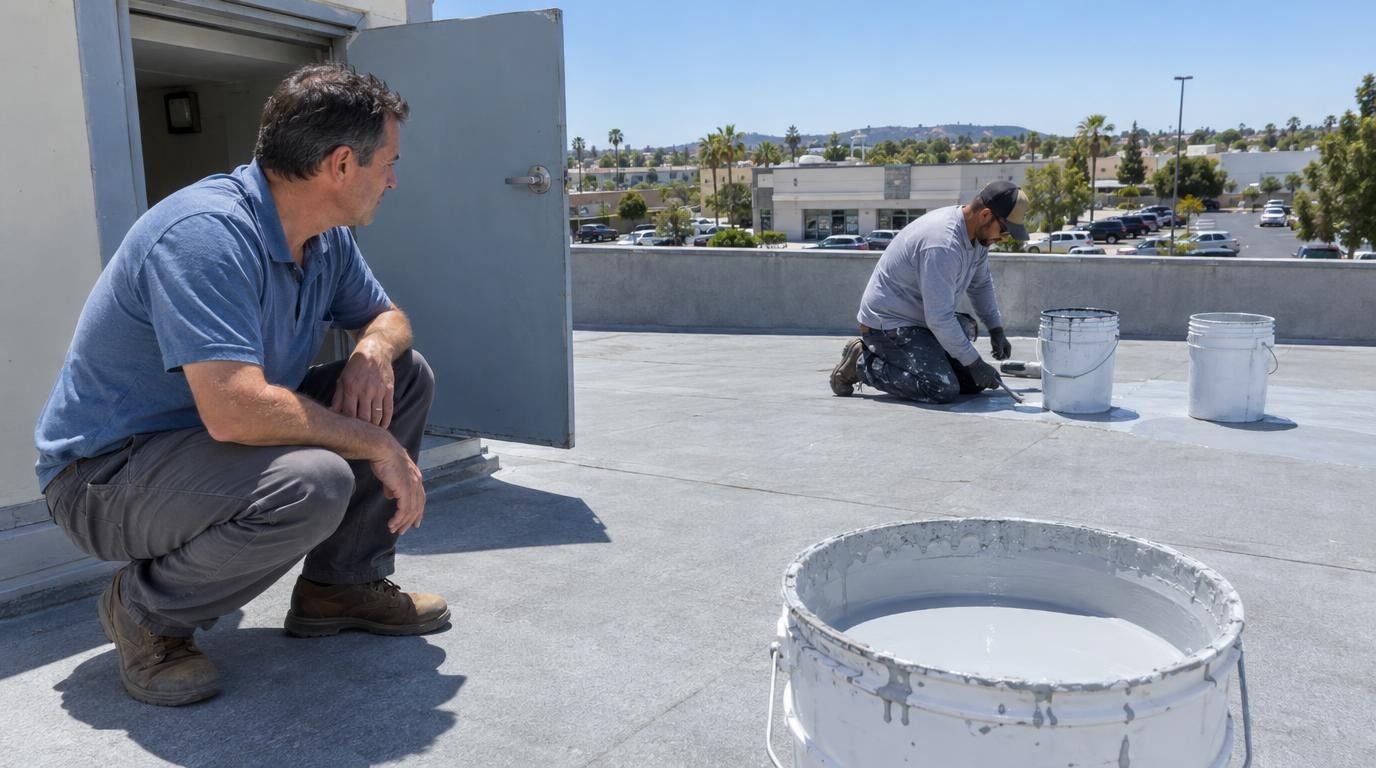
The following comparison is a starting point, not a substitute for the chosen manufacturer’s specification.
| Coating type | Reason to consider it | What to verify |
|---|---|---|
| Silicone | Water exposure and UV exposure are important concerns. | Substrate adhesion, surface preparation, ponding-water terms, and future recoat options. |
| Acrylic | A compatible acrylic system is an option for a well-drained roof. | Whether the product permits the roof’s water exposure and application conditions. |
| Polyurethane or other elastomeric coating | The roof needs a system selected for its substrate and anticipated wear. | Compatible primer, detailing products, coverage, and finish-coat requirements. |
Acrylic, silicone, and polyurethane coatings can each be formulated to reflect sunlight; the coating chemistry alone does not establish a particular product’s performance. Compare documented solar-reflectance and thermal-emittance ratings for products approved for your existing membrane, then weigh drainage, ponding-water limits, roof condition, and application requirements. TPO, PVC, modified bitumen, and other membranes do not all accept the same coating system, and previous coatings may affect the choice. Our guide to comparing complete flat roof systems explains why the surface material is only part of the decision.
Can you get liquid rubber for a flat roof?
Yes, products described as liquid rubber are sold for roofing, but “liquid rubber” describes a broad category rather than a verified match for a particular flat roof. Check the product’s stated substrates, primer and repair requirements, and water-exposure limitations before considering it for an existing membrane. A flexible-looking finish does not establish adhesion or waterproofing performance on its own.
What are the downsides of using silicone roof coating?
Dirt can accumulate on silicone coating, its surface may be slippery when wet, and switching to another coating chemistry later can require additional preparation. Silicone may still be worth considering where ponding-water exposure matters, but it cannot fix poor drainage or an active leak.
Before selecting silicone, confirm that the manufacturer permits its use over the existing roof and specifies how to clean, prime, and detail that surface. Ask how the system will be maintained and recoated, especially if rooftop equipment requires regular access.
Can a reflective flat roof coating reduce cooling needs?
A reflective flat roof coating can reduce roof heat absorption and may reduce cooling needs when the existing roof is suitable for coating. The benefit depends on the product’s measured properties, roof insulation, building use, local conditions, and the coating’s condition over time. Research findings describe potential benefits, not savings promised for an individual property.
The U.S. Department of Energy’s Guide to Cool Roofs explains how a cool roof can lower air-conditioning energy use. A separate residential cool-roof modeling analysis reported lower cooling loads and peak cooling demand across the climates it examined. Modeled homes are not a prediction for an Escondido home or commercial building.
What do solar reflectance and thermal emittance measure?
Solar reflectance describes the share of incoming sunlight a roof surface reflects. Thermal emittance describes how effectively the surface releases absorbed heat. Both are product properties worth checking in documented ratings: a coating’s appearance alone does not establish how it performs, and dirt or wear can affect the installed surface.
Can my flat roof be coated, or does it need repair or replacement?
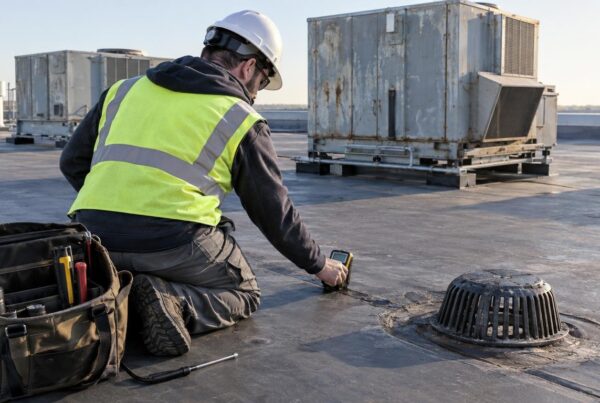
A flat roof can be considered for coating when its existing membrane is sound, reasonably dry, and compatible with a specified coating system. An inspection should identify the membrane and check moisture, seams, flashing, blisters, cracks, punctures, slope, drains, and persistent ponding. Defects need attention before coating; widespread deterioration may call for replacement instead. Flat roof drainage directs rainwater toward drains, and persistent ponding can signal a problem worth inspecting.
Targeted flat roof leak repair may be appropriate when damage is limited and the remaining roof is serviceable. Failed seams or flashing need sound repairs, while drainage work may be necessary where water persistently collects. Recurring leaks, extensive membrane deterioration, or moisture beneath the roof can change the recommendation. Our flat roofing repair decision guide offers more context on that choice.
We offer free roof inspections and recommend practical repairs where they make sense. If the roof needs more extensive work, we explain the options for a suitable low-slope replacement rather than treating a reflective finish as a substitute for waterproofing.
How is flat roof coating applied to a low-slope roof?
We assess and repair the roof, clean and dry the surface, detail vulnerable areas, and apply any required primer and the specified coating. Application weather and curing time vary by system; we follow the manufacturer’s requirements before normal roof access resumes.
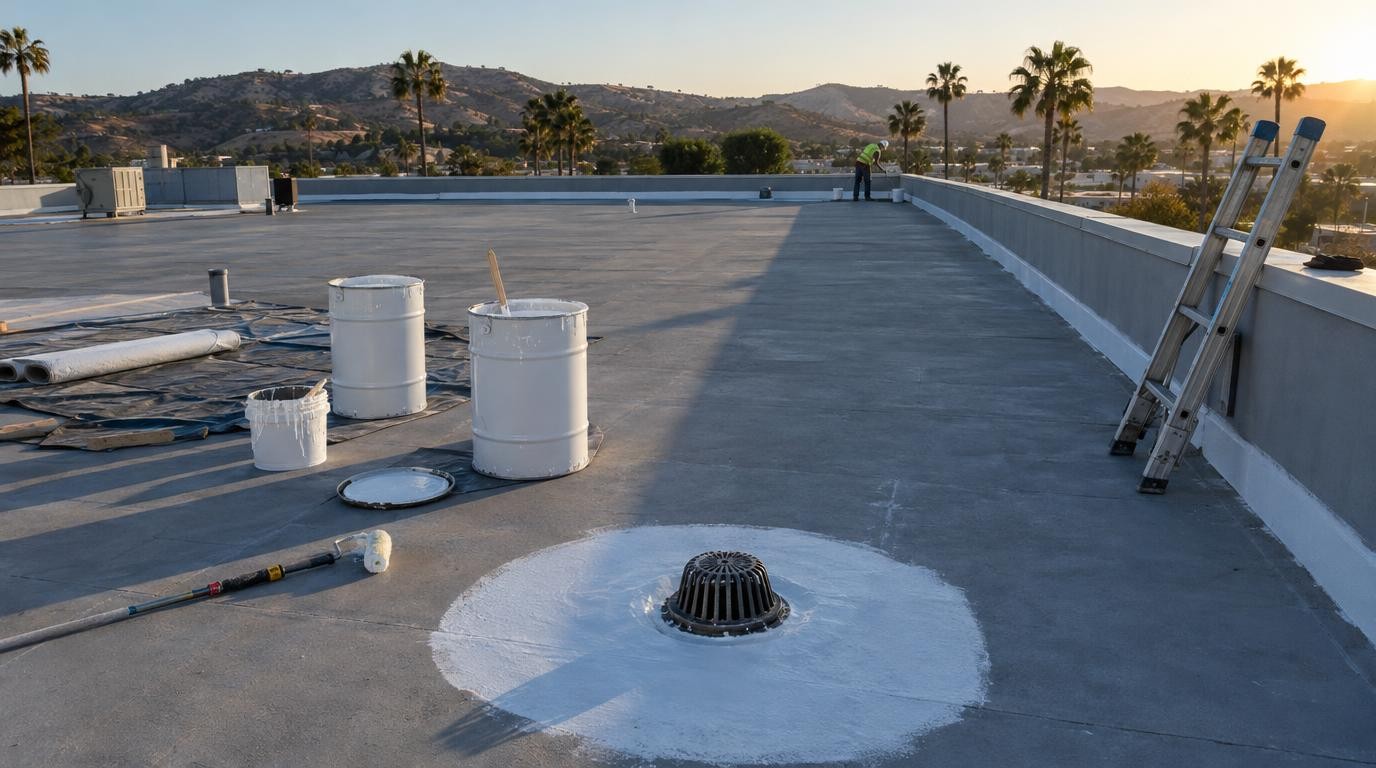
A typical project follows this sequence:
- Identify the existing roof and confirm that its condition and membrane suit the proposed coating system.
- Repair leaks and damaged details, and resolve drainage defects that must be corrected before coating.
- Clean and dry the surface so contaminants or moisture do not interfere with adhesion.
- Repair and detail seams, flashing, edges, and penetrations using compatible materials.
- Apply any required primer, then coat at the manufacturer’s specified coverage and under permitted conditions.
- Inspect the finished surface and its details for areas needing correction.
Can I apply a flat roof coating myself?
You may be able to apply a flat-roof coating yourself if its manufacturer permits homeowner application on your specific membrane, the roof is sound and dry, necessary repairs are complete, and you can access and work on it safely. If the membrane, moisture condition, or flashing details are uncertain, have the roof assessed first. The CDC’s roofing industry safety guide cautions that a warning line alone does not protect workers on a slippery flat roof. Roof Maxx is a named product, not a synonym for flat-roof coating: do not assume you can apply it yourself or use it on a low-slope roof without checking the manufacturer’s instructions for its intended roof types and who may apply it.
How do California cool-roof rules affect a coating project?
California cool-roof requirements may affect a coating project, but an eligible reflective coating is not automatically code-compliant. Applicable rules can depend on building type, climate zone, roof slope, and whether the work is an alteration or reroof. Confirm the project’s requirements and the selected product’s documented reflectance and emittance ratings before specifying a coating.
Lawrence Berkeley National Laboratory’s review of cool-roof standards provides background on how cool-roof provisions have developed. For an actual project, product documentation and the work being performed matter more than a general claim that a coating is “white” or “cool.” The same check applies when comparing coating with a new reflective membrane.
How long can a flat roof coating perform, and what maintenance does it need?
There is no universal service life for a flat roof coating. Performance depends on the coating chemistry, roof preparation, application, sun and water exposure, drainage, and maintenance. Follow the chosen system’s inspection and recoat guidance, and check the roof periodically for seam or flashing problems, blocked drains, debris, and visible coating wear.
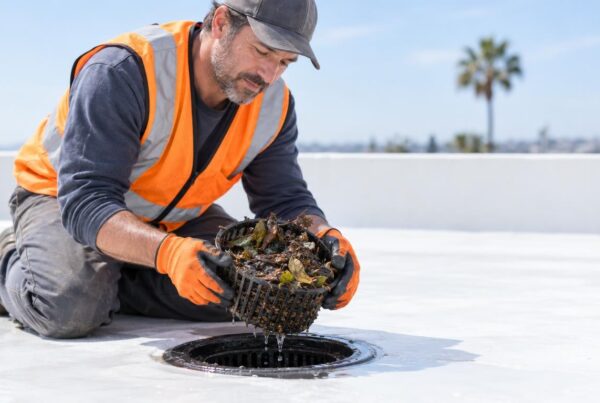
Checks are especially useful after seasonal rain or prolonged sun exposure. Keep drains clear and have changes such as new blisters, damaged details, or recurring ponding assessed; adding more coating is not necessarily the right repair. Maintenance should follow the installed system’s requirements rather than a calendar assumption that applies to every roof.
Frequently Asked Questions
Does a reflective roof coating add insulation to a flat roof?
No. A reflective coating helps reduce sunlight absorbed at the roof surface, but it does not replace roof insulation or repair missing or wet insulation. How much it affects indoor temperatures depends partly on the insulation already in place. We can assess roof condition before recommending coating or other work.
Can you put a new roof coating over an old coating?
Sometimes, but the new coating must be approved for the existing coating and underlying roof. The surface needs to be sound, clean, and dry, and the specified system may require a primer or other preparation. We identify previous coatings during an inspection rather than assuming a new product will adhere.
Can a flat roof be coated if it has solar panels?
Possibly, if the roof is suitable for coating and workers can safely access and prepare the areas around the panels. Panel mounts and roof penetrations need compatible waterproofing details. Coating cannot fix leaks at mounts or reach concealed surfaces, so we assess the roof and coordinate the work around existing equipment.
Will a reflective coating make a flat-roof garage or patio cover cooler?
It may reduce heat absorbed by the roof, but a cooler space is not guaranteed. The result depends on the coating’s documented reflective properties and the structure’s insulation, ventilation, and sun exposure. Garages and patio covers can have low-slope roofs; we check the existing roof before recommending a coating.
What should a flat roof coating estimate include?
Ask for the proposed coating system, surface preparation, repairs, seam and flashing details, any required primer, application requirements, and project timeline. The estimate should also make clear how drainage and existing coatings will be handled. At Gastelum Roofing, we provide an itemized estimate after assessing the roof’s condition and your goals.
Do skylights need special attention during a flat roof coating project?
Yes. Skylight curbs need appropriate waterproofing details, and workers must be protected from falls through skylights and roof openings. NIOSH guidance advises building owners to identify skylight locations for workers and use suitable railings or protective screens. Coating a roof does not eliminate those hazards.
What should Escondido property owners do before choosing a coating?
For an Escondido property, note where water collects after rain and gather any records identifying the roof membrane or previous coatings before an inspection. Those details can help us evaluate the available options without assuming the roof needs a coating.
Gastelum Roofing serves Escondido from the San Diego area and offers free roof inspections, flat roof repair, installation, and replacement. If you are weighing a reflective coating against repairs or a new roof, contact Gastelum Roofing at 760-295-6593 to request an assessment of your low-slope roof.