Last updated: November 19, 2026
A roof inspection checklist covers roof coverings, flashing and sealants, vents and other penetrations, gutters and drainage, roof edges, and visible signs of moisture intrusion. Use it to track what you can see safely before a professional evaluates the roof. The checklist should also change with the roof type: a tile home and a low-slope commercial building have different vulnerable areas. Gastelum Roofing offers a roof inspection service for property owners who want to understand their roof’s condition and next steps.
What does a complete roof inspection checklist include?
A complete roof inspection checklist covers gutters and drainage, framing and exterior trim, roof coverings, flashing, ventilation, and chimneys where present. Each part can show visible wear or a path for water intrusion. Indoor stains and accessible moisture signs provide useful clues, but indoor observations do not replace an examination of the roof systems.
- Gutters and drainage: Look for debris, overflow marks, loose gutters, and blocked outlets or scuppers.
- Framing and exterior trim: Note visible sagging, damaged fascia, or trim that appears loose or deteriorated.
- Roof coverings: Watch for cracked or displaced tiles, missing or worn shingles, damaged metal, or visibly deteriorated membrane.
- Flashing: Check visible transitions and penetrations for gaps, displacement, or failing sealant.
- Ventilation: Note vents that appear blocked, damaged, or poorly sealed where they meet the roof.
- Chimneys: Where a chimney exists, look for deteriorated flashing and visible damage around its base.
What should you check in gutters and roof drainage?
From a safe location, look for leaves or other debris in gutters, signs that water spills over an edge, and downspouts that appear disconnected. On low-slope roofs, drains and scuppers also matter: debris or standing-water marks can identify an area for a roofer to assess. A clear gutter alone does not establish that the roof drains properly.
What should you look for in framing and exterior trim?
Visible sagging, separated fascia, and damaged trim deserve attention because they may indicate a problem at a roof edge or beneath the covering. An inspector can assess accessible areas more closely and explain whether the concern calls for repair or further investigation. Do not assume a visible change reveals the condition of concealed framing.
What signs of wear matter on roof coverings?
Look for materials that are cracked, missing, displaced, curling, or visibly worn. The meaning of each sign depends on the covering and what lies beneath it; a photograph of the exposed surface cannot confirm the condition of underlayment or decking.
Where should roof flashing be checked?
Flashing deserves attention wherever the roof meets a wall, chimney, skylight, vent, or another surface. Valleys and changes in roof slope also warrant a close look. Visible gaps, displaced metal, or worn sealant are reasons for professional follow-up; for more detail, see our guide to finding the right fix for a roof flashing leak.
What should a roof ventilation check cover?
Note whether visible vents appear obstructed or damaged and whether their roof connections appear intact. A roofer can examine the vent penetrations as part of the roof assessment. A roof inspection can identify visible concerns, but it should not be mistaken for a complete assessment of every concealed ventilation component.
What should you look for around a chimney?
Where a chimney is present, note visible deterioration at its base and at the flashing where the chimney meets the roof. Cracks or gaps nearby warrant evaluation because water can enter at the transition even when the surrounding covering looks sound. If there is no chimney, mark the item as not applicable rather than treating it as a missed check.
What are the steps of the inspection process?
Use the checklist in a practical sequence: identify the roof and reported concerns, review drainage, examine visible trim, assess coverings, check flashing, consider ventilation and any chimney, then document findings. The sequence helps an owner ask informed questions; it is not a universal inspection standard or a promise that every roof follows an identical workflow.
- Identify the roof type and concerns. Note the roof’s approximate age, if known, its type, visible wear, known leaks or stains, past repairs, and areas you want the roofer to examine.
- Review drainage. Record visible gutter, drain, downspout, or scupper concerns.
- Review framing and trim. Note visible sagging or damaged roof-edge components.
- Review coverings. Match observed wear to tile, shingle, metal, or low-slope materials.
- Review flashing and penetrations. Pay attention to roof-to-wall joints, vents, skylights, and other transitions.
- Review ventilation and any chimney. Note visible vent concerns and chimney flashing where applicable.
- Document and prioritize. Ask which findings need repair, which merit monitoring, and what further assessment may be needed.
An owner can make notes and take photos from the ground or other safely accessible areas. Our inspection process begins with an initial assessment of the roof and your reported concerns, followed by an on-roof examination, clear recommendations, and support if work is needed.
How should the checklist change for tile, shingle, metal, and low-slope roofs?
On tile roofs, look for cracked or displaced tiles; on shingle roofs, missing or worn shingles; on metal roofs, seam and fastener problems; and on low-slope roofs, membrane wear and drainage concerns. Flashing and penetrations deserve attention on every roof type.
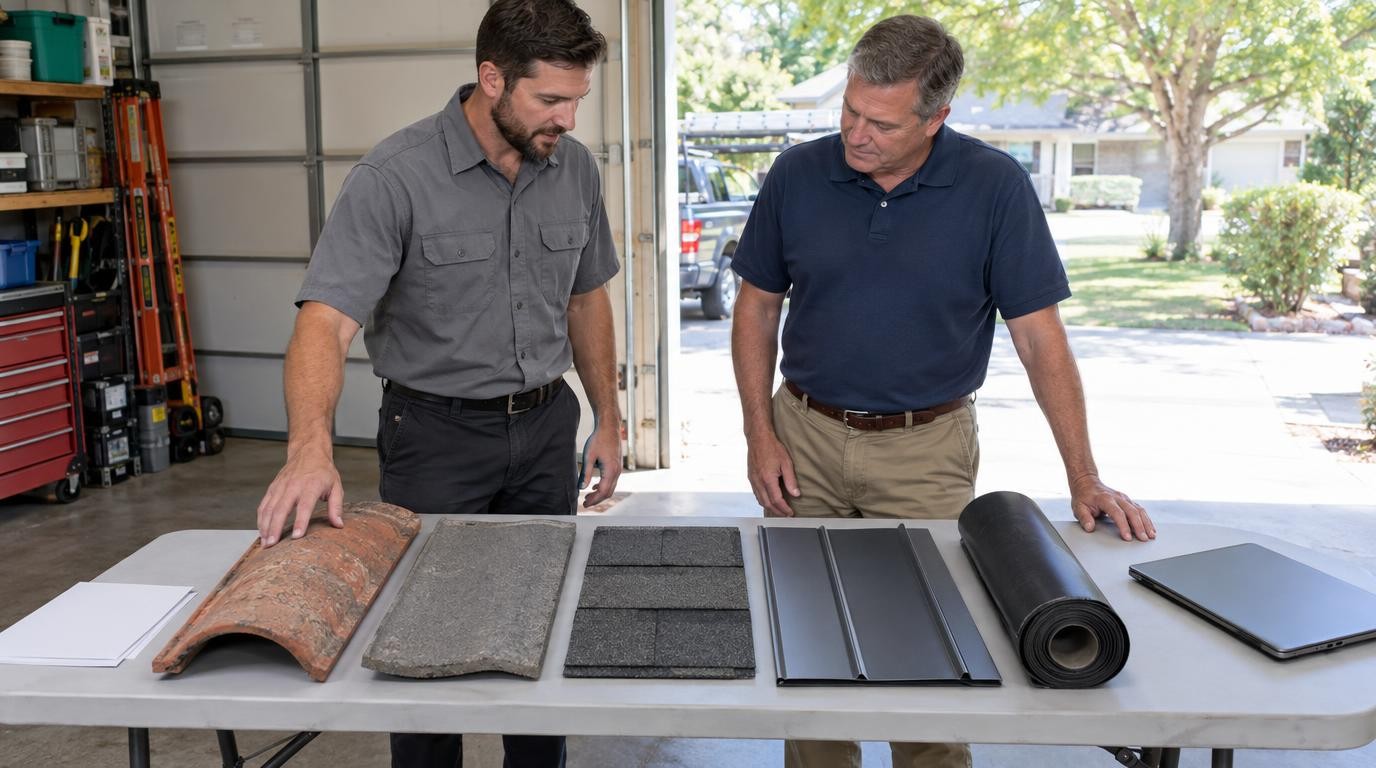
We inspect shingle, tile, metal, and low-slope systems. Tell the inspector which material is installed, especially if additions or roof sections differ, so the findings are tied to the right surface.
What should you check on clay or concrete tile roofs?
Look from a safe vantage point for cracked, slipped, or missing tiles and for uneven areas near roof edges and penetrations. Tile can be fragile underfoot, and a visible tile problem does not by itself establish the condition of the underlayment. Ask the roofer to explain any concern about the tiles, flashing, or concealed materials separately.
What should you check on shingle and metal roofs?
On shingle roofs, note missing pieces, lifting, or visible wear; on metal roofs, look for seam or fastener problems, corrosion, and flashing damage at edges and penetrations. The inspector should distinguish ordinary surface appearance from a defect that affects weather protection rather than treating every mark as a leak.
What should you check on flat or low-slope roofs?
Ask the roofer to examine the membrane surface, seams, flashing, drains, and scuppers. Debris, water marks, or areas that appear to hold water can help identify where drainage needs closer assessment. If you are weighing a finding against possible repairs, our guide to flat roofing repair decisions explains what to discuss with a roofer.
What belongs on a commercial roof inspection checklist?
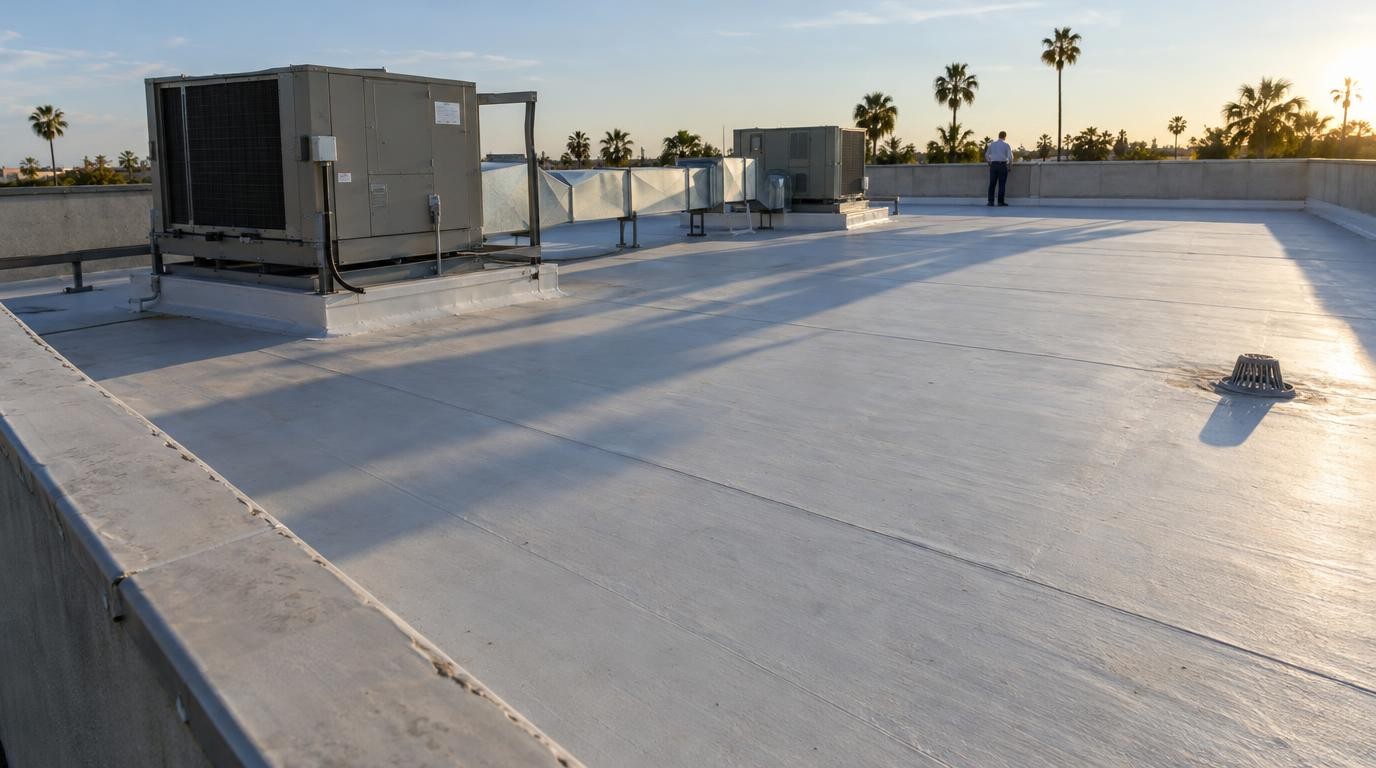
A commercial roof inspection checklist works best by zone: membrane, seams and flashing, edges and parapets, drains and scuppers, penetrations, and areas around rooftop equipment. On a low-slope building, those zones add useful detail to the core roof-system checklist. The goal is to locate concerns clearly so the owner can request appropriate professional follow-up.
- Membrane: Note visible wear, damage, or unusual surface changes.
- Seams and flashing: Identify separation or deterioration at joins and transitions.
- Edges and parapets: Check visible perimeter details and wall-to-roof connections.
- Drains and scuppers: Note debris, overflow evidence, and areas where water appears to linger.
- Penetrations: Locate vents, skylights, and other roof openings for flashing review.
- Equipment areas: Note roof-surface wear and penetrations near equipment without assuming the roof inspection includes an assessment of the equipment itself.
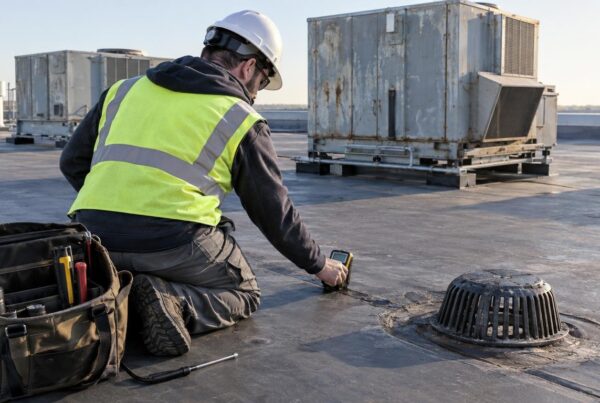
Before accessing a commercial roof, prepared professionals should assess fall hazards and arrange appropriate fall protection and skylight guards or protective screens where needed. The Centers for Disease Control and Prevention’s guidance on preventing falls through skylights and roof openings warns workers never to sit on, lean against, or step on a skylight lens or roof-opening cover because it may not support their weight. Owners should leave on-roof access to appropriately prepared professionals.
When should you use a roof inspection checklist?
Use a roof inspection checklist when you notice leaks, interior stains, missing materials, or unusual wear; after strong winds or heavy rain; as your roof approaches mid-life; before rainy season; or ahead of a property transaction or planned roof work. It also helps with routine maintenance by recording what you observe without diagnosing the cause yourself.
In the Escondido area, sun exposure and occasional heavy rain make a dated record of roof conditions useful. Coastal salt air can also affect properties with coastal exposure, but it is not a condition to assume for every inland roof.
Should you schedule an annual roof inspection?
Yes. Gastelum Roofing recommends that most homeowners arrange an inspection once a year and after strong winds or heavy rain. An inspection before rainy season can also help an owner understand visible wear and maintenance needs. Between visits, write down new stains, leaks, or missing materials so the roofer knows where to begin.
Should you request a pre-purchase roof inspection?
Yes. A pre-purchase roof inspection can clarify visible defects, likely repair priorities, and questions to resolve before a transaction. Buyers and sellers may also request an assessment when planning solar installation, a skylight, or another project that affects the roof. Ask what areas were accessible and what could not be established without further work; an inspection is not a guarantee about concealed conditions.
What should you expect from a professional roof inspection report?
A useful roof condition assessment identifies the roof type, areas examined, observed issues and their locations, and priorities for repair or monitoring. The inspector should explain recommended next steps and any limits on what could be assessed. Ask for findings you can understand and refer back to, without assuming an inspection includes a particular report format or roof certification.
For a residential roof inspection, match the findings against the core systems and the installed material. For a commercial roof, ask whether the findings identify the affected zones. Photos or location descriptions can make a recommendation easier to understand, but the important question is what was observed and why a next step is recommended.
What is a QC checklist, and is it the same as a roof inspection checklist?
No. A quality-control, or QC, checklist checks whether completed work meets intended requirements; an existing-roof inspection assesses current condition and identifies concerns that may need maintenance, repair, or further investigation. The construction quality-control discussion in the CDC archive describes checking work for defects against requirements.
How can you verify a California roofing contractor before an inspection?
Ask for the contractor’s California license number, then use the California Contractors State License Board’s public license lookup to check the number, current status, and classification appropriate for roofing work before the inspection. Also ask about applicable workers’ compensation and liability coverage rather than assuming a particular policy applies. Clear answers about who will inspect the roof, what areas can be assessed safely, and how findings will be explained help set expectations before the visit.
What can you check yourself, and when should you call a roofer?
From the ground or another safely accessible area, you can record visible roof changes and indoor stains or moisture signs; call a roofer for leaks, missing materials, damaged flashing, or drainage concerns. Do not climb onto a roof, especially a fragile tile roof or a wet or steep surface.
Our professional examination considers materials, flashing, penetrations, sealants, valleys, and drainage. If you see an indoor stain, note where and when you observed it; our guide to finding a roof leak’s source explains why the visible stain may not identify the entry point.
We offer roof inspections with no-pressure recommendations. If the roof is sound, monitoring may be the appropriate next step. Minor defects may call for practical repairs, while major damage or an aging roof may warrant a discussion of replacement options.
Frequently Asked Questions
What should I not say to an insurance adjuster about roof damage?
Do not guess when damage occurred, what caused it, or whether insurance covers it. Tell the adjuster what you actually observed, such as the location of a leak or missing material, and share dated photos if you have them. Accurately disclose what you know about the roof’s age, previous damage, and maintenance; do not present existing wear or neglected repairs as damage from a new storm. We can inspect the roof and explain our findings, but the insurer assesses coverage under your policy.
Can a roof inspection tell me how much life my roof has left?
A roof inspection can provide an estimate of remaining roof life, not an exact expiration date. We consider the roof’s age, materials, visible wear, and areas of concern, then explain repair and maintenance priorities. Concealed damage or future weather can change how a roof performs, so treat the estimate as a planning guide.
Do roof inspectors check for soft decking?
Yes. At Gastelum Roofing, we look for signs of soft decking and moisture intrusion during a professional roof inspection. An inspection may identify an area needing further evaluation, but it cannot establish the condition of every concealed section beneath the roof covering. We explain what we observed and whether additional assessment is warranted.
Can foot traffic damage show up during a roof inspection?
Yes. Foot traffic can contribute to areas of roof wear, and we look for sections that may be aging faster because of traffic, heat exposure, or shade. We assess the roofing materials and vulnerable details rather than assuming every surface mark is damage. Tell us about any recent work that required roof access.
Should a commercial building owner provide skylight locations before a roof inspection?
Yes. Provide workers with documents showing the exact locations of skylights where they will work, as the CDC recommends. If a pitched metal roof was installed over an older flat roof, skylights in the old roof may be hidden in the attic and pose a fall hazard to maintenance workers. Roof access and fall-hazard assessment should remain with prepared professionals.
Are translucent fiberglass panels on a metal roof safe to step on?
No. Do not treat translucent panels as walkable metal roofing. The CDC recommends identifying corrugated fiberglass panels between metal roof panels and marking them with warning signs, placing perimeter guards around them, or replacing them with stronger materials. Leave roof access to appropriately prepared professionals, and tell the inspector about any known panels before work begins.
How can you put this checklist to work before your next inspection?
Write down your roof type, the concerns you have observed, and questions about drainage, trim, coverings, flashing, ventilation, and any chimney. After the inspection, compare the findings with the relevant material checks or commercial roof zones. Ask which concerns need repair, which can be monitored, and which could not be assessed.
Keep your notes focused on locations and observable signs, not a guess at the cause. If you own a property in Escondido and want a professional assessment, contact Gastelum Roofing at 760-295-6593 to schedule a roof inspection and receive prioritized recommendations. Our team can explain what the roof shows and what next steps, if any, make sense for your property.