
Last updated: September 8, 2026
As Tropical Storm Marie approaches San Diego County, property owners across the region are taking action to protect their homes and businesses. The storm, which developed near Baja California, is expected to bring significant rainfall to the area over the coming days, prompting monitoring alerts from the National Weather Service. This is the moment to assess your roof’s readiness – not after the rain begins, but right now. A pre-storm roof inspection can reveal vulnerabilities before they become costly problems, giving homeowners in San Diego, Santee, Escondido, and surrounding communities peace of mind when weather turns serious.
What Does a Roof Inspection Reveal Before a Storm Hits?
A professional roof inspection uncovers existing damage, aging materials, and structural vulnerabilities that sudden severe weather can quickly worsen. Inspectors examine every component of the roofing system to identify weaknesses before they fail under storm conditions.
What vulnerabilities does a roof inspection uncover?
During a thorough assessment, inspectors identify missing or damaged shingles, compromised flashing around chimneys and vents, deteriorating sealants, and weakened underlayment that could allow water intrusion. They also spot areas where materials have worn thin from sun exposure, which is particularly relevant for San Diego properties that endure intense UV radiation year-round. Inadequate drainage from clogged gutters or improper grading can create pooling water that stresses the entire system during heavy rainfall. Inspectors additionally look for signs of previous storm damage that may have gone unnoticed, such as hairline cracks in tiles or subtle granule loss on asphalt shingles.
Why do sudden rain events expose hidden weaknesses?
When dry conditions give way to rapid, intense rainfall, roofs that appeared functional under normal circumstances often reveal problems. Water finds the path of least resistance, exploiting small gaps, loose fasteners, and degraded seals that were invisible during fair weather. The sudden thermal shifts common during storm events cause building materials to expand and contract, opening cracks that permit water infiltration. Properties throughout La Mesa, Carlsbad, and Chula Vista that have not undergone recent professional evaluation are especially vulnerable when conditions change rapidly.
What Is Included in a Professional Roof Condition Assessment?
A comprehensive roof condition assessment examines structural integrity, material condition, drainage systems, and flashing details to provide a complete picture of a roof’s current state and maintenance needs.
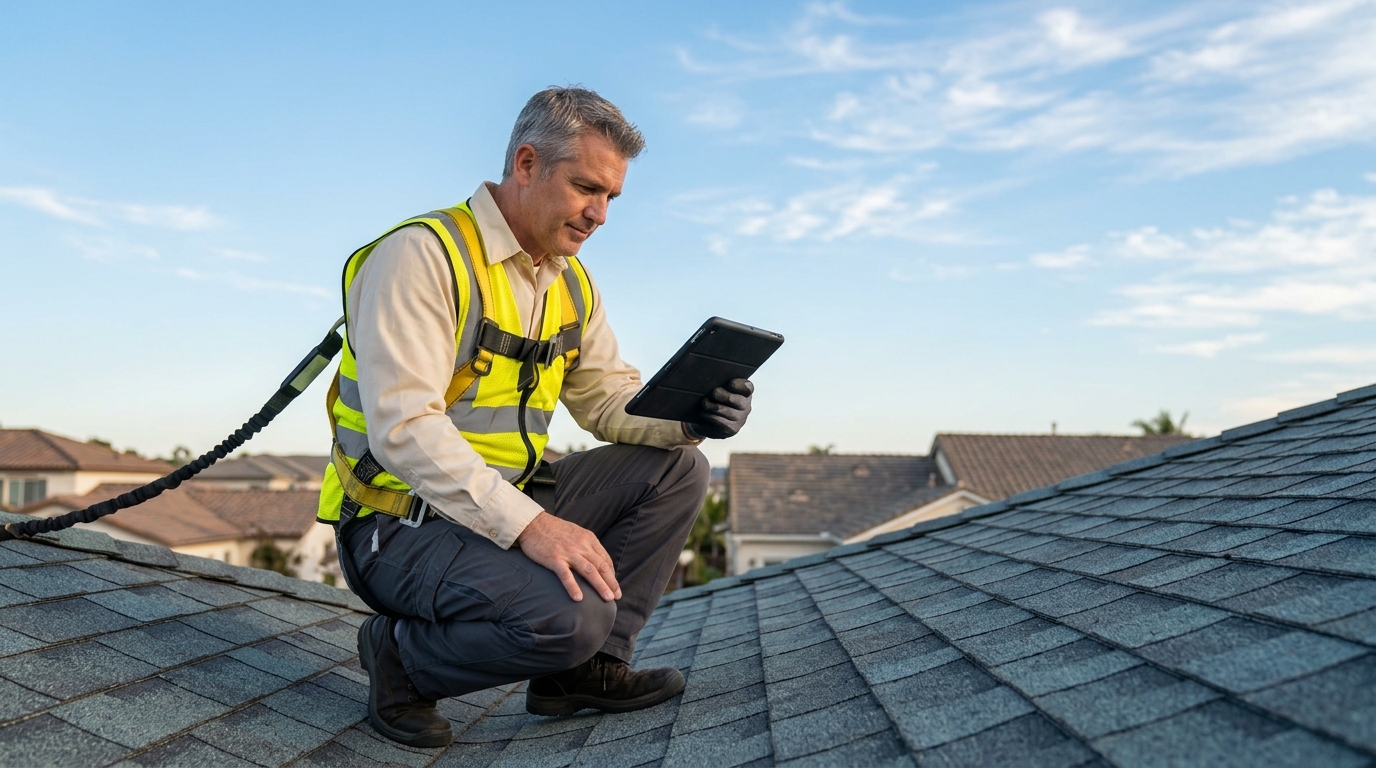
What components do inspectors examine on a residential roof?
Professional assessments cover all visible and accessible roof components systematically. Inspectors evaluate the roof covering material, whether asphalt shingles, tile, or flat membrane systems, checking for cracks, missing pieces, and signs of age-related deterioration. They inspect all flashing points where the roof meets vertical surfaces, including wall junctions, skylights, and penetration points for vents and chimneys. Gutter systems and downspouts receive attention to ensure proper water diversion away from the foundation. The structural components, including decking and support rafters, are assessed for any sagging, water staining, or decay that could compromise the roof’s ability to withstand loads. Additionally, inspectors examine soffit and fascia materials for damage and verify that ventilation systems function correctly to prevent moisture buildup. A roof inspection checklist can help homeowners understand which exterior, structural, and ventilation components a thorough assessment should cover.
How do inspectors check for early signs of storm damage?
Even before a major storm arrives, experienced inspectors recognize patterns that indicate a roof may struggle under severe weather. They look for lifted edges on shingles that could catch wind and tear away, corrosion on metal components that weakens structural integrity, and vegetation growth that signals retained moisture. In the San Diego climate, inspectors pay particular attention to UV degradation on exposed materials and heat-related expansion damage that creates entry points for water. For homeowners in Poway, El Cajon, and throughout the county, identifying these early indicators allows for targeted repairs before the next weather system tests the roof’s limits.
How Does a Pre-Storm Roof Inspection Protect My Home?
Scheduling a roof inspection before tropical storms arrive provides documented evidence of your roof’s condition and enables targeted repairs that prevent emergency situations during severe weather events.
What damage do tropical storms and heavy rain cause to roofs?
Tropical systems bring sustained winds and prolonged rainfall that stress roofing systems differently than typical San Diego weather patterns. High winds can lift and remove shingles entirely, creating immediate pathways for water intrusion. Driving rain finds weaknesses in flashing and sealants that normally withstand light precipitation but fail under the pressure of wind-driven water. Extended moisture exposure saturates organic materials, leading to wood rot, mold growth, and compromised structural elements. Gutters and downspouts often fail under the volume of tropical rainfall, causing water to overflow and pool near foundations. The combination of wind and water affects all roof types, from asphalt shingle systems common in newer developments to tile roofs found throughout established neighborhoods in Carlsbad and Encinitas.
How does early detection prevent costly emergency repairs?
Addressing identified issues before a storm arrives transforms potential emergencies into manageable maintenance. Repairs completed proactively cost significantly less than water damage remediation, structural repairs, or mold abatement that become necessary when a roof fails during a storm. Property owners who invest in pre-storm inspections often find that minor repairs prevent the need for complete roof replacements following severe weather events. Documentation from an inspection completed before storm season begins provides a clear baseline that simplifies insurance claims if damage occurs, establishing that pre-existing problems did not cause subsequent issues.
What Are the Benefits of Drone Roof Inspections?
Drone roof inspections utilize advanced imaging technology to capture detailed roof conditions safely and comprehensively, providing inspectors with data that improves assessment accuracy and client communication.

How does drone technology improve inspection accuracy?
Inspection drones equipped with high-resolution cameras capture detailed imagery of entire roof surfaces from multiple angles, enabling inspectors to document conditions that manual inspection might miss. Thermal imaging capabilities built into some inspection drones reveal moisture intrusion and insulation gaps invisible to the naked eye. The aerial perspective allows comprehensive views of large commercial properties and multi-story residential buildings without requiring scaffolding or ladder placement. Inspectors can review recorded footage multiple times, zooming in to examine specific details and comparing current conditions against previous inspection data to track deterioration over time. This technological approach provides consistent, repeatable documentation that supports long-term maintenance planning. For large facilities, a commercial roof inspection can reveal early warning signs before minor damage becomes a leak.
Can drones detect damage that visual inspections miss?
Drone inspections excel at identifying subtle damage patterns across expansive roof areas that ground-level observation cannot efficiently cover. Cracked tiles, punctured membrane sections, and displaced flashing become clearly visible in detailed aerial photography. Drones can capture images of hard-to-reach areas around solar panel installations, complex roof geometries, and multi-level structures without risk to inspectors or disturbance to the property. For San Diego homeowners with tile roofs, which are common throughout Santee and Escondido, drone technology allows thorough assessment of valleys and ridge lines that traditional inspection methods struggle to access safely.
Why Should San Diego Homeowners Schedule Inspections Before Storms?
Pre-storm roof inspections provide essential documentation that protects homeowners financially and legally while ensuring their properties can withstand severe weather events.
What documentation does a pre-storm inspection provide?
A professional roof inspection generates detailed written reports and photographic evidence of your roof’s current condition. This documentation serves multiple important purposes for property owners. Insurance adjusters rely on pre-storm inspection reports to distinguish between pre-existing damage and new storm-related losses. Home sellers can provide inspection reports to prospective buyers, demonstrating proactive maintenance and transparent property condition disclosure. Homeowners with commercial properties benefit from inspection records that satisfy lease obligations and insurance requirements. For property managers overseeing multiple buildings in La Mesa, Carlsbad, and throughout the county, standardized inspection documentation enables efficient maintenance scheduling and budget allocation. For a closer look at a roof inspection for insurance, learn what insurers may require and how to prepare.
How does a prior inspection help with insurance claims?
When storm damage occurs, having inspection documentation from before the event proves invaluable for insurance purposes. Adjusters can compare pre-storm conditions with post-storm damage to accurately assess claim amounts. Without prior documentation, homeowners face challenges proving that specific damage resulted from recent weather rather than long-standing wear and tear. Insurance policies often exclude coverage for pre-existing conditions, making the distinction between new and old damage critical for claim approval. A thorough inspection completed before Tropical Storm Marie arrives creates a clear record that protects your interests when working with insurance providers to restore your property.
How Often Should I Schedule a Roof Condition Assessment?
Industry standards recommend annual roof condition assessments for most properties, with additional inspections following significant weather events to ensure continued protection.
Is annual roof inspection recommended for San Diego properties?
Professional roofing organizations recommend scheduling comprehensive roof inspections at least once per year, regardless of whether visible problems exist. San Diego’s unique climate, with its combination of intense sunshine, occasional heavy rains, and coastal humidity, accelerates wear on roofing materials compared to more temperate regions. Annual inspections allow property owners to identify and address gradual deterioration before it compounds into significant problems. For properties with mature trees nearby, more frequent inspections may be advisable to check for damage from falling branches and accumulated debris. Property managers and homeowners associations often include scheduled roof inspections in their annual maintenance budgets as a cost-effective approach to preserving property values throughout communities like those in Chula Vista and Poway.
When should I request an inspection after a major storm?
Following significant weather events, especially tropical storms or severe windstorms, a post-storm inspection helps identify damage that may not be immediately apparent from ground level. Even when no obvious leaks have developed, high winds and heavy rain can loosen shingles, damage flashing, or create micro-fractures in roofing materials that will worsen over time. Industry data consistently shows that addressing storm damage quickly prevents more extensive repairs and extends overall roof lifespan. Property owners should request a professional assessment within a few days of a major storm passing through the San Diego area, including Labor Day weekend events like those associated with tropical systems such as Tropical Storm Marie.
How Can I Get My San Diego Property Inspected Before the Next Storm?
Taking action now to schedule a professional roof inspection puts you in control of your property’s protection when severe weather approaches. Experienced inspectors can assess your roof’s current condition, identify vulnerabilities, and recommend maintenance that prevents emergency situations during storms.
Whether your property is in San Diego, Santee, Escondido, La Mesa, Carlsbad, Chula Vista, Poway, or El Cajon, local roofing professionals understand the specific challenges that San Diego County properties face from tropical weather systems. A comprehensive roof condition assessment examines every component of your roofing system, from surface materials to structural elements, providing you with a complete understanding of your property’s readiness for storm season.
Documented inspection results give you evidence to support insurance claims if storm damage occurs and demonstrate due diligence in property maintenance. When you work with qualified professionals who use modern inspection techniques, including drone technology for thorough coverage, you receive accurate information that enables confident decision-making about your property.
To schedule a roof inspection for your San Diego area property, contact Gastelum Roofing directly at 760-295-6593. Their team specializes in helping property owners throughout San Diego County prepare for storm season with thorough, professional roof assessments that protect your investment and provide peace of mind when weather turns severe.
Frequently Asked Questions
What does a roof inspection reveal before a storm hits?
A professional roof inspection uncovers missing or damaged shingles, compromised flashing around chimneys and vents, deteriorating sealants, and weakened underlayment that could allow water intrusion. Inspectors also identify areas worn thin from San Diego’s intense UV radiation, clogged gutters causing pooling water, and signs of previous storm damage such as hairline cracks in tiles or subtle granule loss on asphalt shingles.
How does a pre-storm roof inspection protect my home?
Scheduling a roof inspection before tropical storms arrive provides documented evidence of your roof’s condition and enables targeted repairs that prevent emergency situations during severe weather. Proactive repairs cost significantly less than water damage remediation, structural repairs, or mold abatement that become necessary when a roof fails. Documentation also simplifies insurance claims by establishing pre-storm condition baselines.
What are the benefits of drone roof inspections?
Drone inspections utilize high-resolution cameras to capture detailed imagery from multiple angles, revealing damage that manual inspection might miss. Thermal imaging capabilities detect moisture intrusion and insulation gaps invisible to the naked eye. The aerial perspective provides comprehensive views of large properties without scaffolding, and recorded footage allows inspectors to zoom in and compare current conditions against previous data to track deterioration over time.
How often should I schedule a roof condition assessment in San Diego?
Professional roofing organizations recommend comprehensive roof inspections at least once per year for most properties. San Diego’s unique climate with intense sunshine, occasional heavy rains, and coastal humidity accelerates wear on roofing materials compared to more temperate regions. For properties with mature trees nearby, more frequent inspections may be advisable to check for damage from falling branches and accumulated debris.
How does a prior inspection help with insurance claims after a storm?
When storm damage occurs, pre-storm inspection documentation proves invaluable for insurance purposes. Adjusters can compare pre-storm conditions with post-storm damage to accurately assess claim amounts. Without prior documentation, homeowners face challenges proving damage resulted from recent weather rather than long-standing wear and tear. Insurance policies often exclude coverage for pre-existing conditions, making this distinction critical for claim approval.
What damage do tropical storms and heavy rain cause to roofs?
Tropical systems bring sustained winds and prolonged rainfall that stress roofing systems differently than typical San Diego weather. High winds can lift and remove shingles entirely, creating immediate pathways for water intrusion. Extended moisture exposure saturates organic materials, leading to wood rot, mold growth, and compromised structural elements. Gutters and downspouts often fail under the volume of tropical rainfall, causing water to overflow and pool near foundations.
When should I request a roof inspection after a major storm?
Following significant weather events, especially tropical storms or severe windstorms, a post-storm inspection helps identify damage that may not be immediately apparent from ground level. Even when no obvious leaks have developed, high winds and heavy rain can loosen shingles, damage flashing, or create micro-fractures in roofing materials that will worsen over time. Property owners should request a professional assessment within a few days of a major storm passing through the San Diego area.