Last updated: November 5, 2026
TPO vs EPDM roofing comes down to the roof you have: both are single-ply membranes for low-slope roofs, but TPO is typically light-colored with heat-welded seams, while EPDM is synthetic rubber, often black, with seams joined using compatible tapes or adhesives. Neither is universally better. Sun exposure, drainage, roof design, and installation quality should guide the choice.
What Is the Difference Between TPO and EPDM Roofing?
TPO and EPDM both cover flat and low-slope roofs, but their composition, typical color, and seam methods differ. Here are the main differences to weigh:
| Factor | TPO | EPDM |
|---|---|---|
| Material | Thermoplastic membrane | Synthetic rubber membrane |
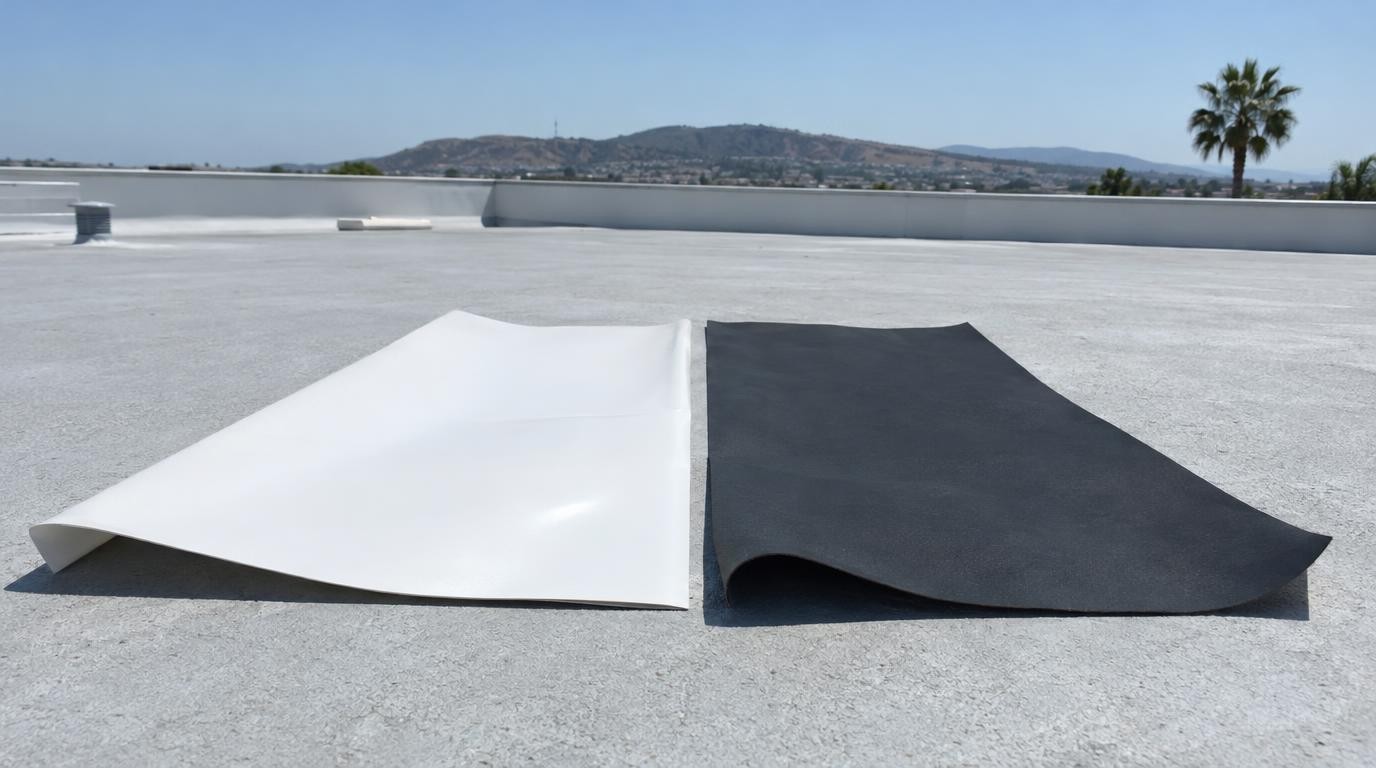
| Sunlight and color | Typically light-colored and reflective | Often black and more heat-absorbing, though lighter-colored options exist |
| Seams | Heat-welded | Joined with compatible tape or adhesive |
What Is a TPO Roofing System?
A TPO system combines membrane sheets with an attachment method, insulation or a recovery board where appropriate, welded seams, and details around edges, drains, and penetrations. Our TPO roofing service covers installation, replacement, repair, and inspections.
How Do TPO and EPDM Handle Sun and Heat?
Light-colored TPO generally reflects more sunlight than commonly black EPDM, helping reduce heat buildup at the roof surface. TPO membranes are also engineered to resist UV breakdown and heat aging on sun-exposed roofs in Southern California.
Does a White Membrane Roof Always Reduce Cooling Demand?
No. A white membrane roof can reduce solar heat absorbed at the roof surface and may lower cooling demand, but the effect inside depends on insulation, roof assembly, interior use, and cooling needs. In our roofing work, we recommend considering reflective TPO alongside those conditions rather than treating membrane color as a promise of energy savings.
How Do TPO and EPDM Seams Affect Leak Protection?
Well-executed TPO welds and properly prepared EPDM tape or adhesive seams can both be watertight. For either membrane, leak protection also depends on sound flashing at penetrations and edges, properly sealed drains, and adequate drainage.
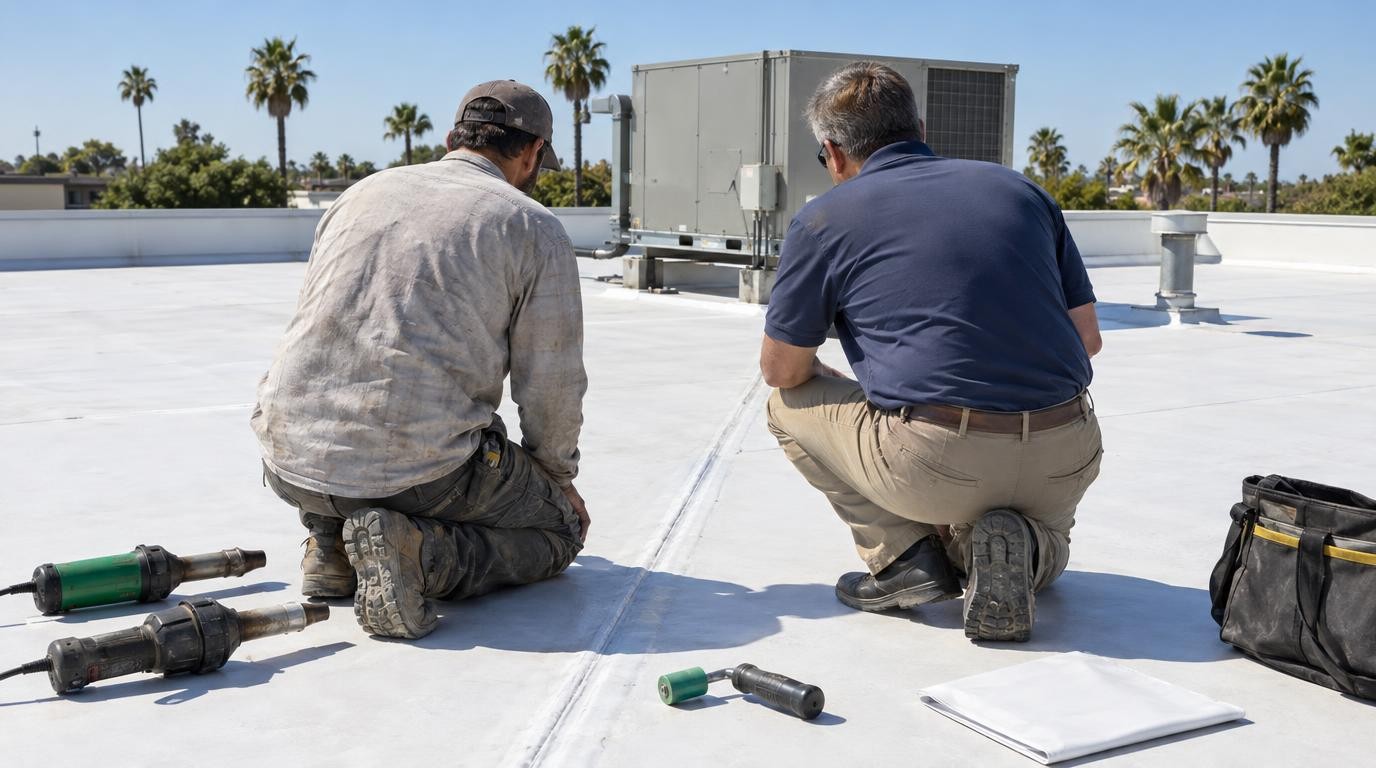
How Are TPO and EPDM Seams Joined?
An installer uses controlled heat to weld overlapping TPO sheets and checks the finished seams for continuity. EPDM requires the preparation and joining materials specified for its rubber membrane system; heat-welding TPO and taping EPDM are not interchangeable repair methods.
How Do TPO and EPDM Compare on Wear and Repairs?
A compatible TPO patch or seam repair can be heat-welded; EPDM repairs use compatible tape or adhesive on a carefully prepared surface. For either roof, we check punctures, seams, flashing, drainage, and possible moisture beneath the membrane. Isolated damage may be repairable, but widespread deterioration or wet insulation may call for replacement.
What Are the Downsides of EPDM Roofing?
Commonly black EPDM absorbs more solar heat than light-colored TPO, which may matter on a sun-exposed roof. That does not rule EPDM out: consider the color and condition of the proposed membrane, the roof assembly, and whether its seams and flashing can be detailed correctly.
Can a Damaged TPO Roof Be Repaired?
Yes. Our TPO roof repair work addresses punctures, tears, seam issues, flashing failures, and drainage-related wear when the roof’s condition supports a repair. We estimate that many properly installed and maintained TPO systems can last 20–30 years or longer, depending on membrane thickness, installation quality, and drainage performance. It is not a guarantee for an individual roof.
What Happens During TPO Roof Installation or Replacement?
- We inspect the existing roof and drainage to determine whether replacement or a recover system is suitable.
- For a replacement, we remove old materials, inspect the exposed substrate, and address drainage and insulation needs. For an eligible recover, we check the existing assembly and moisture conditions before preparing the surface.
- We prepare the substrate, plan insulation and any underlayment or recovery board, and select a manufacturer-approved attachment method suited to the roof.
- We install the membrane, weld the seams, and detail the flashing at edges, drains, and penetrations.
- We inspect the seams, flashing, and drains, then clean up the site.
Can TPO Be Installed Over an Existing Flat Roof?
Sometimes. A recover system is an option only when existing materials, moisture conditions, roof structure, and applicable requirements permit it. Recurring leaks, saturated insulation, or widespread membrane wear may instead call for removal and replacement.
Installation safety also matters. A workplace safety report hosted by the Centers for Disease Control and Prevention identifies glare and slipperiness as potential hazards for workers handling bright TPO membranes. Those are reasons for appropriate work practices, not reasons to choose a membrane without assessing the roof.
What Should an Inspection Check Before You Choose a Membrane?
A membrane inspection should identify the existing material and evaluate moisture, substrate condition, insulation, penetrations, flashings, drainage, and repairability. Those findings help distinguish an isolated repair from a roof that needs more extensive work. Gastelum Roofing offers no-pressure roof inspections for San Diego-area property owners, including owners in Chula Vista.
How Do I Know If I Have EPDM or TPO?
Color, texture, and seam construction provide clues: commonly black, rubber-like material with taped seams may be EPDM, while a light-colored sheet with welded seams may be TPO. Color alone cannot confirm the membrane. A professional can verify the material and determine whether its seams, flashings, and underlying assembly are suitable for repair or replacement.
Frequently Asked Questions
Can solar panels be installed on a TPO or EPDM flat roof?
Yes, a flat roof with TPO or EPDM may accommodate solar panels, but the mounting design must suit the roof. A solar-ready roof design publication identifies both membranes and ballast mounting as flat-roof options. Have the roof structure, drainage, and waterproofing details assessed before installation.
How is a TPO roof attached?
A TPO roof can be mechanically fastened, fully adhered, or induction-welded, depending on the roof design and the manufacturer’s approved system. At Gastelum Roofing, we choose the attachment method after assessing the roof deck, insulation needs, and performance goals. Proper substrate preparation and flashing details matter alongside the attachment method.
What should a TPO roof estimate include?
A TPO roof estimate should clearly identify the proposed materials, labor, and project timeline. At Gastelum Roofing, we provide an itemized estimate after assessing the roof’s condition, drainage, and insulation needs. Ask which preparation, attachment method, flashing work, and final inspections are included so you can understand the proposed scope.
What should I do if water keeps pooling near a flat-roof drain?
Arrange an inspection of the drain and surrounding roof rather than assuming a new membrane will solve the pooling. At Gastelum Roofing, we check drainage and look for related membrane wear, flashing problems, and moisture beneath the roof. The findings determine whether a targeted repair or broader work is appropriate.
Should I have a TPO roof checked after rooftop equipment work?
Yes, have the roof checked if equipment work involved foot traffic, new penetrations, or changes near flashings. Those activities can leave punctures or compromise waterproofing details. At Gastelum Roofing, we inspect the membrane, seams, flashings, and drains to identify damage early and recommend practical repairs when the roof’s condition allows.
What happens after a free TPO roof inspection?
You receive a recommendation based on the roof’s condition, not an automatic replacement proposal. At Gastelum Roofing, we assess drainage and insulation needs, suggest practical repairs for minor issues, and explain replacement options when damage is extensive.
Which Membrane Should You Choose for Your Flat Roof?
For a sun-exposed low-slope roof, consider light-colored TPO when lowering rooftop heat is a priority and the roof can accommodate its attachment, insulation, and welded-seam details. EPDM remains an option when its surface color and specified taped or adhered seams fit the roof. Neither membrane overrides manufacturer requirements or compensates for poor drainage.
Is TPO Suitable for Both Commercial Roofs and Residential Additions?
Yes. We install TPO on commercial buildings, residential additions, and patio covers when the roof design supports the system.
What’s Better, a TPO or a PVC Roof?
Neither is universally better. PVC and TPO are both single-ply options for low-slope roofs. We consider light-colored TPO when reducing rooftop heat buildup is a priority; its heat-welded seams can provide watertight protection when properly installed. To choose between particular TPO and PVC systems, compare your roof’s design and intended use with each manufacturer’s requirements for attachment and detailing. We can inspect your roof and explain whether TPO is a good fit.
If you own a low-slope property in San Diego or Chula Vista, contact Gastelum Roofing at 760-295-6593 to arrange a no-pressure roof inspection. We can check the membrane and drainage, explain whether repair or replacement makes sense, and discuss whether our TPO roofing service fits your property.