Last updated: August 4, 2026
Flat roofing has become a trusted solution for homeowners and business owners across San Diego, from the coastal neighborhoods of Carlsbad to the inland communities of Santee and Escondido. A recent market development – a competitor promotion offering a flat roof replacement package at a specific price point – has drawn new attention to this versatile roofing option. Whether you are evaluating a new flat roof for a modern home, considering a commercial installation, or simply want to understand what these promotions actually include, this guide walks you through everything you need to make an informed decision about flat roofing in the San Diego area.
What Is Flat Roofing and Why Is It Popular in San Diego?
Flat roofing refers to roofing systems with minimal slope, typically no more than a few degrees from horizontal. Despite the name, these roofs are never truly flat – they include slight inclines to facilitate water drainage. This design has gained significant traction across San Diego County, from La Mesa to Poway, because it offers a clean, contemporary aesthetic that complements both residential and commercial architecture.
What Building Types Benefit Most from Flat Roofs?
Flat roofs serve a wide range of building types throughout the San Diego region. Commercial properties – including office buildings, retail centers, and industrial facilities in areas like El Cajon and Chula Vista – frequently choose flat roofing for its cost-effective design and ease of maintenance. Modern residential homes with contemporary styling also embrace flat roof elements for their minimalist appeal. Additionally, flat roofs are ideal for structures where rooftop access is needed, such as buildings with HVAC systems, solar panels, or outdoor living spaces that can be built over the roof deck.
How Does San Diego’s Climate Affect Flat Roof Performance?
San Diego’s Mediterranean climate – with mild winters, warm summers, and limited rainfall – creates favorable conditions for flat roofing systems. However, the coastal environment in communities like Carlsbad brings salt air exposure, while inland areas such as Escondido experience more temperature variation between day and night. These factors influence material selection and maintenance schedules. Professional flat roofing contractors understand how to address regional considerations like UV exposure, occasional heavy rains, and the need for proper drainage to prevent water accumulation during San Diego’s brief wet seasons.
What Are the Best Materials for a Flat Roof?
Modern flat roofing materials offer distinct advantages for San Diego properties. Three primary options dominate the market: TPO (thermoplastic polyolefin), EPDM (ethylene propylene diene monomer), and built-up roofing systems. Each material presents unique characteristics suited to different property types, budgets, and performance priorities.
What Is TPO and When Should I Use It?
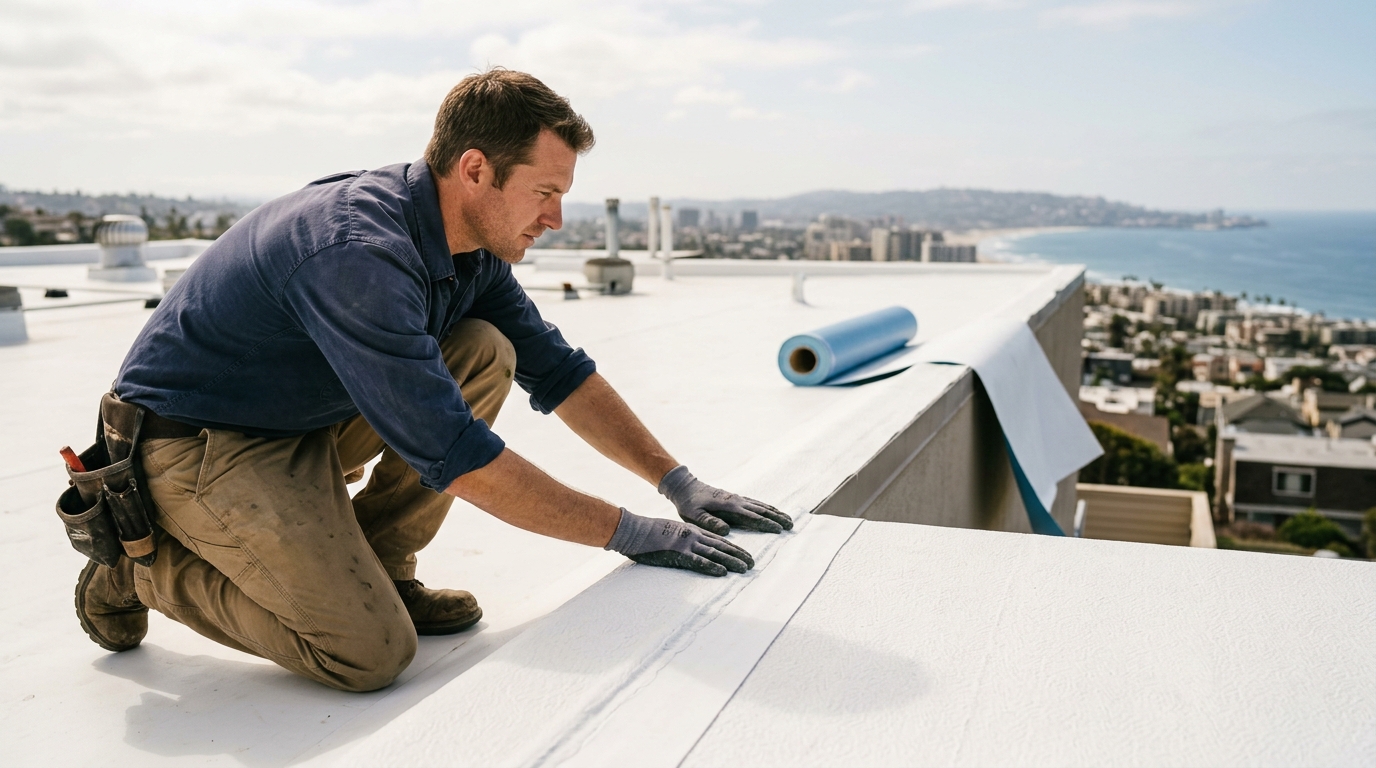
TPO is a single-ply membrane known for its energy-efficient white surface that reflects sunlight and reduces cooling costs – particularly valuable during San Diego’s warm summers. TPO roofing installation involves heat-welded seams that create a watertight bond, making it a strong choice for both residential and commercial flat roofs in communities like Santee and La Mesa. Property owners interested in meeting California’s Title 24 energy efficiency requirements often find TPO aligns well with compliance goals. Our TPO roofing services provide expert installation tailored to these requirements.
What Is EPDM and What Are Its Advantages?
EPDM is a durable rubber membrane that has served flat roof applications for decades. Its flexibility allows it to accommodate building movement, while its dark surface absorbs heat in cooler months – a benefit for properties not heavily reliant on air conditioning. EPDM roofs are known for their longevity and resistance to UV radiation, making them suitable for the intense sunlight exposure common throughout San Diego County.
How Does Built-Up Roofing Work for Flat Surfaces?
Built-up roofing, often called BUR, layers multiple plies of asphalt-saturated felt with alternating applications of bitumen (asphalt or coal tar). A protective gravel or mineral surface caps the system, providing excellent durability and fire resistance. BUR remains a proven option for flat roofs, particularly on commercial buildings, though it requires more labor-intensive installation than single-ply membranes.
Which Flat Roof Material Lasts Longest in Coastal Climates?
Durability varies by material and installation quality, but properly installed flat roof systems in San Diego’s coastal and inland environments typically offer 20 to 30 years of service life. TPO and EPDM membranes, when professionally installed with proper flashing and seam sealing, provide excellent resistance to UV exposure and thermal cycling. Built-up systems offer exceptional durability through their layered construction. The key to maximizing longevity lies in selecting quality materials suited to the specific microclimate – whether that means enhanced UV resistance for sun-exposed properties in Escondido or superior moisture barriers for areas near the coast in Carlsbad.
What Are the Key Benefits of Choosing a Flat Roof?
Flat roofing delivers several advantages that make it an attractive choice for San Diego property owners. Understanding these benefits helps homeowners and business operators evaluate whether a flat roof aligns with their needs and priorities.
How Does a Flat Roof Maximize Usable Space?
One of the most significant advantages of flat roofing is the usable space it creates. Unlike pitched roofs that dedicate vast triangular areas to unused attic space, flat roofs provide a functional platform. Property owners in Santee and Poway use flat roofs to install solar panel arrays, rooftop gardens, outdoor entertaining areas, or additional HVAC equipment without sacrificing ground-level space. This versatility makes flat roofs particularly valuable for commercial properties where maximizing building footprint efficiency directly impacts the bottom line.
Why Is Flat Roofing Cost-Effective Over Time?
While initial costs vary by material and property size, flat roofs often prove more economical over their lifespan compared to complex pitched alternatives. The straightforward design simplifies inspections, repairs, and maintenance access. Fewer materials are required for covering the same footprint, and the accessible surface allows professional crews to work efficiently during routine maintenance. For property managers overseeing buildings throughout San Diego County, this accessibility translates to lower maintenance costs and fewer unexpected repair needs.
What Energy Efficiency Advantages Do Flat Roofs Offer?
Flat roofs present excellent opportunities for energy savings, particularly with cool-colored or reflective surfacing materials. TPO and similar reflective membranes reduce heat absorption, lowering cooling demands during San Diego’s warm months. Property owners can further enhance efficiency by adding rigid insulation boards beneath the membrane during installation, creating a comprehensive building envelope solution that supports comfort while reducing utility expenses.
How Do I Know If My Flat Roof Needs Repair or Full Replacement?
Recognizing the signs of flat roof deterioration helps property owners address problems before they escalate into costly interior damage. Regular visual assessments and prompt attention to warning indicators protect your investment.
What Are the Early Warning Signs of Flat Roof Damage?
Several indicators suggest your flat roof requires professional attention. Blistering – raised areas where moisture has become trapped beneath the membrane – often appears as bubbles or raised sections on the roof surface. Cracking or splitting in the membrane, particularly around seams and penetrations, compromises the waterproofing integrity. Additionally, visible tears, shrinkage of membrane edges, or deterioration of flashing materials around vents, skylights, and parapet walls all signal the need for evaluation by a qualified flat roofing contractor.
How Does Ponding Water Indicate a Problem?
Ponding water – water that remains pooled on the roof surface more than 48 hours after rainfall – suggests inadequate drainage or structural settling. While San Diego experiences relatively limited rainfall, the occasional storm can expose drainage deficiencies. Standing water accelerates membrane degradation, compromises insulation effectiveness, and creates conditions favorable to moss or algae growth. Properties experiencing recurring ponding should have a professional assess both the drainage system and the underlying structure to determine whether repair or more comprehensive remediation is needed.
When Is Repair Enough vs. When Is Replacement Necessary?
Minor damage isolated to specific areas – such as a small tear, a single blister, or localized flashing failure – often responds well to targeted repair. However, widespread deterioration, multiple leak sources, or membranes approaching their expected service life may warrant full replacement. A professional inspection evaluates factors including the membrane’s overall condition, the integrity of underlying structure, insulation performance, and the roof’s maintenance history to recommend the most appropriate course of action for your San Diego property.
What Does Professional Flat Roof Installation Include?
Quality flat roof installation follows a systematic process designed to maximize performance and longevity. Understanding what professional installation entails helps property owners set realistic expectations and recognize the value of working with experienced contractors. Our roofing services team brings this expertise to every project.
How Long Does a Typical Flat Roof Installation Take?
Project duration depends on property size, roof complexity, material selection, and whether the installation involves new construction or replacement of an existing system. A typical residential flat roof installation in San Diego might complete within several days to a week, while larger commercial projects could extend longer. Weather conditions occasionally influence scheduling, though San Diego’s generally favorable climate allows for consistent installation timelines throughout most of the year.
What Steps Ensure a Watertight Flat Roof System?
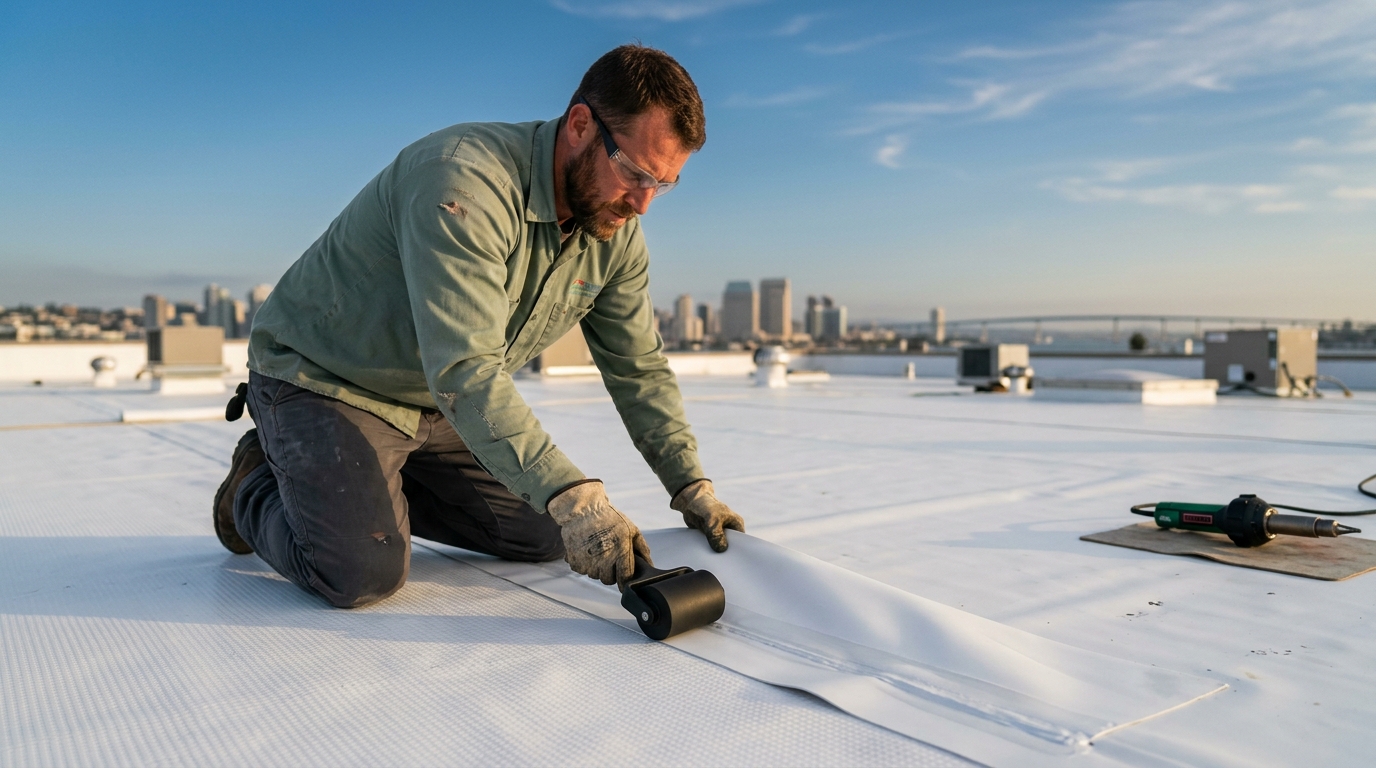
Professional installation involves several critical steps: thorough substrate preparation and, when needed, removal of existing roofing materials; installation of appropriate insulation boards to enhance energy efficiency; precise membrane placement with careful attention to overlaps and seams; professional heat-welding or adhesive application to create continuous watertight bonds; and meticulous flashing installation around all roof penetrations, edges, and transitions. Quality contractors follow manufacturer specifications precisely and conduct thorough inspections upon completion to verify system integrity.
Why Is Proper Ventilation Critical for Flat Roof Longevity?
Ventilation manages temperature and moisture within the roof system, preventing problems that compromise longevity. Without adequate airflow, heat accumulates beneath the membrane, accelerating material degradation and increasing cooling costs. Moisture from interior sources – showers, cooking, general humidity – can condense within the roof structure, promoting mold growth and insulation damage. Professional installers design ventilation strategies appropriate to the specific building and climate conditions, ensuring the roof system performs optimally throughout its service life.
How Can I Maintain My Flat Roof Year-Round in San Diego?
Regular maintenance extends flat roof service life and protects your investment. Establishing consistent care routines helps San Diego property owners avoid premature deterioration and costly repairs.
What Seasonal Maintenance Protects My Flat Roof?
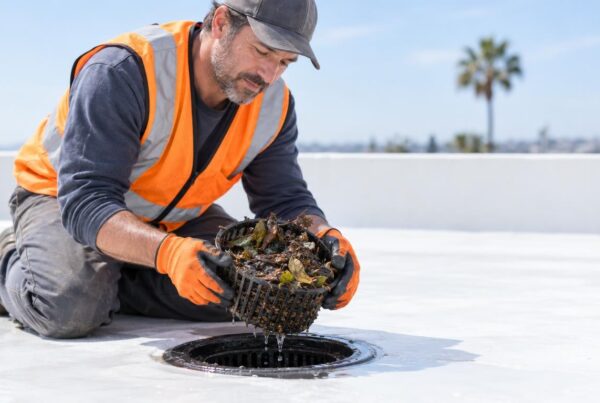
Each season presents maintenance opportunities. Before summer’s intense heat arrives, inspect the membrane for UV-related damage and verify that reflective surfaces remain clean and effective. Following San Diego’s occasional winter rains, check drainage systems to confirm they handle water flow efficiently. In fall, remove accumulated debris from the roof surface and ensure no organic material has collected in corners or around penetrations where it could retain moisture and promote degradation.
How Often Should I Schedule Professional Flat Roof Inspections?
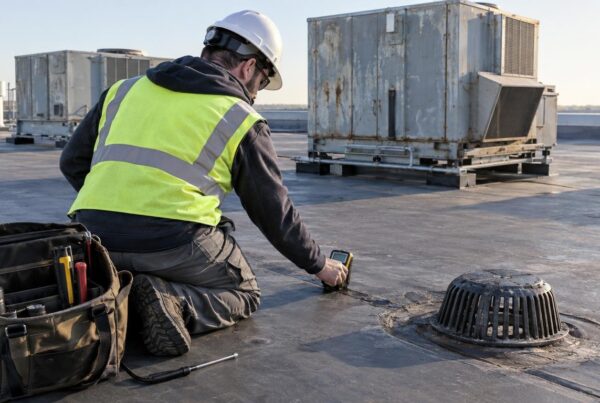
Industry best practices recommend professional inspections at least annually, with additional assessments following significant weather events. Trained inspectors identify developing problems before they become visible from the ground or inside the building. They also verify the condition of seams, flashing, drainage, and penetration seals – components that require expertise to evaluate accurately. For commercial properties with large flat roof systems, more frequent inspections may provide additional protection and documentation value.
What Can I Do to Extend the Life of My Flat Roof?
Property owners contribute to roof longevity through simple practices: keeping the roof surface clean and free of debris; maintaining clear drainage paths; promptly addressing any visible damage before it spreads; limiting rooftop access to authorized personnel who understand how to move safely without damaging the membrane; and scheduling professional maintenance without delay when concerns arise. These proactive measures help maximize the return on your flat roofing investment.
What Should I Look for When Hiring a Flat Roofing Contractor?
Selecting the right contractor significantly influences installation quality, system performance, and long-term satisfaction. Careful evaluation helps property owners make confident decisions.
What Credentials and Experience Matter Most?
Look for contractors with demonstrated experience specifically in flat roofing systems, as these require different expertise than pitched roof installations. Appropriate licensing and insurance protect both parties and indicate professional operation. Manufacturer certifications for specific materials – such as TPO or EPDM – demonstrate that the contractor has completed training and meets quality standards. Ask about previous projects in your community, and request references from property owners whose roofs were installed several years ago to assess long-term performance.
How Do I Evaluate a Contractor’s Communication and Transparency?
Professional contractors communicate clearly about project scope, materials, timelines, and what the finished installation should accomplish. They provide detailed proposals that explain the work to be performed rather than simply quoting a price. Watch for responsiveness during the evaluation process – if a contractor is attentive and informative before you commit, that communication style likely continues throughout the project. Transparent contractors welcome questions and explain their processes thoroughly.
Why Is Local Experience Important for San Diego Flat Roofs?
Contractors familiar with San Diego’s specific climate challenges, building codes, and neighborhood characteristics bring valuable context to your project. They understand how coastal conditions in Carlsbad differ from inland heat exposure in Escondido, and they know local permit requirements and inspection expectations. Local experience also means accountability within the community – a contractor who serves the San Diego area maintains their reputation through every installation.
How Does a Competitor’s Flat Roof Pricing Help Me Make a Smarter Decision?
When evaluating flat roof investments, seeing competitor pricing provides useful context for understanding what different packages include. A recent market promotion offered a flat roof replacement at a specific price point with defined square footage limits. Property owners comparing estimates can use this information as a reference – not necessarily as a target – while recognizing that meaningful differences exist between low-price promotions and comprehensive professional installation.
Questions worth asking when comparing estimates include: What materials are included, and do they meet current quality standards? Does the price account for proper insulation, or is that an add-on? What warranty coverage protects the installation? How does the contractor handle unexpected repairs discovered during tear-off? What preparation and cleanup services are included? Transparent, itemized estimates reveal these distinctions more clearly than single-figure prices, helping you understand exactly what your investment covers.
When a competitor promotion creates a pricing anchor, it presents an opportunity to have a substantive conversation about value. The most responsible approach involves comparing not just prices, but the complete scope of work, materials quality, and contractor qualifications. This ensures your final decision reflects genuine value rather than simply the lowest available number.
What Should San Diego Property Owners Take Away About Flat Roofing?
Flat roofing offers San Diego property owners a practical, versatile solution suited to both residential and commercial applications. Whether your property is in Carlsbad, La Mesa, Poway, or any of the surrounding communities, understanding material options, recognizing maintenance needs, and selecting a qualified contractor positions you for long-term success with your flat roof investment.
The key steps remain consistent: evaluate your property’s specific needs, explore material options that align with your priorities, maintain the roof regularly once installed, and work with experienced professionals who communicate clearly throughout the process. Whether you are considering a flat roof for new construction, evaluating replacement for an aging system, or simply seeking to understand your options, informed decision-making delivers the best outcomes.
For homeowners and property managers in the San Diego area ready to explore flat roofing solutions for their property, Gastelum Roofing offers consultations to discuss your specific situation, answer questions, and provide guidance tailored to your needs. Reach out to their team to schedule a conversation about your flat roofing project – contact Gastelum Roofing at 760-295-6593 to get started.
Frequently Asked Questions
What is flat roofing and why is it popular in San Diego?
Flat roofing refers to systems with minimal slope, typically no more than a few degrees from horizontal, designed with slight inclines for water drainage. It has gained popularity in San Diego for its clean, contemporary aesthetic that complements both residential and commercial architecture. The Mediterranean climate creates favorable conditions, and the design offers cost-effective maintenance plus rooftop accessibility for solar panels or HVAC equipment.
What are the main materials used for flat roofs in San Diego?
Modern flat roofing materials include TPO (thermoplastic polyolefin), EPDM (ethylene propylene diene monomer), and built-up roofing systems. TPO features an energy-efficient white surface that reflects sunlight and reduces cooling costs, with heat-welded seams providing watertight bonds. EPDM is a durable rubber membrane offering excellent flexibility and UV resistance. Built-up roofing layers asphalt-saturated felt with protective gravel for exceptional durability on commercial properties.
How long does a flat roof typically last in San Diego?
Properly installed flat roof systems in San Diego typically offer 20 to 30 years of service life. Durability depends on material selection, installation quality, and adherence to regional considerations like UV exposure and coastal conditions. TPO and EPDM membranes provide strong resistance to UV radiation and thermal cycling when professionally installed with proper flashing and seam sealing.
What are the warning signs that my flat roof needs repair or replacement?
Key warning signs include blistering (raised areas where moisture is trapped), cracking or splitting in the membrane particularly around seams and penetrations, visible tears, and shrinkage of membrane edges. Ponding water that remains pooled more than 48 hours after rainfall also indicates inadequate drainage. Minor isolated damage often responds to targeted repair, while widespread deterioration may warrant full replacement.
How do I maintain a flat roof throughout the year in San Diego?
Seasonal maintenance protects your flat roof investment. Before summer, inspect for UV-related damage and verify reflective surfaces remain clean. After winter rains, check that drainage systems handle water flow efficiently. In fall, remove debris from the roof surface and around penetrations. Industry best practices recommend professional inspections at least annually, with additional assessments following significant weather events.
What should I look for when hiring a flat roofing contractor in San Diego?
Look for contractors with demonstrated experience specifically in flat roofing systems, appropriate licensing and insurance, and manufacturer certifications for specific materials like TPO or EPDM. Request references from projects completed several years ago to assess long-term performance. Local experience matters because San Diego contractors understand coastal conditions, inland heat exposure, and local building codes. Choose contractors who communicate clearly and provide detailed proposals.
What are the key benefits of installing a flat roof on my San Diego property?
Flat roofs provide several advantages for San Diego properties. They maximize usable space for solar panels, rooftop gardens, or HVAC equipment without sacrificing ground-level area. The accessible design simplifies inspections and maintenance, often resulting in lower long-term costs. Energy-efficient options like TPO reflective membranes reduce cooling demands during warm months, while proper insulation enhances overall building envelope performance.