Last updated: July 6, 2026
California’s updated building energy standards took effect January 1, 2026, making Title 24 compliance mandatory for all new roofing installations and replacements across the state. For San Diego property owners, this regulatory shift creates an urgent need to understand cool roof requirements before starting any roofing project. TPO roofing has emerged as the leading compliance solution, offering a straightforward path to meeting these new standards while delivering measurable energy savings for commercial and residential properties alike.
What Is TPO Roofing and Why Does It Matter Right Now?
TPO roofing, or thermoplastic olefin membrane roofing, is a single-ply roofing system composed of a reinforced thermoplastic polyolefin blend. This material has become the fastest-growing commercial roofing option in the United States due to its combination of durability, energy efficiency, and cost-effectiveness. TPO membranes typically feature a white reflective surface that meets strict cool roof standards, making them ideal for California’s climate. The material is heat-welded at seams, creating a watertight bond that outperforms traditional adhesive-sealed systems.
California’s 2025 Building Energy Efficiency Standards update, which became enforceable on January 1, 2026, introduced stricter requirements for roof thermal performance across residential and commercial buildings. Property owners in San Diego who delay roofing decisions risk facing compliance issues, potential fines, or costly retrofits. TPO roofing provides an immediate solution that satisfies these new regulations while future-proofing properties against further energy code updates.
How Does California’s Title 24 Apply to Your Roof?
Title 24, Part 6 of the California Code of Regulations establishes mandatory energy efficiency standards for all new construction and alterations in the state. The 2025 standards update specifically tightened requirements for roof assemblies, mandating minimum thermal performance values and cool roof compliance for most building types. These regulations apply to both residential and commercial properties undergoing roof replacement or installation in cities like San Diego, La Mesa, Carlsbad, and throughout the county.
The California Energy Commission oversees these standards and provides compliance documentation requirements for property owners and contractors. Failing to meet Title 24 requirements during a roofing project can result in failed inspections, delayed occupancy permits, and remediation costs that far exceed the price of choosing a compliant system from the start.
What Changed in the 2025 Energy Standards Update?
The 2025 update introduced enhanced cool roof requirements that mandate higher solar reflectance and thermal emittance values for roofing materials. Properties in climate zones like San Diego’s Zone 7 face specific performance thresholds that older roofing materials cannot achieve. The standards also expanded compliance documentation requirements, making it essential to work with contractors who understand the technical specifications.
TPO roofing already meets or exceeds these 2025 requirements, with ENERGY STAR-certified membranes achieving solar reflectance values above 0.65 and thermal emittance ratings exceeding 0.85. This inherent compliance makes TPO the practical choice for property owners seeking to avoid the complexity of alternative solutions that may require additional insulation layers or compensatory measures.
How Does Title 24 Affect Roofing Requirements in California?
Title 24 compliance requires roofing materials to demonstrate specific thermal performance characteristics that reduce heat transfer into buildings. The standards measure this through solar reflectance, which indicates how much solar radiation the roof reflects, and thermal emittance, which shows how efficiently the surface releases absorbed heat. Cool roof products like TPO achieve high scores on both metrics, qualifying them for compliance credit under the Energy Code.
The 2026 enforcement of these standards means building departments now require documentation of roof assembly compliance before issuing final permits. Property owners must submit certificates of compliance from manufacturers, installation specifications, and sometimes third-party verification. This documentation burden makes selecting a proven compliant system like TPO essential for smooth project completion.
What Are the Mandatory Cool Roof Requirements?
Mandatory cool roof requirements apply to roof replacements on existing buildings with at least 50% of the roof area being recovered or replaced. The specific performance values required depend on the property’s climate zone and roof type. For low-slope roofs common on commercial buildings in San Diego, the 2025 standards require a minimum initial solar reflectance of 0.65 or a combination of reflectance and emittance values meeting prescribed thresholds.
TPO roofing membranes exceed these minimums consistently. A standard 60-mil white TPO membrane typically achieves initial solar reflectance ratings between 0.70 and 0.85, depending on the manufacturer. This performance margin ensures compliant installations even as aging and weathering slightly reduce reflectance over the membrane’s lifespan.
Which Properties Must Comply With the 2026 Standards?
All new construction in California must meet the 2026 Title 24 standards for roof assemblies, including residential developments in Santee, Escondido, and Chula Vista, as well as commercial projects throughout San Diego County. Existing buildings undergoing roof replacement or recovering at least half their roof area must also comply, making the standards relevant to property managers overseeing multi-family complexes, office buildings, retail centers, and industrial facilities.
Exceptions exist for historic properties, buildings with insufficient roof structure to support cool roof systems, and properties where cool roof installation would void manufacturer warranties on existing equipment. However, most standard commercial and residential properties in the San Diego region fall squarely under the mandatory compliance requirements.
What Makes TPO the Smarter Compliance Choice for San Diego Properties?
TPO roofing delivers Title 24 compliance through its inherently reflective white surface, which reflects up to 85% of incoming solar radiation rather than absorbing it as heat. This cool roof capability meets California’s mandatory requirements without requiring additional roof coatings, special installation techniques, or compensatory insulation upgrades. Property owners choosing TPO receive a complete, code-compliant roofing solution in a single installation.
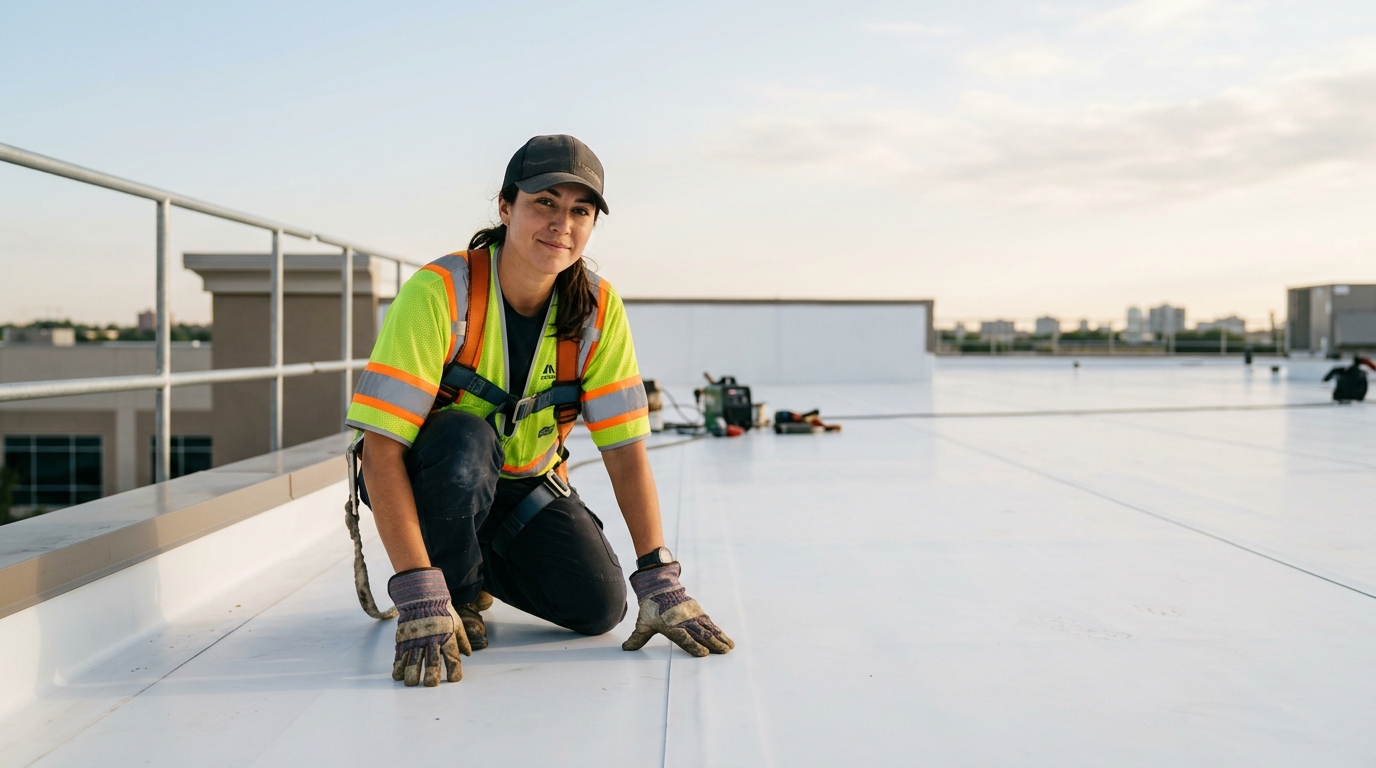
The material’s cost-effectiveness stems from both its competitive material pricing and its installation efficiency. TPO membranes install in wide rolls that minimize seams, and heat-welded joints require less labor than traditional membrane attachment methods. Combined with the compliance certainty it provides, TPO offers the lowest total cost of ownership for properties seeking to meet the 2026 energy standards.
How Does TPO’s Reflective Surface Meet Cool Roof Standards?
TPO’s white surface achieves its reflective properties through specially formulated chemical compounds that maintain high solar reflectance over years of exposure to San Diego’s intense sunlight. The material’s single-ply construction eliminates the need for built-up layers that can trap heat, and its heat-welded seams prevent air and moisture infiltration that compromise performance in other systems.
The California Energy Commission’s Building Energy Efficiency Standards recognize TPO as a compliant cool roof material when properly installed. ENERGY STAR certification, available for qualifying TPO products, provides additional verification that the material meets the environmental performance thresholds required by state regulators and building departments throughout California.
Why Is TPO More Cost-Effective Than Alternative Solutions?
When comparing roofing systems for Title 24 compliance, TPO’s lifecycle cost advantage becomes clear through its competitive installed price, minimal maintenance requirements, and extended service life. Alternative compliant systems like built-up roofing with reflective coating require more frequent maintenance and recoating, while PVC membranes offer similar performance at typically higher material and installation costs. For a closer look at material costs, durability, and cool roof performance, see our TPO vs PVC roofing comparison.
Industry data consistently shows that TPO installations complete 20-30% faster than comparable modified bitumen systems, reducing labor costs and minimizing business disruption for commercial properties. For property owners in El Cajon, Poway, and throughout the San Diego region, this installation efficiency translates directly into project savings.
What Are the Key Benefits of TPO Roofing for Commercial and Residential Properties?
TPO roofing provides measurable energy savings by reducing air conditioning demand during San Diego’s warm months. The reflective surface prevents heat gain through the roof assembly, keeping building interiors cooler without overworking HVAC systems. Property owners typically see utility bill reductions of 15-30% attributable to the roof’s thermal performance, depending on building insulation, air sealing, and climate conditions.
The expected lifespan of a properly installed TPO roof ranges from 20 to 30 years, with many manufacturers offering 25-year warranties on their premium products. This longevity rivals more established roofing systems while providing superior cool roof performance. The membrane’s flexibility accommodates building movement without cracking, and its chemical composition resists ozone exposure, UV radiation, and biological growth.
How Does TPO Improve Energy Efficiency in San Diego’s Climate?
San Diego’s climate, characterized by warm summers and mild winters, makes cool roof performance particularly valuable for property owners. TPO’s high solar reflectance prevents the solar heat gain that drives air conditioning consumption in buildings with conventional roofing. During peak summer afternoons, a white TPO roof can remain 50-60 degrees cooler than a dark built-up roof surface.
The 2025 Building Energy Efficiency Standards specifically account for these regional climate benefits when establishing performance requirements. Properties in climate zone 7, which includes San Diego proper, Carlsbad, and surrounding communities, benefit most from TPO’s thermal performance characteristics.
What Is the Expected Lifespan of a TPO Roof?
Professional installation and quality materials determine TPO roof longevity, with most systems performing reliably for 20 to 25 years before requiring replacement. Regular inspections and minor maintenance, such as clearing debris and checking seam integrity, can extend service life toward the upper end of this range. Manufacturer warranties typically cover material defects for 20 years or more, providing long-term investment protection. For signs of damage beyond routine maintenance, our guide to TPO roofing repair explains what to check and when to call a professional.
In clinical practice, property managers report that TPO roofs require fewer repairs than EPDM or modified bitumen systems over equivalent service periods. The heat-welded seams maintain their integrity without the adhesive degradation that affects other single-ply membranes, contributing to the system’s excellent long-term performance record.
What Does TPO Roof Installation Entail for San Diego Properties?
TPO roof installation typically requires 3 to 7 days for most commercial and residential properties, depending on roof size, accessibility, and whether existing roofing removal is necessary. The process begins with a thorough inspection of the roof deck to verify structural integrity and identify any repairs needed before membrane installation. Contractors then prepare the surface, install appropriate insulation if required, and apply the TPO membrane using mechanical attachment or fully adhered methods.
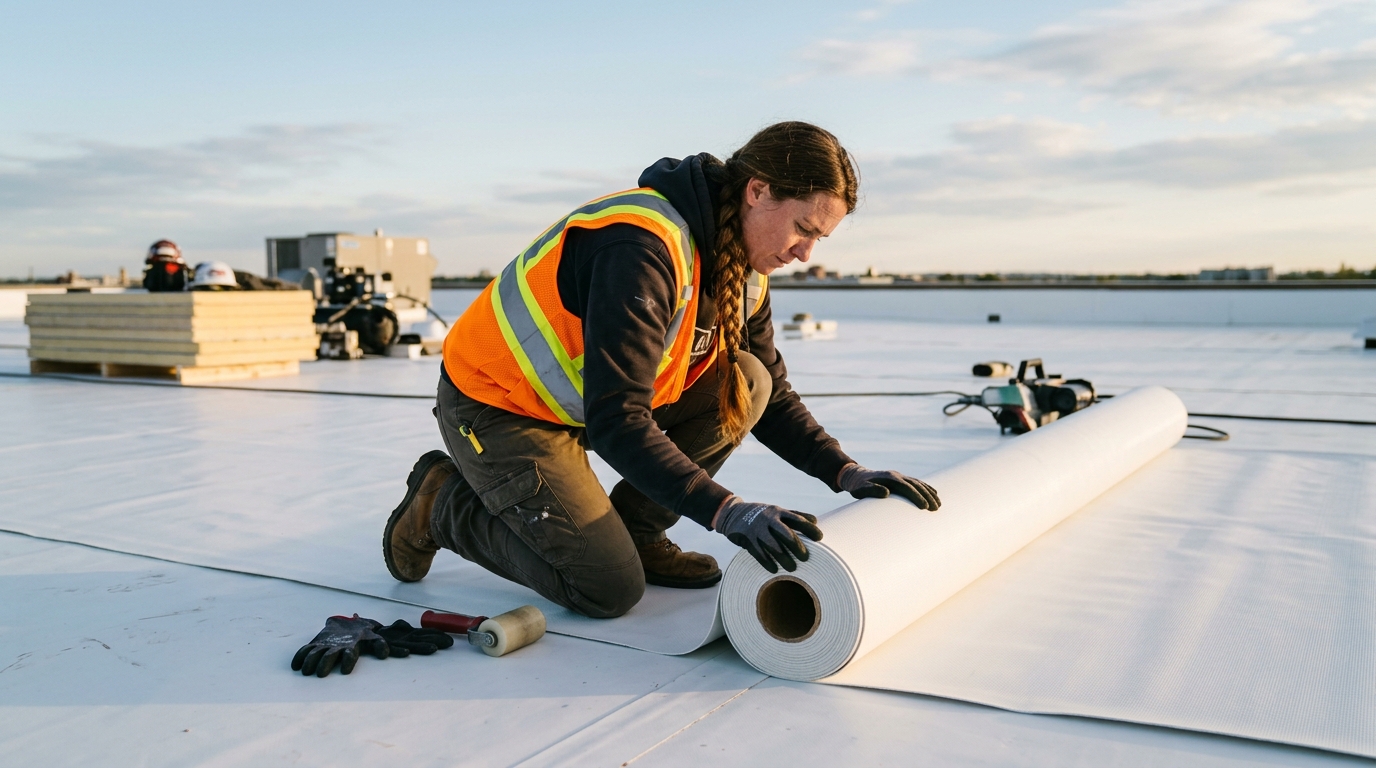
Property owners should expect some disruption to daily operations during installation, though professional contractors minimize this impact through careful scheduling and efficient work practices. Noise from equipment and some odor from adhesives may occur, particularly during seam welding. Weather conditions can affect installation scheduling, as membrane application requires dry conditions and appropriate temperatures.
How Long Does a Typical TPO Installation Take?
Most residential TPO installations in the San Diego area complete within 2 to 4 days, while commercial projects of moderate size typically require 5 to 10 working days. Properties requiring complete tear-off of existing roofing materials will need additional time, potentially extending projects by several days. Complex roof geometries, limited access, or multi-building portfolios may also lengthen installation schedules.
Contractors provide detailed project timelines during the proposal phase, allowing property owners to plan accordingly. Gastelum Roofing offers comprehensive project schedules that account for San Diego’s seasonal weather patterns and help ensure timely completion even during the busy summer construction season.
What Should Property Owners Expect During the Process?
During TPO installation, property owners should designate staging areas for materials and equipment, ensure clear access for contractor vehicles, and relocate any sensitive equipment or inventory from areas directly beneath the work zone. Professional contractors handle all safety requirements, permit documentation, and coordination with building departments.
Communication throughout the project keeps property owners informed of progress, any unexpected discoveries, and final inspection scheduling. Experienced contractors like Gastelum Roofing conduct walkthroughs upon completion, explaining maintenance recommendations and warranty coverage details to help property owners protect their investment.
Why Choose Gastelum Roofing for Your TPO Installation?
Gastelum Roofing brings specialized expertise in TPO installation throughout San Diego County, with extensive experience serving commercial properties in Carlsbad, Chula Vista, and Escondido, as well as residential clients in La Mesa, Santee, and Poway. Our crews understand the specific requirements of Title 24 compliance documentation and ensure every installation meets or exceeds California Energy Commission standards. We have helped hundreds of San Diego property owners navigate the 2026 energy code transition with confidence.
Our commitment to quality extends beyond installation to include comprehensive warranty support, ongoing maintenance services, and responsive repair capabilities. Property owners who choose Gastelum Roofing receive a dedicated project partner from initial consultation through final inspection, ensuring compliance and satisfaction at every stage.
What Local Expertise Does Our Team Bring to San Diego Projects?
Gastelum Roofing’s team possesses decades of combined experience with commercial and residential roofing throughout San Diego’s unique climate zones. We understand local building department requirements, contractor relationships, and the specific challenges that coastal and inland properties present for roofing systems. This regional knowledge ensures smooth project execution without the delays that can affect out-of-area contractors.
Our crews include certified TPO installation specialists trained by leading manufacturers to ensure proper heat-welding techniques, flashing details, and membrane handling. Continuous training keeps our team current with evolving product technologies and installation best practices.
How Do We Ensure Title 24 Compliance From Start to Finish?
From the initial roof assessment, Gastelum Roofing incorporates Title 24 compliance planning into every project scope. We verify that specified TPO products meet or exceed required solar reflectance and thermal emittance values, prepare complete compliance documentation packages, and coordinate with building departments for smooth permit processing and final inspections.
Our quality control process includes pre-installation material verification, in-progress inspections, and final documentation review before project closeout. Property owners receive certificate of compliance packages that satisfy building department requirements and provide documentation for future reference or property transactions.
Frequently Asked Questions
What is TPO roofing and how does it help with Title 24 compliance?
TPO (thermoplastic olefin) is a single-ply roofing membrane with a white reflective surface that achieves solar reflectance values above 0.65 and thermal emittance ratings exceeding 0.85. These properties meet California’s mandatory cool roof requirements under Title 24, Part 6, making TPO an inherently compliant solution for San Diego properties requiring roof replacement or new installation in 2026 and beyond.
How does the 2025/2026 Title 24 update affect roofing requirements in California?
California’s updated building energy standards took effect January 1, 2026, mandating stricter cool roof requirements for all new roofing installations and replacements statewide. Properties in climate zone 7 (including San Diego) must meet minimum solar reflectance of 0.65 or specific combinations of reflectance and emittance values. Building departments now require compliance documentation before issuing final occupancy permits.
How long does a TPO roof installation take in San Diego?
Most residential TPO installations complete within 2 to 4 days, while commercial projects of moderate size typically require 5 to 10 working days. Properties requiring complete tear-off of existing roofing materials may need additional time. Weather conditions can also affect scheduling, as membrane application requires dry conditions and appropriate temperatures.
What energy savings can I expect with TPO roofing?
Property owners typically see utility bill reductions of 15-30% attributable to TPO’s thermal performance. During peak summer afternoons, a white TPO roof can remain 50-60 degrees cooler than a dark built-up roof surface. The reflective surface prevents heat gain through the roof assembly, reducing air conditioning demand during San Diego’s warm months.
What is the expected lifespan of a TPO roof?
A properly installed TPO roof lasts 20 to 30 years, with many manufacturers offering 25-year warranties on premium products. Regular inspections and minor maintenance, such as clearing debris and checking seam integrity, can extend service life toward the upper end of this range. The heat-welded seams maintain their integrity better than adhesive-sealed systems over time.
Why is TPO more cost-effective than alternative Title 24 compliant solutions?
TPO installations complete 20-30% faster than comparable modified bitumen systems, reducing labor costs and minimizing business disruption. As an inherently compliant cool roof material, TPO avoids additional coatings or compensatory insulation upgrades that other solutions may require. Combined with minimal maintenance requirements and competitive material pricing, TPO offers the lowest total cost of ownership for Title 24 compliance.
What happens if I don’t use Title 24 compliant roofing?
Failing to meet Title 24 requirements during a roofing project can result in failed inspections, delayed occupancy permits, and remediation costs that far exceed the price of choosing a compliant system from the start. Property owners risk facing compliance issues, potential fines, or costly retrofits. The California Energy Commission requires documentation of roof assembly compliance before building departments issue final permits.
Conclusion
TPO roofing represents the most practical path to Title 24 compliance for San Diego property owners replacing or installing roofs in 2026 and beyond. Its inherently reflective surface satisfies California’s cool roof requirements, while its cost-effectiveness, durability, and energy efficiency deliver long-term value that benefits property owners and tenants alike. The 2025 Building Energy Efficiency Standards create both obligation and opportunity – choose a compliant roofing solution that positions your property for the future.
Ready to learn how TPO roofing can meet your compliance needs while delivering measurable savings? Schedule a consultation with Gastelum Roofing by calling 760-295-6593. Our team serves property owners throughout San Diego, including Carlsbad, Chula Vista, Escondido, El Cajon, La Mesa, Poway, and Santee. Let us provide a complimentary assessment of your roofing requirements and a detailed proposal for your TPO installation project.