Last updated: November 15, 2026
To seal a rubber roof, identify the membrane and defect, clean and dry the affected area, then use a compatible seam repair, patch, or targeted sealant suited to the damage. At Gastelum Roofing, our roof sealing service begins with an inspection to determine which repair is appropriate.
How do you seal a rubber roof?
The repair depends on the defect. An open seam needs a seam-specific repair, while a puncture in otherwise sound membrane may need a compatible patch. If flashing or materials beneath the membrane are damaged, repair those components before using sealant to reinforce the detail.
Which steps should a lasting EPDM repair include?
- Assess the EPDM membrane, leak source, and extent of damage.
- Prepare the repair area as described below, following the selected system’s instructions.
- Install the specified seam repair, patch, or sealant, then check the finished detail and nearby drainage.
What should you check before applying any sealant?
Check whether the membrane is torn, the seam has opened, flashing has failed, or water is collecting near a drain. The visible gap may not be the only problem. If the membrane or materials beneath it are damaged, repair those components before using sealant to reinforce the detail.
What is the best way to seal a leaky roof?
The best approach is to locate the leak and address its cause, not simply cover the wettest-looking area. A sound EPDM detail may benefit from targeted sealing, but an open seam, puncture, failed flashing, or damaged underlying material calls for a repair suited to that condition. Drainage should also be checked before work begins.
Where do EPDM roof leaks usually start?
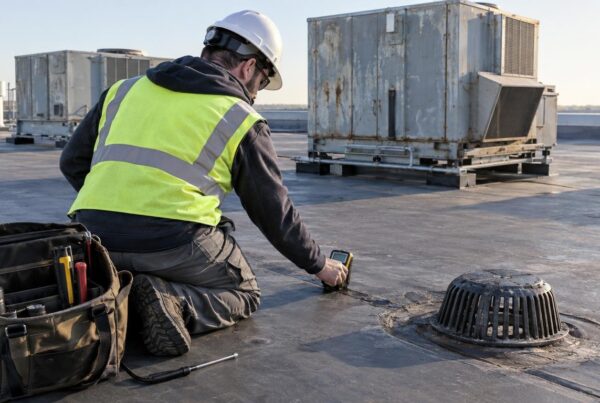
Inspect seams, vent and other penetration connections, flashing, wall transitions, and drainage points. Water can travel beneath roofing materials before appearing indoors, so an interior stain does not necessarily identify the exterior entry point. The location and condition of the defect determine whether EPDM roof seam sealing, a patch, or flashing repair makes sense.
When is sealing the wrong fix for a leak?
Sealant alone is the wrong fix when membrane is torn, flashing is failing, or moisture has affected materials beneath the roof. Water that repeatedly collects near a drainage point also needs a drainage assessment rather than another application over the same spot. For a broader look at repair decisions, see our guide to flat roofing repair in San Diego.
How should you prepare EPDM before sealing?
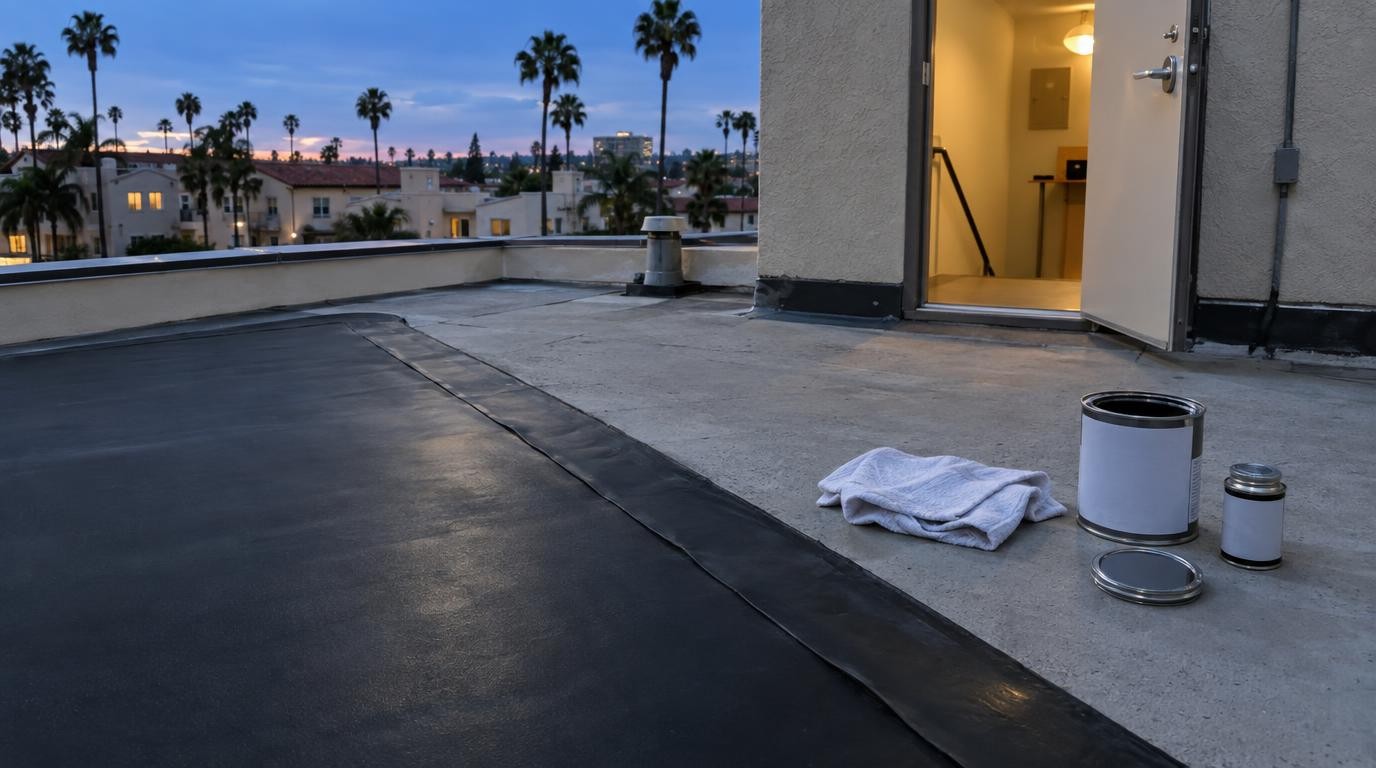
Prepare EPDM by removing debris and failed material, cleaning the repair area with a product compatible with the membrane and repair system, and allowing the surface to dry completely. Apply primer only where the selected system requires it. Preparation matters because a new repair must bond to the existing roof, not to dirt or loose sealant.
Why must the repair area be clean and completely dry?
Dirt, loose material, and moisture interfere with contact between the roof and the repair material. Cleaning deserves particular attention on an older membrane: the National Institute of Standards and Technology has examined cleaning aged EPDM roofing membrane material. Use the cleaner and drying instructions specified for the actual membrane and repair system rather than assuming that any household cleaner will do.
When does an EPDM repair need primer?
Use primer when the manufacturer’s instructions for the chosen tape, patch, or liquid repair system call for it. Primer requirements vary by product and application; the fact that one repair method uses primer does not make it a universal EPDM step. Confirm the required preparation before applying anything to the roof.
Can EPDM roofing be patched?
Yes, a localized hole in otherwise sound EPDM may be patchable after the area has been assessed and prepared. A compatible reinforced liquid repair or membrane patch can cover the defect, but the method must suit the membrane and damage. An opened seam needs a seam-specific repair rather than an improvised patch over the gap.
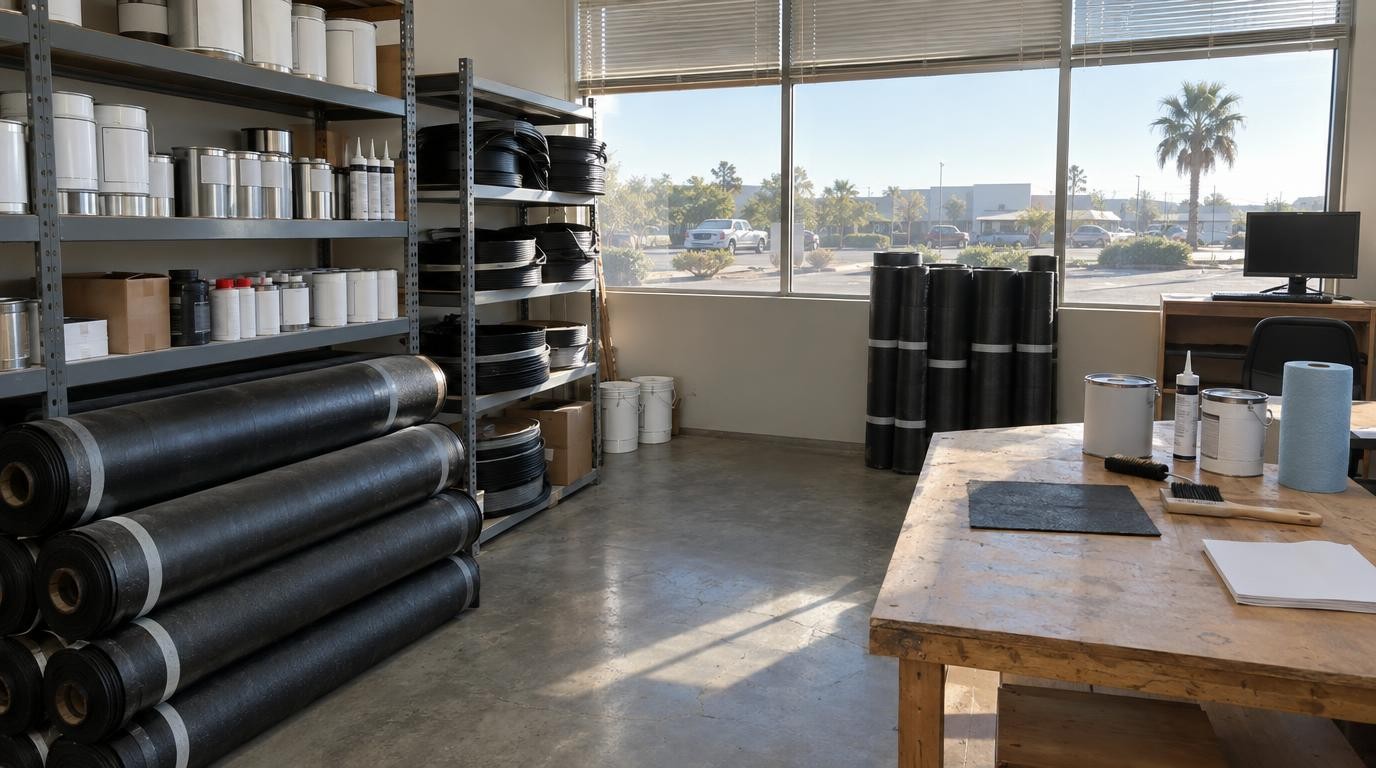
How does a reinforced liquid patch build up its layers?
In a compatible fleece-reinforced liquid system, the installer brushes a base coat onto the prepared area, embeds and smooths polyester fleece into the wet material, then applies a top coat that covers the fleece. That sequence describes one type of rubber roof patch, not a requirement for every EPDM product. The selected system’s instructions govern coverage, preparation, and application.
When should you use a membrane patch or seam repair instead?
A localized puncture may be better suited to an EPDM membrane patch, while an open seam calls for a seam repair designed for the existing membrane. The choice depends on the defect, roof condition, and materials already present. Where damage is extensive or the underlying roof assembly is compromised, EPDM roof replacement may be more appropriate than another localized repair.
What is the best sealant for rubber roofs?
There is no single best sealant for every rubber roof. Choose an EPDM-compatible sealant, tape, patch, or reinforced liquid system after identifying the membrane, repair location, and existing materials. A compatible product still requires the preparation specified by its manufacturer; a product intended for another roofing membrane should not be assumed to work on EPDM.
How can you check whether a product is compatible with EPDM?
Read the product’s instructions for the membranes it accepts and for any required cleaner, primer, or surface preparation. If the roof’s membrane type or existing coating is uncertain, identify those materials before choosing a product. The distinction matters: TPO and EPDM roofing are different systems, so advice for one should not automatically be applied to the other.
Do seams, penetrations, and punctures need the same product?
Not necessarily. A seam may call for a seam-specific system, a penetration may need flashing work, and a puncture may need a membrane or reinforced liquid patch. Ask how the proposed material addresses the particular defect rather than relying on a general “rubber roof sealant” label.
Is rubber good for roofing?
EPDM is a rubber membrane used on low-slope roofs, and it can be suitable when the roof and installation details support that system. Its performance depends in part on sound seams, flashing, penetrations, and drainage. Maintaining those details is more useful than assuming the membrane surface alone will prevent every leak.
Where does EPDM make sense on a low-slope roof?
EPDM is an option for residential and commercial low-slope roofing when the roof design and installation method suit the membrane. The right choice depends on the whole roof assembly and its details, not just the material name. EPDM sealing instructions do not transfer automatically to shingle, tile, metal, or other low-slope roofs.
What maintenance do EPDM seams and roof details need?
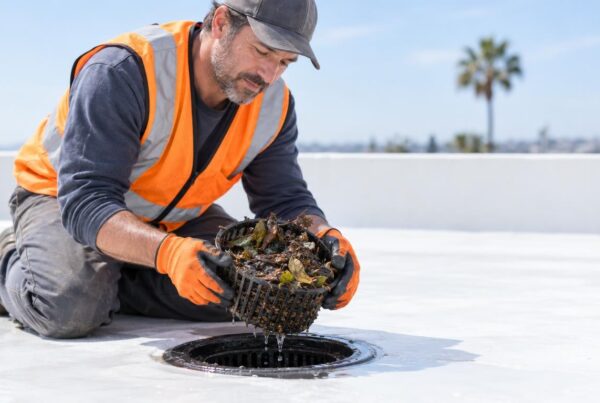
Inspect seams and flashing for separation, look for wear around penetrations, and check that drains and other water paths remain clear. Address a loose or damaged detail according to its condition rather than repeatedly covering it with sealant. In our roofing work, the first question is whether the existing detail is sound enough for targeted sealing.
When does a rubber roof need coating instead of targeted sealing?
A visible leak alone does not mean an EPDM roof needs coating. We consider the roof’s overall condition and whether it needs a localized repair or a broader surface treatment before recommending an approach.
How is roof sealing different from roof coating?
Roof sealing targets joints, flashing, and penetrations; roof coating covers a broader surface, usually on a low-slope roof, to add protection and potentially improve reflectivity. The right approach also depends on the roof’s condition:
| Approach | When it may fit | Important limit |
|---|---|---|
| Targeted sealing | The membrane is generally sound, but details such as penetrations or transitions need reinforcement. | It does not repair torn membrane or failed flashing. |
| Localized repair | A puncture, open seam, or flashing connection needs repair. | Damage beneath the membrane must also be assessed. |
| Roof coating | A suitable low-slope roof may benefit from broader surface protection or reflectivity. | It does not resolve punctures, failed flashing, or moisture beneath the membrane. |
What must be checked before coating an EPDM roof?
Confirm the membrane and any existing surface treatments, examine seams and flashing, assess the roof for damage or trapped moisture, and review drainage. Then verify that the proposed coating system is suitable for the roof and that its preparation and application meet manufacturer instructions and applicable requirements.
When should you call a roofer instead of sealing it yourself?
Request a professional assessment for a persistent leak, extensive damage, failed flashing, an uncertain membrane type, or unsafe roof access. A roofer can trace the likely entry point, assess the roof assembly, and decide whether sealing, patching, or a more substantial repair is appropriate. Avoid accessing a wet or unsafe roof to investigate a leak.
What should a roof sealing assessment include?
At Gastelum Roofing, we begin with a roof inspection and recommend work based on the roof’s condition. When sealing is appropriate, our team removes failed sealant and prepares the target areas as needed, applies suitable waterproofing at vulnerable details, and finishes by checking sealed areas and drainage. Roof access and product handling also deserve care: a CDC roofing health hazard evaluation identified falls and slips among the potential safety hazards of roofing work.
How can you evaluate a proposed EPDM repair?
Ask whether the proposal identifies the likely leak source, names materials compatible with the existing membrane, and explains cleaning, drying, and any required primer. It should also say whether a seam repair, patch, or flashing repair is needed before sealant is applied. For work involving solvent-containing materials, the CDC’s account of roofing-worker solvent exposure is a reminder to follow product safety instructions as well as installation instructions.
Frequently Asked Questions
What should I do if my rubber roof starts leaking during a storm?
Protect the interior first: move belongings away from the leak, catch dripping water, and avoid electrical fixtures near wet areas. Do not climb onto a wet roof. Note when and where water appears, then arrange an inspection when conditions are safe; the indoor drip may not be directly below the roof opening.
How can I tell whether my rubber roof is EPDM or TPO?
Check installation records, product markings, or ask a roofer to identify the membrane before buying repair materials. Color alone is not a reliable test, especially on an older or coated roof. EPDM and TPO require different repair methods, so at Gastelum Roofing, we confirm the roof type before recommending a sealing system.
Can an EPDM patch go over an existing roof coating?
Only if the patch system is approved for the existing coating and the surface can be prepared as its manufacturer requires. A patch that bonds to a failing coating may peel away with it. Identify both materials first; damaged or loose coating may need removal before the underlying EPDM can be repaired.
How long does an EPDM roof patch need before it can get wet?
The required wait depends on the specific patch, adhesive, or liquid repair system; there is no universal rain-ready time. Check the manufacturer’s instructions for application conditions and rain exposure before starting. If rain is expected before the system can be installed as directed, postpone the repair and protect the interior instead.
How can I tell if insulation under an EPDM roof is wet?
A persistent leak or a soft area underfoot can raise concern, but surface appearance alone cannot confirm whether roof insulation is wet. Have a roofer assess the roof assembly before covering the area with a patch or coating. At Gastelum Roofing, we recommend repairing damaged underlying materials before sealing the roof detail.
Are solvent-based EPDM cleaners and adhesives safe to use?
They require careful handling because some single-ply roofing products contain organic solvents. Follow the selected product’s safety instructions, including its ventilation and protective-equipment requirements; keep containers closed when not in use, and leave unsafe roof work to professionals.
What should you do next if your rubber roof leaks?
Note where and when the leak appears, but do not assume an interior stain marks the roof entry point. Arrange an inspection to identify the cause and determine whether targeted sealing, patching, coating, or a larger repair fits the roof’s condition. In San Diego, sun exposure and occasional heavy rain make aging sealant and drainage details worth checking.
How can inspections help catch failing seals?
An inspection can reveal separation at seams, deteriorating sealant around penetrations, damaged flashing, or obstructed drainage before you choose a repair. It also provides a chance to distinguish a detail that needs reinforcement from material that needs replacement. High-quality roofing-grade sealants can last for years, but their lifespan depends on the product, sun exposure, and roof conditions. Periodic inspections help confirm that sealed details remain intact.
When should you schedule a roof sealing assessment?
Schedule an assessment when you notice a leak, an opening at a seam or flashing connection, or aging sealant around a roof penetration. If you cannot identify the membrane or safely access the area, leave the roof investigation to a professional. For a condition-based recommendation in San Diego, contact Gastelum Roofing at 760-295-6593 to arrange a roof sealing assessment.