Last updated: October 31, 2026
Standing seam metal roof installation starts with assessing the existing roof and preparing the attachment surface. The crew then lays out and attaches panels, joins their raised seams, finishes the flashing, and inspects the completed roof. The details depend on the roof’s condition and the selected system’s instructions. At Gastelum Roofing, our Reroofing / Re-covering service begins with an evaluation of whether the existing roof can support a new system.
How Is a Standing Seam Metal Roof Installed?
The crew first determines whether the roof needs a tear-off or qualifies for re-covering, makes any needed deck repairs, and prepares the surface. Next come required underlayment and starter details, panel layout and attachment, seam closure, remaining flashing, and final inspection. The selected system’s instructions determine the exact order and details.
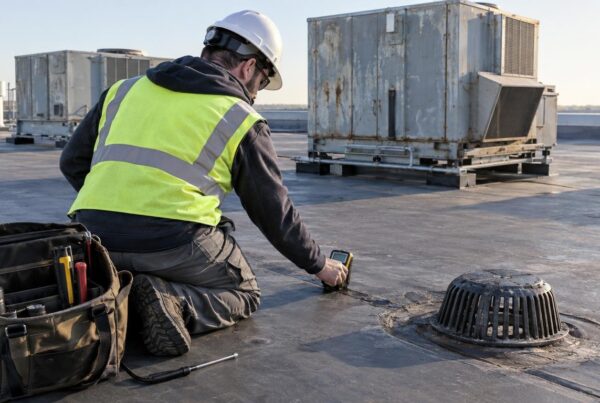
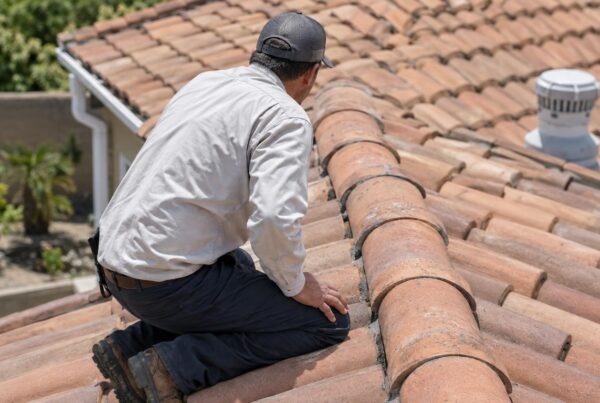
- Inspect the existing roofing, roof geometry, flashing, and signs of moisture or deck damage.
- Determine whether a full tear-off or a qualifying re-cover is appropriate.
- Make any needed deck repairs, prepare the attachment surface, and install any required underlayment.
- Lay out the panels and install starter and flashing details that must go beneath them.
- Attach the panels and join or mechanically seam them as the system requires.
- Complete the remaining edge, ridge, valley, and penetration details.
- Inspect the completed roof and clean up the work area.
What happens before the first standing seam panel goes on?
The crew checks the existing roofing, deck condition, moisture signs, and roof shape before selecting an installation approach. A full roof replacement exposes the deck after tear-off; a re-cover leaves qualifying existing roofing in place. Once the approach is settled, the crew prepares the attachment surface and plans the panel layout and transitions, installing any underlayment required by the chosen assembly.
In what order are panels, seams, and roof edges finished?
Installation commonly proceeds from layout and starter details to attachments and panels, followed by seam closure and the remaining edge, ridge, valley, and penetration details. Some flashing components must go in before the adjacent panels, while others finish those transitions afterward. The installer should follow the approved details for the chosen assembly rather than treating that general sequence as a universal instruction.
Can Standing Seam Panels Go Over an Existing Roof?
Standing seam panels may be installed as part of a re-cover only when the existing roof is sound, applicable building requirements permit the work, and the proposed standing seam assembly is approved for the conditions. Re-covering is not the same as roof tear off and replacement: it leaves existing materials in place instead of exposing the deck for repair.
When is a full tear-off the better choice?
A full tear-off is the better choice when trapped moisture, soft decking, multiple existing roof layers, or widespread underlayment failure make covering the roof unsuitable. Removing old materials lets the crew inspect and repair the underlying surface before new roof installation. Damaged or poorly detailed flashing may also affect the recommendation, particularly if the leak source cannot be properly addressed in a re-cover.
What does an inspection need to check before re-covering?
At Gastelum Roofing, we evaluate existing layers, signs of trapped moisture, decking condition, and flashing before recommending re-covering. We also consider whether the proposed system can be attached and waterproofed as required. A roof that appears sound from the ground may still need closer examination at penetrations and other transitions.
The distinction is practical:
| Approach | What happens to the existing roof | When it may fit |
|---|---|---|
| Re-covering | Qualifying existing roofing remains beneath a new system. | The structure and existing layers are suitable, and the proposed assembly is permitted. |
| Full tear-off replacement | Old materials are removed so the deck can be inspected and repaired. | Moisture damage, unsound decking, multiple existing roof layers, or widespread underlayment failure rule out a re-cover. |
How Should the Roof Be Prepared for Standing Seam Panels?
Standing seam panels need a sound attachment surface, any underlayment required by the selected assembly, and measurements that account for the entire roof. After any necessary deck repairs, the crew checks slopes, eaves, rakes, ridges, valleys, and penetrations. Careful preparation helps the panels attach correctly and gives flashing a workable base at roof transitions.
Why do deck condition and underlayment matter?
Concealed attachments depend on the substrate specified for the roof system. After tear-off, unsuitable decking should be repaired before the underlayment and panels go on. Underlayment adds a layer of protection beneath the metal, but its type and placement must match the assembly; it does not compensate for an unsound deck or unfinished flashing.
Preparation also includes safe work planning. A Safety Science study of solar-installation hazards identifies slipping hazards on wet metal roofs and glare in sunlight. Crews need to account for surface and weather conditions while working overhead.
How are panel lengths and roof geometry checked?
The crew measures each roof plane and identifies changes in slope, valleys, edges, and anything that interrupts a panel run. Those measurements guide panel lengths, seam locations, and cuts around penetrations. For property owners considering future rooftop solar, a CDC-hosted report on solar-ready houses advises checking whether the standing seam lip size matches the intended solar clamp.
How Are Standing Seam Panels Laid Out, Fastened, and Joined?
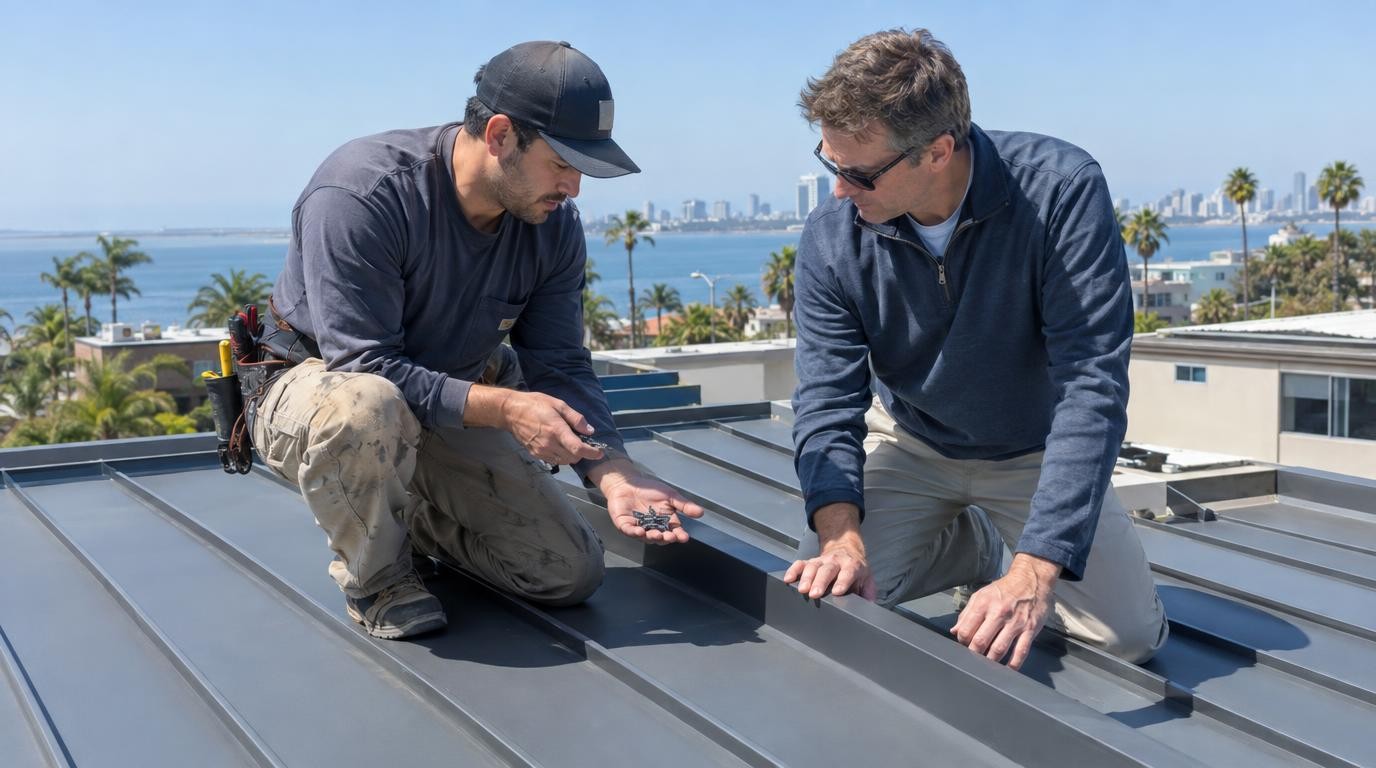
Standing seam roof panels are set from a straight reference line so the first panel establishes alignment for the remaining runs. The selected system determines whether panels use concealed clips or an integral fastening flange, how they accommodate thermal movement, and whether their seams snap together or require mechanical seaming. Cross seams are used only where the roof design and approved details call for them.
How does the first panel determine alignment?
Before fastening progresses across a roof plane, the crew checks the starting line against the roof edges and verifies the first panel’s position. A small alignment error at the start can become more noticeable across successive panels, especially near a rake or valley. Checking panel layout before attachment also helps identify narrow cuts or awkward transitions.
How do concealed clips and snap-lock or mechanically seamed joints work?
Concealed clips hold the panels without placing exposed fasteners through the main panel surface. Clip type, spacing, attachment, and provisions for thermal movement must follow the selected system’s specifications. With snap-lock panels, mating edges engage as panels are installed; mechanically seamed panels require equipment to fold or close the joint as specified. Neither joint type makes flashing details optional.
When are cross seams needed?
A cross seam connects panel runs across the direction of drainage when a roof design requires more than one run. Its placement and construction need an approved detail for the chosen system and roof conditions. Panel lengths should therefore be settled during layout, rather than adding a cross seam as an improvised field fix.
How Are Valleys, Edges, and Penetrations Kept Watertight?
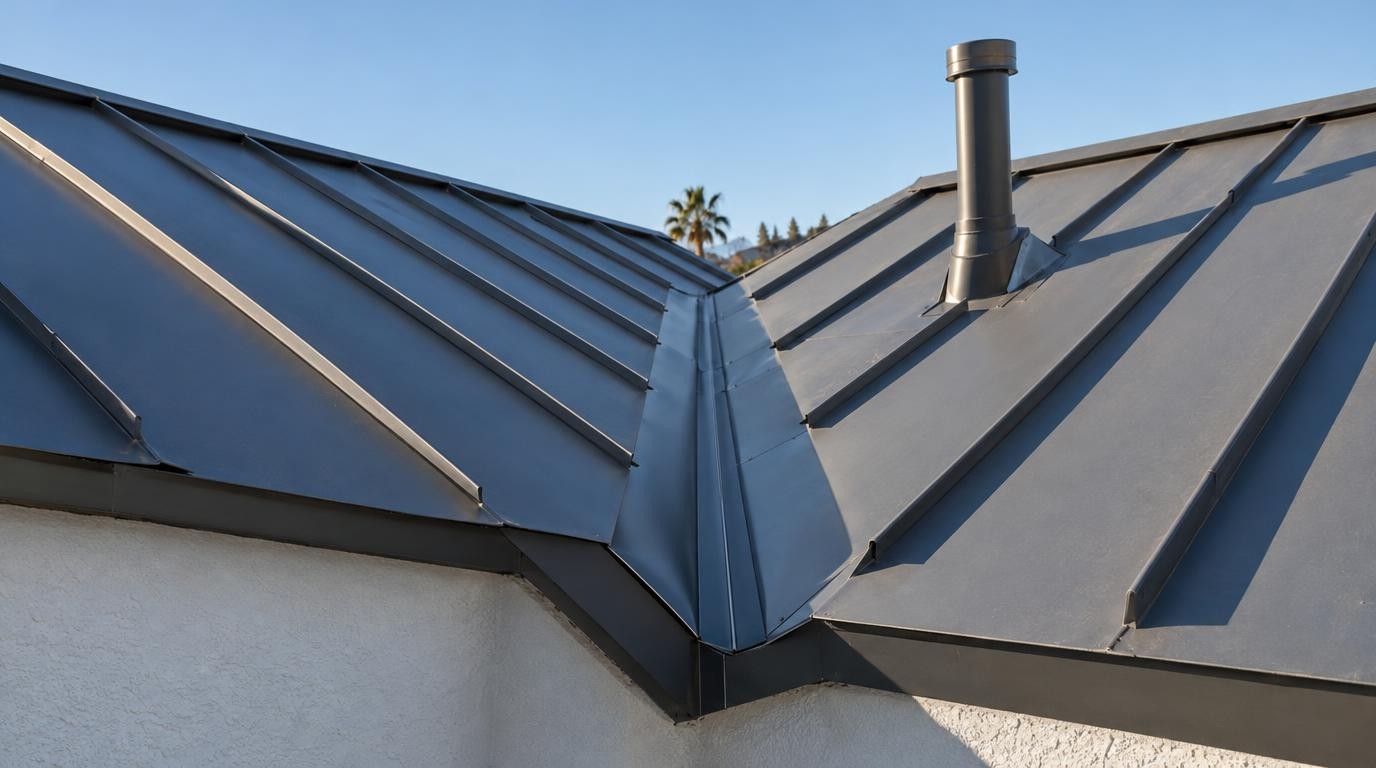
Valleys, edges, and penetrations rely on fitted panels and coordinated standing seam roof flashing to direct water away from openings and off the roof. Crews cut panels to the approved layout, preserve the specified valley clearances, and complete eave, rake, ridge, and penetration details. Sealant supplements the specified assembly; sealant alone is not a substitute for flashing.
How are standing seam panels installed at a valley?
A valley concentrates drainage from adjoining roof planes, so the crew sets the specified valley flashing and cuts nearby panels to the approved lines and clearances. Panel ends and attachments must work with that flashing detail without obstructing drainage. The required arrangement varies by system and roof geometry; it should be reviewed before panels are cut.
What details protect eaves, rakes, ridges, and roof penetrations?
Eave and rake details finish exposed panel edges and connect them to the roof’s drainage and weatherproofing design. Ridge details close the upper ends of panel runs, while properly fitted flashing protects vents and other penetrations. Property owners can ask the installer to identify these transitions on the plan, since their details are less apparent than the panels across the open roof.
How Can You Check the Finished Installation?
A finished standing seam roof should be reviewed for consistent panel alignment, completed seams, secure attachment, finished edges and penetrations, clear drainage paths, and a clean site. The final review should also confirm that roof-specific details follow the selected manufacturer’s instructions and applicable California building requirements. Visual checks are useful, but appearance alone cannot verify every concealed detail.
What should be included in the final inspection?
- Panel runs that appear straight and consistent with the planned layout.
- Seams completed in the manner required by the selected system.
- Attachment and edge details checked against the installation plan.
- Valleys, ridges, and penetrations finished with the specified flashing.
- Drainage paths clear of installation debris and the work area cleaned.
At Gastelum Roofing, our re-covering process includes a final inspection and clean-up. Owners considering a broader replacement can also review how a roof replacement timeline is planned so the inspection is understood as part of the work, not an afterthought.
Which installation details should a property owner ask about?
Ask which manufacturer’s installation instructions governed the assembly, how panel attachment and movement were addressed, and which details were used at the roof’s valleys and penetrations. If the project is a re-cover, ask how eligibility was confirmed. Also ask how the installation addresses applicable California building requirements. These questions are more informative than a promise that a roof can never leak.
What Should San Diego Property Owners Decide Before Replacing Their Roof?
San Diego property owners should decide between a qualifying re-cover and full tear-off after evaluating moisture, decking, existing layers, flashing, and the proposed roof assembly. Sun exposure and occasional heavy rain make sound panel and transition details important. An inspection should establish what the roof needs before the owner chooses a replacement approach or a standing seam system.
How do roof condition and local exposure affect the choice?
Sun exposure can wear roofing materials and sealants, while heavy rain tests valleys, edges, and penetrations. Existing moisture or compromised decking favors tear-off so those conditions can be addressed. Where the structure and existing roof qualify, re-covering may remain an option, but eligibility for a particular standing seam assembly still needs confirmation. Owners comparing metal roofing choices may find our San Diego metal roofing overview useful alongside a property-specific inspection.
What should you ask during a roof inspection?
Ask what the inspection found beneath or around the existing roofing, whether the deck needs repair, and whether existing layers permit a re-cover. Have the team explain how flashing at each transition would be handled under either approach. Our roof inspections assess the roof’s condition and help us explain appropriate repair or replacement options, including when re-covering is unsuitable.
Frequently Asked Questions
How long does it take to install a standing seam metal roof?
There is no fixed installation time. Roof size, roof complexity, weather, deck repairs, and whether the old roof must be removed all affect the schedule. A qualifying re-cover can often be completed sooner than a full tear-off. At Gastelum Roofing, we include the proposed timeline in our itemized estimate.
Can standing seam metal roofing be installed in the rain?
Metal-roof work is best postponed in rain when possible because wet panels create a slipping hazard. Crews should protect any exposed roof areas while work is paused.
Do I need a permit to install a standing seam metal roof in San Diego?
A permit may be required, depending on the property’s jurisdiction and the scope of the roofing work. Before installation, ask your contractor to confirm the applicable requirements with the city or county building department and explain who will obtain any required permit. Permit approval does not replace following the selected roof system’s installation instructions.
Can solar panels be attached to a standing seam roof without drilling through it?
Yes. Compatible seam clamps can hold solar-panel mounts without drilling through the metal panels at those mounts; other penetrations, if needed, require proper flashing. The clamp must match the standing seam lip size. Confirm compatibility with the roofing and solar installers before selecting either system.
How often should a standing seam metal roof be inspected after installation?
Have the roof checked periodically and after significant storms, following any maintenance schedule specified by the roof manufacturer. An inspection should look for debris blocking drainage, damaged flashing, and changes around penetrations or seams. Avoid walking on wet metal panels; a qualified roofer can assess areas that are difficult to see safely.
What should a standing seam roof installation estimate include?
An estimate should identify the proposed roof system, whether the work is a re-cover or tear-off, planned flashing and waterproofing details, and the expected timeline. At Gastelum Roofing, we provide an itemized estimate covering materials, labor, and the project timeline. Ask how unexpected deck repairs would be handled if tear-off reveals damage.
What Is the Next Step for a Standing Seam Roof Project?
The next step is a roof inspection that connects the installation plan to the property’s actual condition. Sound decking, an eligible roof assembly, accurate panel layout, and complete flashing all matter more than the appearance of the finished seams alone.
If you are considering standing seam metal roof installation in San Diego, contact Gastelum Roofing at 760-295-6593 for a consultation. We can inspect the existing roof, explain whether re-covering or full replacement makes sense, and confirm whether a suitable standing seam system is available for your property.