Last updated: October 16, 2026
Asphalt shingles vary in profile, construction, and available performance features. Choosing among them means matching the specific product to your roof. At Gastelum Roofing, we inspect San Diego County roofs and help homeowners compare options for shingle roof installation and repair.
What are the three types of shingles?
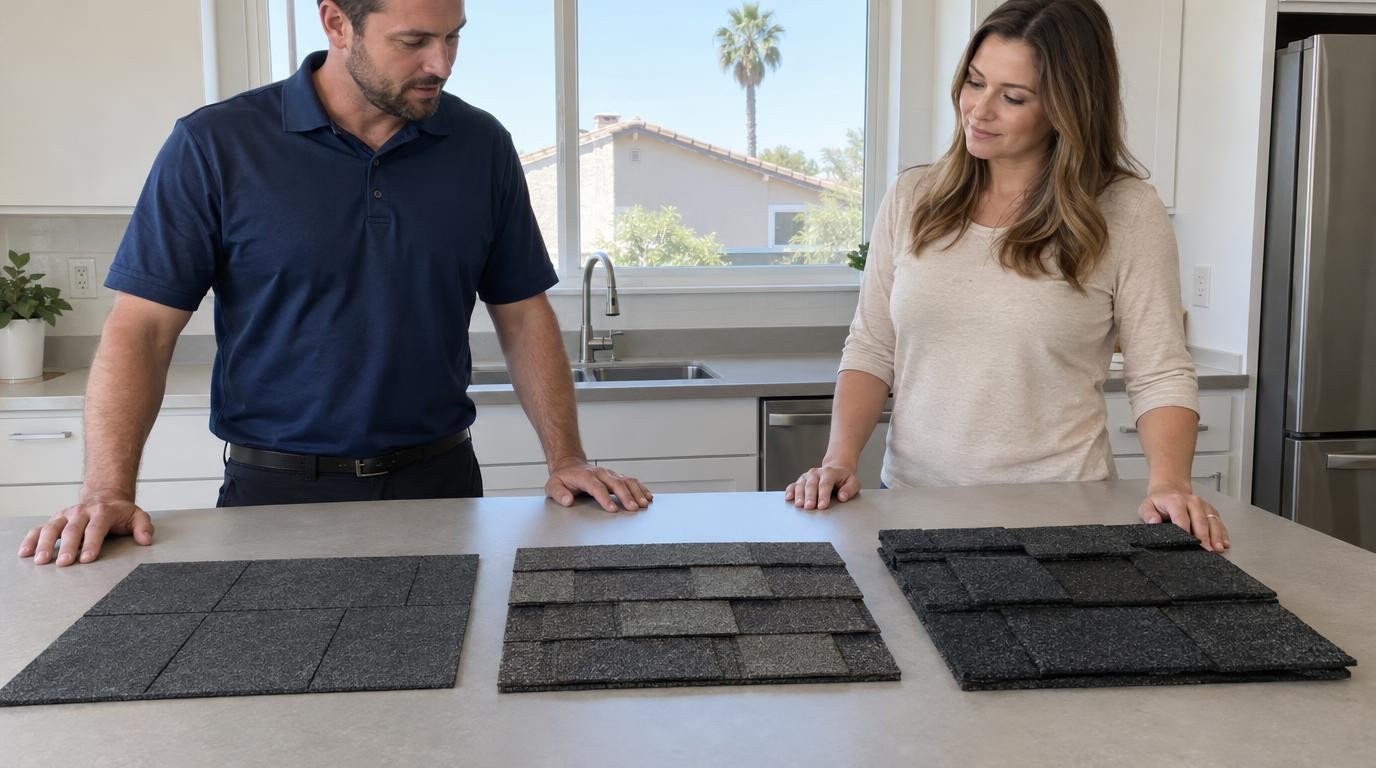
Three common types of asphalt shingles are 3-tab, architectural or dimensional, and luxury or premium. Luxury products are often higher-end architectural shingles rather than a separate material. A composition shingle roof commonly means a roof covered with asphalt-based shingles. Compare these options by profile and construction:
| Option | Profile and construction | What to check |
|---|---|---|
| 3-tab | Flat, uniform pattern | The product’s permitted slope and written performance specifications |
| Architectural | Layered construction and a textured appearance | Product-specific wind ratings and installation requirements |
| Luxury or premium | More pronounced profile; may resemble another roofing material | The actual product’s impact, wind, and fire ratings |
What are 3-tab asphalt shingles?
3-tab shingles have a traditional, orderly appearance. Their relatively flat profile suits homeowners who prefer clean roof lines. A suitable 3-tab product can provide dependable protection when installed and maintained properly, but its specifications should be compared with those of architectural options rather than judged by appearance alone.
What are architectural or dimensional shingles?
Architectural shingles, also called dimensional or laminated shingles, use layers to create visible depth. Our shingle roofing service offers architectural options for homeowners seeking a textured appearance and product-specific improvements in wind resistance and durability over traditional 3-tab shingles. Always compare the written specifications of the products under consideration.
What are luxury asphalt shingles?
Luxury or premium asphalt shingles have a more substantial profile and may be designed to resemble other roofing materials. Appearance alone does not establish an impact rating, wind rating, or expected service life. We can help compare premium options with architectural and 3-tab shingles for the home’s roof design.
What other types of roof shingles are available?
Asphalt is not the only material sold as individual roof shingles: wood, metal, slate, and synthetic shingles are also available. Wood shingles are generally sawn for a more uniform profile; wood shakes are a distinct, usually more textured wood roofing product. Whether either wood option suits a home depends on the product and applicable fire and building requirements. Shingle materials can differ substantially in weight, appearance, and installation requirements. Clay or concrete tile and standing-seam metal are separate roof systems, not alternative names for asphalt shingles.
How do metal, slate, and synthetic shingles differ from asphalt?
Metal shingles are individual overlapping pieces rather than continuous metal panels. Slate shingles are natural stone and can require particular attention to structural support and installation. Synthetic shingles are manufactured to imitate materials such as slate; their weight and performance depend on the product. The CDC Healthy Housing Reference Manual lists wood and asphalt shingles, wood shakes, metal roofing, tile, and slate among roofing materials.
Are tile and standing-seam metal roofs shingles?
No. Tile roofs use individual clay or concrete tiles, while standing-seam metal roofs use panels joined along raised seams. Each system calls for its own assessment of the roof structure and installation details. If you are comparing systems rather than shingle products, our guides to tile roofing for San Diego homes and metal roofing and fire protection provide more context.
What type of shingles are best for a roof?
No shingle type is best for every roof. Architectural asphalt shingles are a strong candidate when a homeowner wants a layered appearance and product-specific performance beyond a traditional 3-tab option. A 3-tab shingle may suit a simpler design. Roof slope, sun exposure, ventilation, and the selected product’s requirements should guide the decision.
When do architectural shingles make sense for a San Diego home?
Compared with traditional 3-tab shingles, architectural shingles offer a layered, textured appearance and can provide improved wind resistance and a longer lifespan. Compare the products’ written specifications before deciding. For a home in Santee, a reflective shingle of any suitable type may help reduce heat absorption under strong inland sun when paired with proper attic ventilation. Explore how shingle roof colors affect your home’s appearance and how reflective options may help manage heat under strong sun.
How should sun exposure, ventilation, and roof design affect the choice?
Check the manufacturer’s permitted roof slopes and installation instructions before selecting a shingle. Attic ventilation and roof details also need assessment because a product cannot compensate for an unsuitable assembly. Potential indoor comfort benefits vary by product and home; check the product specifications and applicable California requirements rather than assuming a particular result. The Building America Solution Center’s asphalt shingle roof guide is a useful institutional reference for considering the roof as a system.
Should I get class 3 or class 4 shingles?
Under the UL 2218 impact-resistance designation, Class 4 represents higher tested impact resistance than Class 3. Consider Class 4 when greater impact resistance is a priority; a suitable Class 3 product may suffice when it is not. For a Santee roof, compare the exact products and assess their wind and fire specifications separately from their impact ratings. Neither class makes a shingle or completed roof damage-proof.
What does a shingle impact rating actually measure?
UL 2218 uses dropped steel balls to simulate hail impacts on roofing samples; Class 4 is tested with a larger ball than Class 3. The rating describes how the tested product performed, not how every installed roof will fare in a storm. Ask for documentation identifying the exact product and rating, and review the manufacturer’s warranty separately to learn what it covers.
Is impact resistance the same as wind or fire resistance?
No. Wind ratings and fire classifications address different performance characteristics and must be checked separately. The complete roof assembly, installation instructions, and applicable local requirements also matter. Our San Diego wind-resistant shingle guide explains why the installed roof deserves attention alongside the shingle label.
What roof shingles should I stay away from?
Avoid shingles that do not meet the roof’s slope or applicable requirements, products with performance claims you cannot verify, and installations that omit necessary system details. No entire asphalt shingle category is automatically a poor choice. Existing shingles that curl, lose granules, or go missing are signs to inspect the current roof, not proof that every new shingle of that type is unsuitable.
Are 3-tab shingles always a poor choice?
No. 3-tab shingles remain an option when their appearance and written performance specifications suit the roof. Compare the particular 3-tab product with architectural alternatives, including installation requirements, rather than assuming that a category name settles the decision.
Which warning signs matter more than a shingle label?
Be cautious if a proposal does not explain slope suitability, underlayment, fastening, ventilation, or required roof details. On an existing roof, missing or lifted shingles, curling, granule loss, and leaks warrant inspection. Those conditions help determine whether a localized repair is reasonable or whether damage is more extensive.
How long do different shingle roofs last?
Our guidance for most asphalt shingle roofs is 20–30 years; actual service life depends on the product, installation, ventilation, weather exposure, and maintenance. Architectural shingles may last longer than traditional 3-tab shingles. Premium asphalt products and non-asphalt shingles need product-specific lifespan assessments rather than an assumed range. A warranty has its own terms and should not be treated as a promise that a roof will remain serviceable for its full duration.
What affects a shingle roof lifespan in San Diego County?
Sun exposure, seasonal rain, and occasional strong winds can contribute to wear. Coastal humidity and inland heat create different exposures across San Diego County. Because exposure and roof details vary from home to home, an inspection offers a better picture of remaining condition than age alone.
When can maintenance or repair extend its useful life?
Periodic inspections can identify damaged shingles, flashing concerns, and signs of aging. Repairing a localized leak or damaged area can help prevent further moisture intrusion when the surrounding roof remains sound. Granule loss calls for an assessment of its extent and cause; it does not, by itself, determine whether repair or replacement is appropriate.
How are shingles installed, and when is replacement necessary?
We begin by assessing the roof’s slope, existing covering, and ventilation so new shingles are installed as part of a suitable system. Isolated damage may call for repair, while widespread damage or deterioration may make replacement more practical.
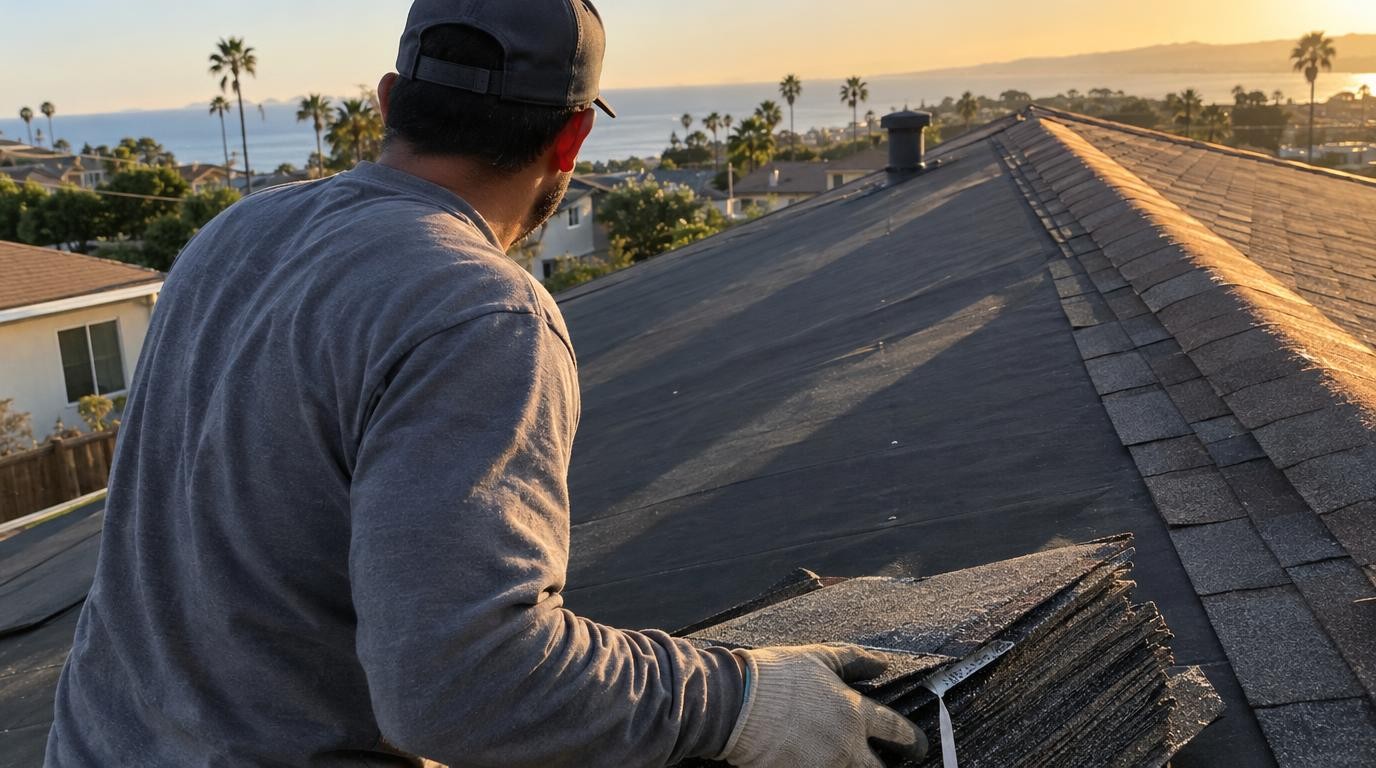
What happens during roof shingles installation?
Our installation process follows a clear sequence:
- Inspection and consultation: We assess the roof and discuss the homeowner’s goals so the proposed work fits the property.
- Written scope: We explain the materials, work, and project timeline before installation.
- Preparation: When replacing a roof, we remove old materials and inspect the exposed decking. Ventilation planning and underlayment prepare the roof for the new covering.
- Shingle installation: Our in-house team aligns and fastens shingles using the applicable product instructions.
- Final inspection and cleanup: We review the completed work and leave the property clean.
When is shingle roof repair more appropriate than replacement?
Repair may be appropriate when damage is limited and the surrounding shingles and roof assembly remain in serviceable condition. Widespread curling, substantial granule loss, recurring leaks, storm damage, or general aging can make replacement the more practical scope. Our shingle roof replacement guide explains what happens when replacement is needed.
Frequently Asked Questions
What is the difference between fiberglass and organic asphalt shingles?
The difference is the reinforcing mat beneath the asphalt: fiberglass shingles use a fiberglass mat, while organic shingles use a mat made from organic material. A CDC-hosted study of roofers describes both constructions. Ask which mat a proposed product uses, then compare its written specifications rather than assuming the mat alone determines performance.
Can asphalt shingles be installed on a flat roof?
Generally, no. Asphalt shingles need a sufficiently sloped roof to shed water as intended. Have a roofer measure the slope and check the specific manufacturer’s minimum slope and any required low-slope underlayment or installation details. If the roof is below the product’s permitted slope, choose a covering designed for that roof instead.
What does underlayment do beneath roof shingles?
Underlayment provides a layer of protection between the shingles and roof decking, helping manage water that gets beneath the visible roof covering. It does not replace properly installed shingles or flashing. At Gastelum Roofing, we include underlayment in our shingle installation process and select installation details for the roof and applicable product instructions.
Why does a roofer inspect the decking during shingle replacement?
The decking is the structural surface beneath the roof covering that supports the new shingle system. Inspecting it after old materials are removed can reveal damage that needs attention before installation. At Gastelum Roofing, we remove old roofing during replacement and inspect the exposed decking so the scope addresses more than the visible shingles.
Can older roof shingles contain asbestos?
Yes, some older roof shingles may contain asbestos, but not all do. The Agency for Toxic Substances and Disease Registry notes that some roof shingles may contain asbestos and that disturbing asbestos-containing products can release fibers. If you suspect asbestos, avoid breaking or removing the material yourself and seek a qualified assessment before replacement work.
What should a shingle roof installation estimate include?
A shingle roof installation estimate should identify the proposed materials, labor, and expected project timeline so you can compare the work being offered. At Gastelum Roofing, we provide an itemized estimate after inspecting the roof. Ask the contractor to clarify whether removal of existing materials, decking work, ventilation planning, and cleanup are included in the proposed scope.
What should you do before choosing new roof shingles?
Before choosing new shingles, request a roof inspection, compare written product specifications, and ask for a clear repair or installation scope. The inspection should address existing damage, roof design, and ventilation. Product documents should identify the applicable ratings and installation requirements so you can compare options that actually suit your home.
What should a roofing contractor inspect and explain?
Ask for an assessment of the shingles, flashing, signs of moisture intrusion, ventilation, and any decking concerns that can be evaluated. A clear recommendation should distinguish work that can be repaired from conditions supporting replacement, then explain the proposed steps and timeline. At Gastelum Roofing, our licensed, bonded, and insured team completes work in-house and offers no-pressure roof inspections.
How can you compare shingle product specifications?
Use the written documents for each proposed product rather than comparing category names alone. Check the permitted slope, impact rating if offered, wind and fire specifications, installation instructions, and warranty terms. Then compare those requirements with the findings from your roof inspection.
If you are weighing shingle options for a home in Santee or elsewhere in the San Diego area, contact Gastelum Roofing at 760-295-6593 to schedule a roof inspection and consultation. We will explain whether your roof calls for a repair, a replacement, or continued monitoring before you choose a product.