Last updated: August 16, 2026
What Makes Metal Roofing a Smart Choice for San Diego Homeowners?
San Diego’s 263 sunny days each year and its position along Southern California’s wildfire-prone terrain create a unique set of demands for residential and commercial rooftops alike. For property owners across the city and its surrounding communities – from the coastal streets of Carlsbad to the inland neighborhoods of Escondido and Poway – choosing the right roofing material means balancing two priorities that rarely coexist: superior fire protection and measurable energy savings. Steel roofing addresses both. Modern metal roof systems carry a Class A fire rating, reflect solar heat away from the structure, and can reduce cooling energy consumption by up to 40 percent compared with conventional asphalt shingle systems. These performance advantages make metal roofing a compelling option for San Diego homeowners who want long-term resilience without sacrificing energy efficiency.
Unlike traditional roofing materials that degrade under persistent UV exposure and become fuel during seasonal wildfires, metal panels are engineered to withstand extreme conditions while maintaining their structural integrity decade after decade. For a region where summer temperatures regularly climb and wildfire season grows longer each year, the case for this roofing solution is rooted in performance data that matters to property owners in El Cajon, La Mesa, Chula Vista, and every neighborhood between.
How Does a Metal Roof Protect Against Wildfires in Southern California?
Metal roof systems provide the highest available level of fire resistance, earning a Class A rating from independent testing agencies. A Class A fire rating means the roofing material resists ignition from flying embers, radiant heat exposure, and direct flame contact – the three primary ways wildfires threaten structures during Southern California’s dry season.
What is Class A fire rating and why does it matter?
Class A is the top tier in a three-tier classification system that rates roofing materials on their resistance to fire exposure. Materials receive this designation after passing rigorous tests for flame spread, fuel contribution, and structural integrity under fire conditions. According to building code supplemental requirements published by the City of San Diego, cool roofs and fire-resistant roofing systems are increasingly mandated in high-risk zones across the county. Steel roofing qualifies as a non-combustible surface, meaning it will not ignite, warp, or release burning droplets even when exposed to sustained flames. For homeowners in wildfire-adjacent areas of Santee, Escondido, and the eastern slopes of San Diego, a Class A metal roof represents a meaningful upgrade in property protection that goes beyond what asphalt shingles or wood shakes can offer.
Can metal roofing prevent ember intrusion during wildfire season?
Ember intrusion – where wind-carried burning debris passes through gaps in a roof assembly and ignites materials inside the structure – is one of the most common ways homes catch fire during wildland episodes. Interlocking metal roof panels, particularly those installed in a standing seam configuration, eliminate the gaps and penetrations where embers can take hold. Fasteners and seams are concealed beneath the raised rib structure, creating a continuous, non-combustible barrier across the entire roof plane. This sealed profile makes steel roofing especially well-suited for properties in communities like Poway, El Cajon, and Santee, where proximity to brush and canyon areas elevates ember exposure risk during peak fire weather.
How Much Energy Can a Metal Roof Save in Sunny Climates Like San Diego?
Metal roof systems can reduce a building’s cooling energy consumption by up to 40 percent in hot, sun-drenched climates like San Diego’s. The savings come from a combination of thermal mass properties, radiant heat deflection, and highly reflective surface coatings that prevent solar radiation from penetrating the building envelope.
What makes metal roofing energy-efficient?
Unlike asphalt shingles, which absorb and retain solar heat, metal conducts heat rapidly but does not store it. When the sun sets, a metal roof releases the absorbed energy quickly, preventing the overnight heat retention that drives up cooling costs the following day. A study conducted by the Oak Ridge National Laboratory found that reflective metal roofing systems demonstrated substantial reductions in heat transfer compared with non-reflective surfaces, with measured savings that translated directly into lower air conditioning demand during summer months. For San Diego properties – where inland areas like El Cajon and La Mesa routinely experience triple-digit temperatures – the thermal dynamics of a metal roof offer a measurable advantage over traditional materials from the first summer after installation.
How do reflective coatings improve thermal performance?
Many modern standing seam metal roof systems are finished with specially formulated reflective coatings that amplify the roof’s natural thermal properties. ENERGY STAR-listed coatings are designed to bounce back a greater percentage of incoming solar radiation, reducing surface temperatures and decreasing heat flow into the building interior. These coatings are available in a wide range of Kynar-finish colors, allowing homeowners to select an aesthetic that complements their property while still benefiting from high solar reflectance values. For commercial properties across Chula Vista, Carlsbad, and downtown San Diego, reflective metal roofing systems align with Title 24 compliance requirements for cool roofs in California, providing both regulatory alignment and genuine operational savings.
What Types of Metal Roofing Are Available for San Diego Properties?
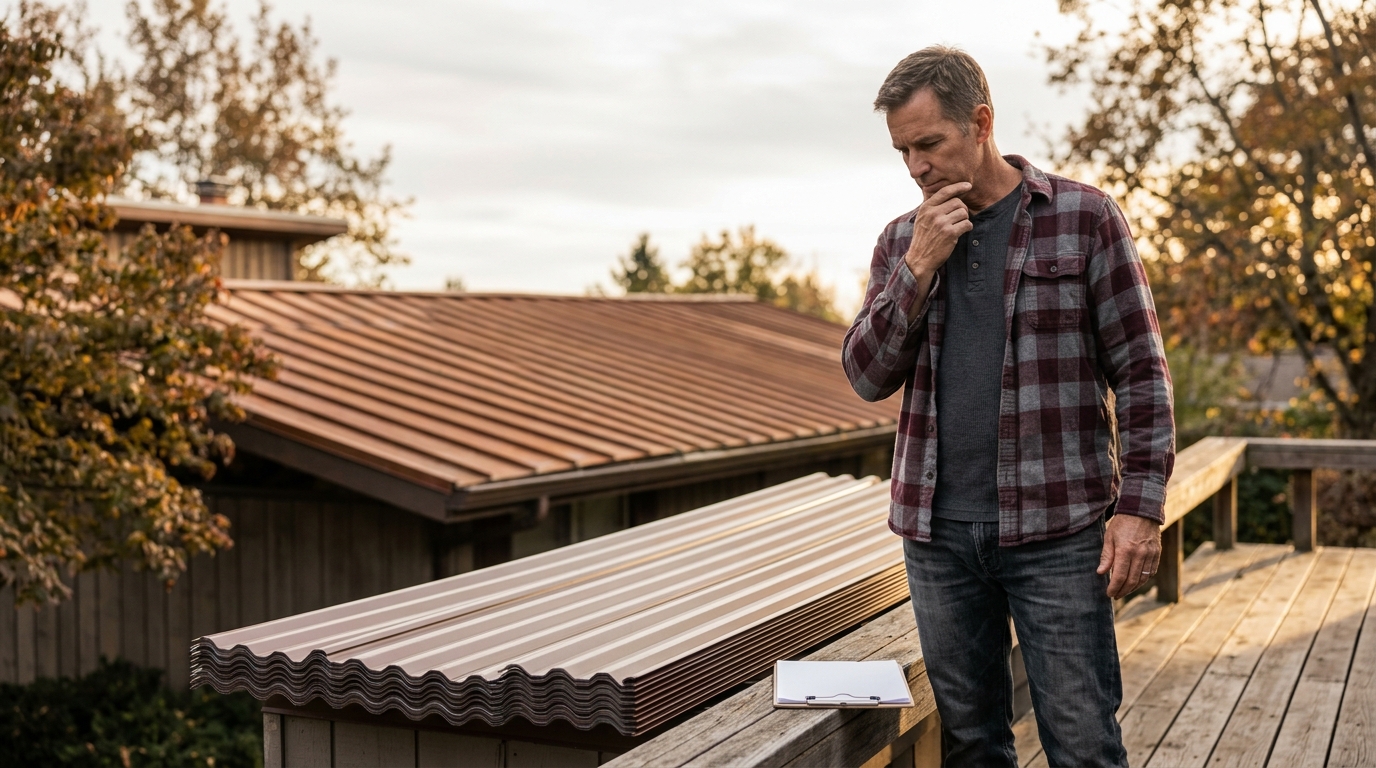
San Diego property owners can choose from several distinct metal roofing profiles, each suited to different aesthetic preferences, budgets, and performance requirements. The two most common options are standing seam metal roofing and corrugated metal roofing, each offering a unique combination of visual character and structural capability.
What is the difference between standing seam and corrugated metal roofing?
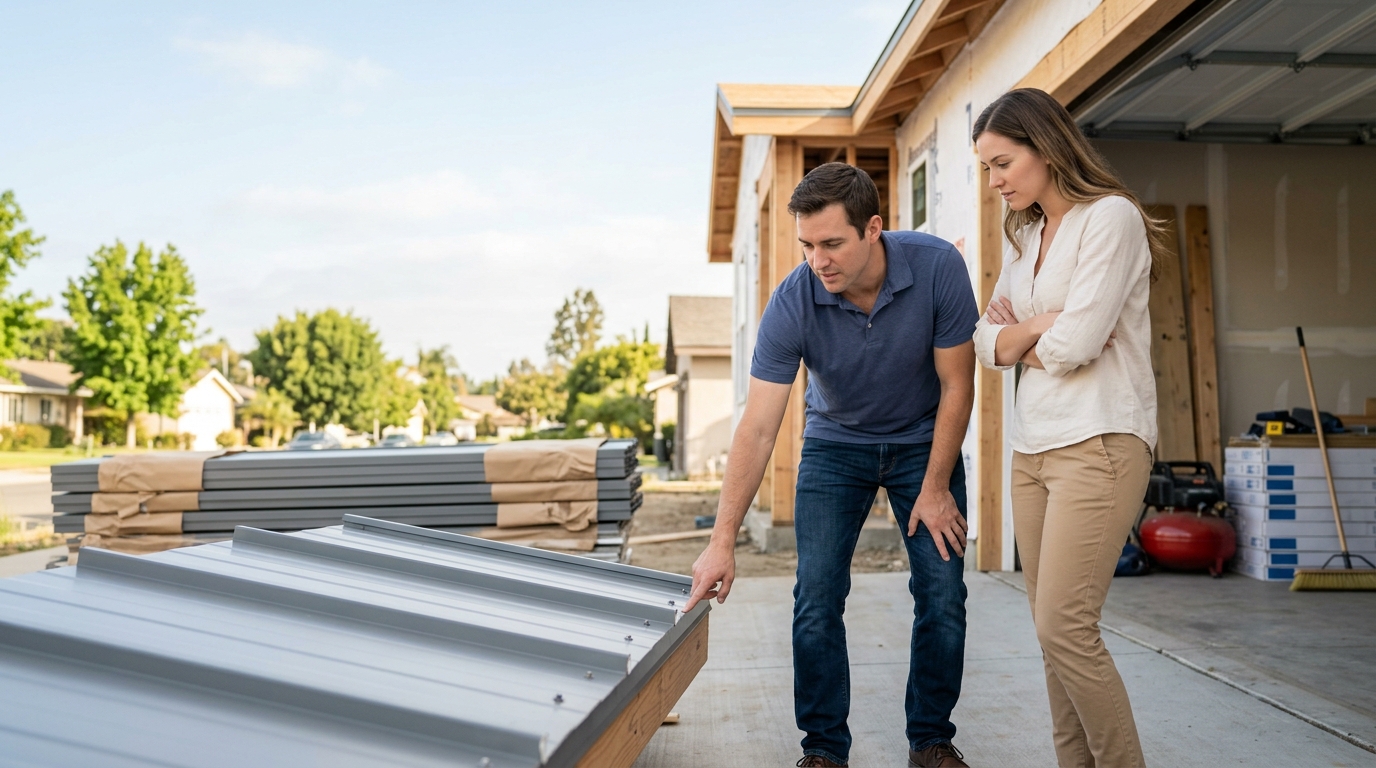
Standing seam metal roofing features clean, raised ribs that run continuously from the roof’s eave to its ridge, with concealed fasteners that protect against moisture intrusion and wind uplift. This profile delivers a sleek, contemporary appearance that appeals to homeowners in coastal communities like Carlsbad and La Mesa, where modern architectural styles are prevalent. Corrugated metal roofing, by contrast, uses a wavy, repetitive panel pattern with exposed fasteners that secure the panels directly to the roof deck. Corrugated panels carry a utilitarian, industrial character that works well for commercial buildings, agricultural structures, or residential projects seeking a more rustic aesthetic. Both options provide non-combustible protection and long service lives, but the choice between them affects visual style, fastener maintenance schedules, and cost considerations over time.
Which metal roofing materials work best for coastal and inland areas?
San Diego’s varied geography creates distinct environmental conditions that influence material selection. Coastal properties in Carlsbad and Chula Vista are exposed to salt-laden air that accelerates corrosion on bare steel surfaces. For these locations, aluminum or Galvalume-coated steel panels with factory-applied protective finishes resist rust formation far more effectively than standard galvanized steel. Inland properties in Escondido, Santee, and Poway face intense UV exposure and higher temperature swings but less salt exposure, making painted Kynar-finish steel panels an excellent choice that combines durability with a broad palette of color options. Working with experienced metal roofing contractors who understand these regional differences ensures that material selection matches the specific environmental demands of each property, whether it sits near the bay or deeper in the inland valleys.
How Long Does a Metal Roof Last Compared to Traditional Roofing Materials?
A properly installed metal roof delivers a service life of 40 to 70 years, significantly exceeding the 15 to 25-year lifespan of conventional asphalt shingle systems. This longevity reflects metal’s inherent resistance to cracking, warping, and biological degradation under conditions that degrade other roofing materials.
What maintenance does a metal roof require?
Steel roofing requires minimal ongoing maintenance compared with other roofing types. Because the panels are non-porous and resist moss, algae, and fungal growth, routine care is limited to periodic inspections, clearing debris from valleys and gutters, and checking that fasteners and sealants remain intact. Most manufacturers recommend a professional inspection every two to three years, particularly after severe weather events, to identify and address any minor issues before they develop into larger concerns. For commercial property owners in San Diego’s industrial corridors and residential homeowners across the city’s diverse neighborhoods, this low-maintenance profile translates into fewer service calls, reduced long-term upkeep expenses, and greater peace of mind throughout the roof’s extended service life.
How do San Diego’s coastal conditions affect metal roof longevity?
The Pacific coastline running through Carlsbad, Encinitas, and the western edges of Chula Vista subjects buildings to persistent salt spray, high humidity, and marine fog – all of which accelerate corrosion on susceptible metals. Selecting the appropriate coating system and base metal for a coastal property mitigates these effects substantially. Aluminum and Kynar-coated steel panels are specifically formulated to resist salt-induced degradation, helping metal roofs in these areas achieve their full intended lifespan without premature failure. Inland areas like Escondido, El Cajon, and Poway present a different set of conditions centered on thermal cycling and UV intensity rather than salt exposure, but the same principles of proper material selection and professional installation apply to maximizing roof performance across all of San Diego County’s diverse microclimates.
Is a Metal Roof Better Than Asphalt Shingles for San Diego Homes?
For San Diego homeowners evaluating long-term value, steel roofing outperforms asphalt shingles in every performance category most relevant to this region’s climate: fire resistance, energy efficiency, durability, and service life. While shingles remain a lower upfront cost option, their vulnerability to UV degradation, shorter lifespan, and combustible composition make them a less strategic choice for properties in Southern California’s evolving fire and heat environment.
How does metal roofing perform in high-UV environments?
San Diego’s intense solar radiation year-round places continuous stress on exterior building materials. Asphalt shingles absorb UV energy, which accelerates oxidation of the petroleum-based binders holding the fiberglass mat together. Over a single decade, this process can result in surface granule loss, curling edges, and reduced waterproofing effectiveness. Metal roof panels, particularly those finished with Kynar or similar fluoropolymer coatings, are engineered specifically to resist chalking, fading, and surface degradation under prolonged UV exposure. Industry data consistently shows that these factory-applied finishes maintain their color integrity and reflective properties for 30 years or longer, preserving both the roof’s performance and its appearance without the need for resurfacing or recoating. Explore metal roofing colors to choose a finish that suits your home and verify its appearance before installation.
What are the long-term cost benefits of choosing metal over shingles?
While the initial investment in a metal roof installation exceeds that of asphalt shingles, the extended service life, energy savings, and reduced maintenance requirements generate compounding returns over the roof’s lifetime. A metal roof that lasts two to three times longer than a shingle roof eliminates the cost of one or two complete roof replacements over a 50-year period. Combined with cooling energy savings that can reach 40 percent during San Diego’s warmest months, the total cost-of-ownership calculation increasingly favors metal roofing for homeowners planning to remain in their properties long-term. For commercial property owners across San Diego, Carlsbad, and Chula Vista, these long-term economics align with broader sustainability goals and building certification requirements that reward durable, energy-efficient envelope systems.
Is Metal Roofing the Right Investment for Your San Diego Property?
Metal roof systems deliver a rare combination of wildfire resilience, energy efficiency, and durability that addresses the most pressing performance challenges facing San Diego property owners today. From the coastal communities of Carlsbad and La Mesa to the inland valleys surrounding Escondido, Santee, and El Cajon, homeowners who choose steel roofing gain a roof system engineered specifically for Southern California’s unique climate demands. The Class A fire rating provides critical protection during wildfire season, while reflective coatings and thermal properties work together to lower cooling costs throughout the long, sun-filled summers. With a service life that can exceed 70 years and maintenance requirements that remain minimal over that span, metal roofing represents one of the most sound long-term investments a property owner can make.
If your home or commercial building in San Diego could benefit from an upgrade to fire-resistant, energy-efficient steel roofing, the team at Gastelum Roofing is ready to help you explore your options. Gastelum Roofing serves residential and commercial clients throughout San Diego County, including Santee, Escondido, La Mesa, Carlsbad, Chula Vista, Poway, and El Cajon. Their experienced metal roofing contractors provide professional assessments, customized material recommendations, and expert installation tailored to each property’s specific location, architecture, and performance goals.
To schedule a consultation with Gastelum Roofing, call 760-295-6593 or visit Gastelum Roofing’s services page to learn more about metal roof installation and replacement options in your area.
Frequently Asked Questions
What is a Class A fire rating and why does it matter for San Diego roofs?
A Class A fire rating is the highest designation in a three-tier classification system that rates roofing materials on fire resistance. Steel roofing earns this rating by passing rigorous tests for flame spread, fuel contribution, and structural integrity under fire conditions. It means the roof will not ignite, warp, or release burning droplets when exposed to flames or flying embers – critical protection for wildfire-prone areas of San Diego County.
How much energy can a metal roof save in San Diego’s sunny climate?
Metal roof systems can reduce cooling energy consumption by up to 40 percent in hot, sun-drenched climates like San Diego’s. The savings come from reflective surface coatings that deflect solar radiation, rapid heat release rather than retention, and reduced heat transfer into the building interior. Studies show these properties directly lower air conditioning demand during summer months, particularly in inland areas like El Cajon and La Mesa.
How long does a metal roof last compared to traditional roofing materials?
A properly installed steel roof delivers a service life of 40 to 70 years, significantly exceeding the 15 to 25-year lifespan of conventional asphalt shingle systems. This longevity reflects metal’s inherent resistance to cracking, warping, and biological degradation under conditions that degrade other roofing materials like UV exposure and temperature cycling.
What maintenance does a metal roof require over its lifetime?
Steel roofing requires minimal ongoing maintenance compared with other roofing types. Because the panels are non-porous and resist moss, algae, and fungal growth, routine care is limited to periodic inspections, clearing debris from valleys and gutters, and checking that fasteners and sealants remain intact. Most manufacturers recommend a professional inspection every two to three years, particularly after severe weather events.
Which metal roofing materials work best for coastal areas like Carlsbad and Chula Vista?
For coastal properties exposed to salt-laden air, aluminum or Galvalume-coated steel panels with factory-applied protective finishes resist rust formation far more effectively than standard galvanized steel. These materials withstand the persistent salt spray, high humidity, and marine fog that accelerate corrosion on bare steel surfaces, helping metal roofs achieve their full intended lifespan in coastal environments.
Is metal roofing better than asphalt shingles for San Diego homes?
Steel roofing outperforms asphalt shingles in every performance category most relevant to San Diego’s climate: fire resistance, energy efficiency, durability, and service life. While shingles remain a lower upfront cost option, their vulnerability to UV degradation, shorter lifespan, and combustible composition make them a less strategic choice for properties in Southern California’s fire and heat environment.
Related reading
- Flat Roofing: A Complete Guide for San Diego Properties
- TPO Roofing: Your Title 24 Compliance Shortcut for San Diego Properties