
Last updated: October 1, 2026
Flat roofing repair is a targeted approach that fixes specific problems rather than replacing the entire system. When performed at the right time, it can extend a roof’s service life without the cost of full replacement. Understanding when repair makes sense and when replacement is necessary helps San Diego property owners avoid expensive decisions based on incomplete information.
What Is Flat Roofing Repair and When Does It Apply?
Flat roofing repair addresses localized damage such as punctures, seam failures, or membrane deterioration in specific areas. Unlike replacement, which involves removing and reinstalling the entire roofing system, repair focuses on fixing the identified problem while preserving functional sections of the roof. Choosing between these options without a proper assessment can lead to unnecessary expense.
How do flat roof repair and replacement differ?
Repair targets specific issues and typically costs less upfront while extending the roof’s serviceable life. Replacement involves removing the existing system and installing a new one, delivering a fresh lifespan but at higher initial investment. The decision depends on the roof’s overall condition, not just the visible damage.
How Long Does a Flat Roof Last Before Needing Repair?
Flat roof lifespan varies significantly by membrane type. Common flat roof systems include thermoplastic polyolefin (TPO), ethylene propylene diene monomer (EPDM) rubber, and modified bitumen, and each has its own typical service range that depends on the specific product, how well it was installed, and how it has been maintained. Knowing the membrane type and installation date helps determine whether repair remains a viable option or if replacement better serves the property’s long-term interests.
What is the expected lifespan of different flat roof membranes?
Material composition, installation quality, maintenance history, and local climate conditions all influence how long a flat roof will last. San Diego’s intense sun exposure and coastal humidity can accelerate aging in some materials, making membrane condition assessments essential for determining remaining useful life.
What Signs Indicate My Flat Roof Needs Attention?
Visible deterioration like cracks, blisters, or areas of standing water indicates the membrane requires evaluation. Other warning signs include sagging sections, interior water stains, musty odors, and unexpected increases in heating or cooling costs. Early detection through regular inspections can help keep minor issues from becoming major problems.
How can I detect a flat roof leak early?
Regular visual inspections of the membrane surface, flashings, and drainage systems help identify problems before they cause interior damage. A professional assessment provides a more thorough evaluation that can catch issues not visible from the surface.
How Is a Flat Roof Assessment Conducted?
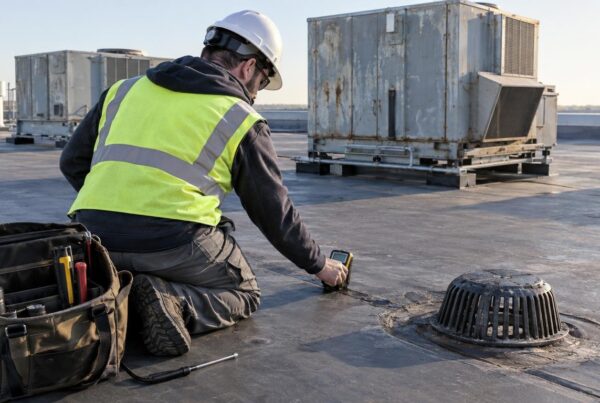
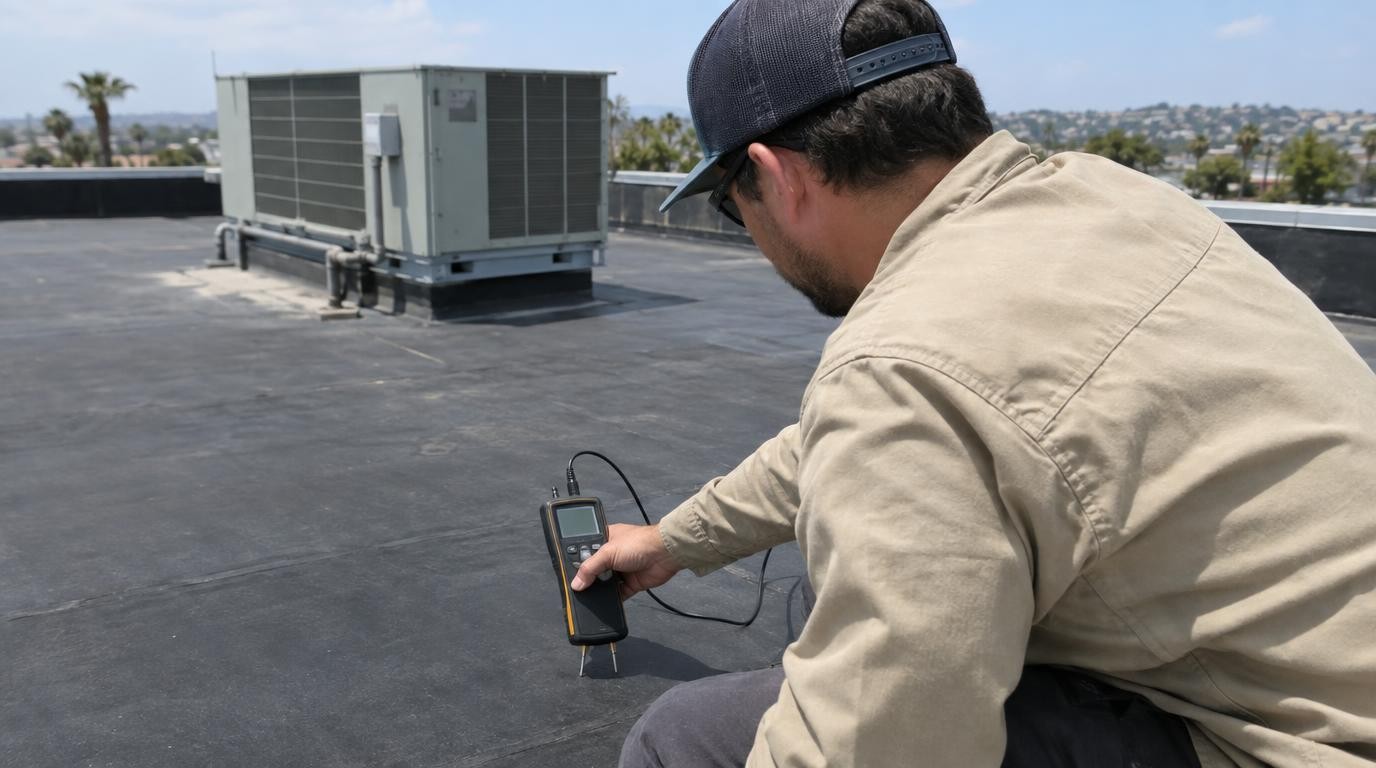
A professional flat roof assessment examines multiple system components. Contractors inspect the membrane surface for wear, check seams and flashings, test the substrate for moisture intrusion, evaluate the structural deck, and review drainage functionality. This comprehensive review determines whether repair will resolve the issues or if more extensive work is necessary.
When Does Flat Roof Repair Make More Sense Than Replacement?
Flat roof repair generally makes economic sense when the membrane still has a meaningful portion of its expected lifespan remaining and the substrate remains intact. If wet or damaged insulation exists beneath the membrane, repair typically will not provide a lasting solution. For that reason, substrate condition should be evaluated alongside membrane age when determining the appropriate course of action.
What percentage of membrane life should remain for repair to be worthwhile?
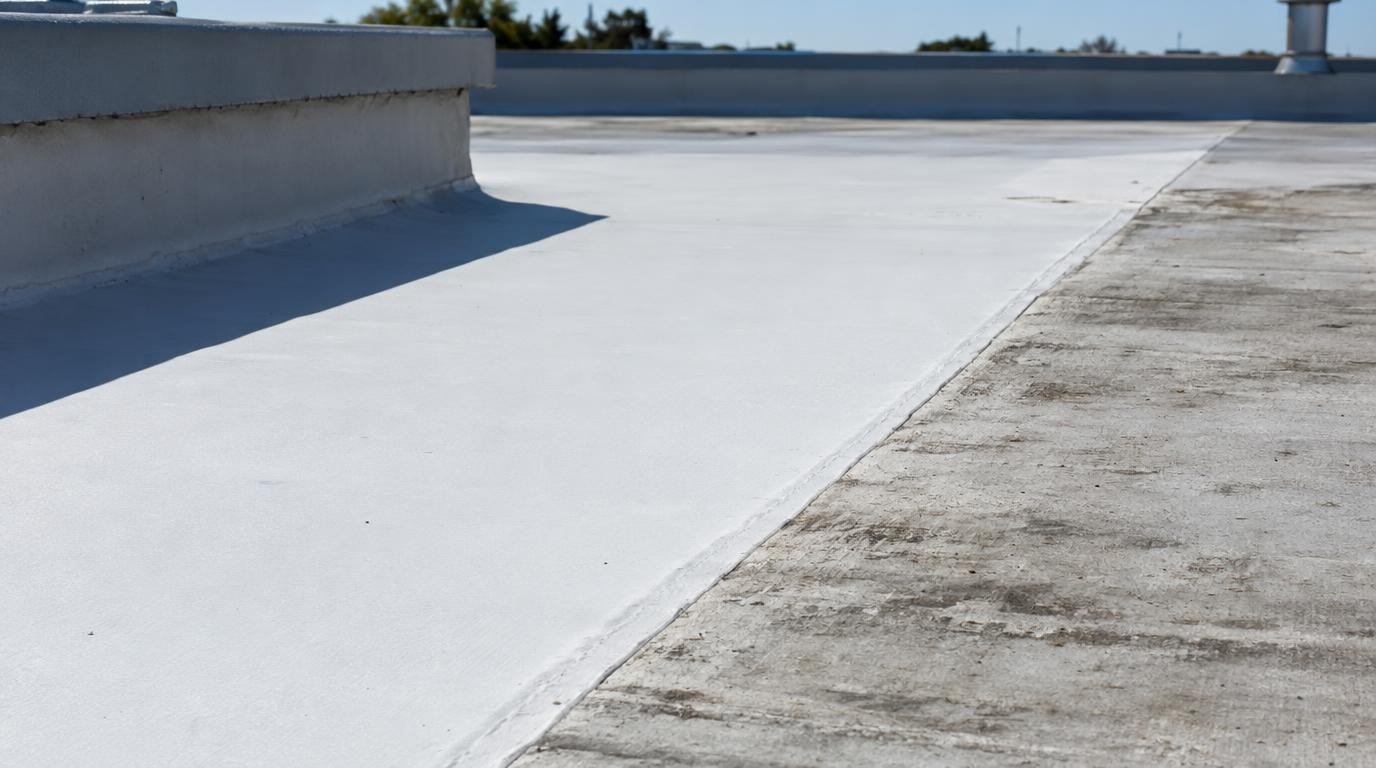
There is no single percentage that applies to every roof. Repair tends to deliver better value when the membrane is well within its expected service life and the damage is limited to specific areas. When a membrane is near the end of its service life or problems are widespread, a retrofit or full replacement often provides better long-term return on investment.
Gastelum Roofing guides San Diego property owners through these decisions with thorough assessments that examine membrane condition, insulation health, and deck integrity. Our team provides clear recommendations based on the actual state of each roof, not assumptions. We work with property owners in La Mesa and throughout San Diego County on flat roof systems.
Making the right call between repair and replacement starts with understanding what lies beneath the surface. Flat roofing repair from Gastelum Roofing begins with a complete evaluation so you understand the condition of your roof before any work is done. To schedule your assessment, call 760-295-6593 or contact us online today.
Frequently Asked Questions
What types of damage can flat roofing repair fix?
Typical repairs include patching small punctures and tears, resealing open or separated seams, repairing flashing around edges, vents, and other roof penetrations, and addressing localized areas of worn membrane. Clearing or correcting drains that allow water to pond can also be part of a repair. Widespread blistering, many failed seams, or saturated insulation usually point toward more extensive work rather than a spot repair.
Why does San Diego’s climate affect flat roof performance?
Strong, year-round sun exposes the membrane surface to ultraviolet radiation, which can gradually dry out and weaken some roofing materials, while properties closer to the coast also contend with moisture and salt air. How much these factors matter depends on the membrane type and the roof’s location, so it helps to know which material is on your roof and to watch for surface cracking, chalking, or brittleness in sun-exposed areas. A flat roof coating can help reflect heat, but the right type depends on your existing membrane and roof condition.
What maintenance helps extend flat roof lifespan?
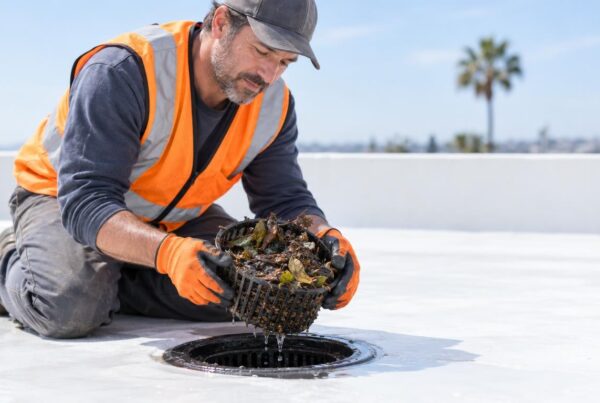
Keep drains, scuppers, and gutters clear of leaves and debris so water can leave the roof, and check the surface after heavy rain or wind for ponding, loose flashing, or new damage. Limit foot traffic on the membrane and keep equipment or stored items off the roof where possible. Scheduling periodic professional inspections and addressing small problems promptly can help maximize the serviceable life of any flat roof membrane.
How do I know if my flat roof substrate is still viable for repair?
Signs that moisture may have reached the layers beneath the membrane include soft or spongy spots underfoot, persistent blisters, and interior stains that return after a surface repair. Because the substrate cannot be judged by eye alone, a contractor may use moisture testing or take small samples to check the insulation and deck. If those layers are dry and sound, repair is more likely to hold; if they are wet or damaged, the affected sections typically need to be replaced.