
Last updated: October 1, 2026
TPO roofing repair can often address a localized puncture, tear, open seam, or flashing problem when the surrounding roof is sound. If you have noticed a leak or visible damage on a low-slope roof in Poway, a professional assessment can determine whether a targeted repair will work or whether moisture and drainage need attention first.
Can TPO roofing be repaired?
Yes, a roofing contractor can often repair localized TPO damage after checking the membrane and the roof beneath it. A sound surrounding membrane may support a patch or a repaired seam, but a surface patch will not correct trapped moisture or poor drainage. The right repair depends on what caused the problem.
Which types of TPO membrane damage are typically repairable?
Small punctures and tears are common candidates for a compatible TPO patch. A contractor may also be able to repair a separated seam or a problem around a flashing detail, depending on the condition of the adjoining material. Gastelum Roofing offers TPO roofing services and can assess which approach fits the roof.
When does a leak point to more than a surface repair?
A recurring leak, damp insulation, or water that remains on the roof can point to a broader issue. The visible opening may need repair, but the contractor should also identify how water is moving through the roof system. Water can travel beneath the membrane before appearing as a stain indoors, so an interior stain does not necessarily identify the roof opening above it.
What are the common problems with TPO roofing?
Common TPO roof problems include punctures, tears, separated seams, stressed flashing details, and drainage concerns. Property owners may notice visible changes from a safe vantage point or find an interior water stain.
What do punctures and separated seams look like?
A puncture may appear as a small hole or cut in the white membrane. A separated seam may have a lifted edge or a visible gap where membrane sheets overlap. Photos taken from a safe location and notes about when a stain appears can help a roofer focus an inspection; there is no need to walk onto the roof to collect them.
Why do flashing details and ponding water deserve attention?
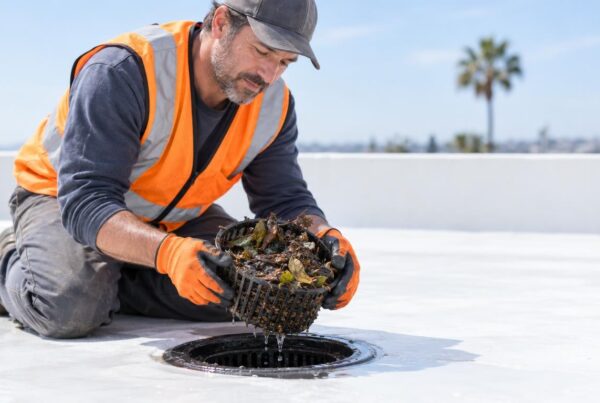
Flashings help seal transitions at roof edges, equipment, and other penetrations. Those changes in shape and material deserve a close look when water enters the building. Standing water that persists after weather clears can also signal a drainage concern that a membrane patch alone will not resolve. For context on low-slope roof systems, see our guide to flat roofing in San Diego.
How does a contractor inspect a TPO roof before repairing it?
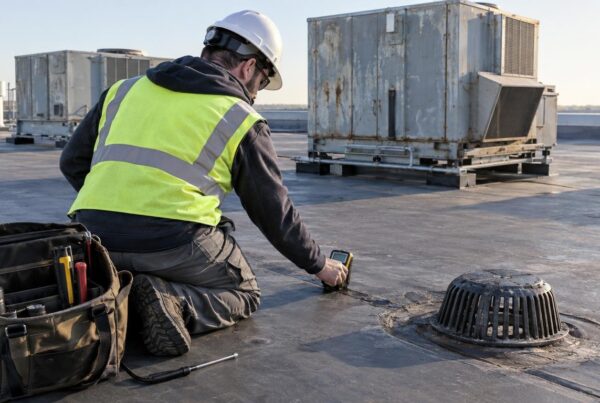
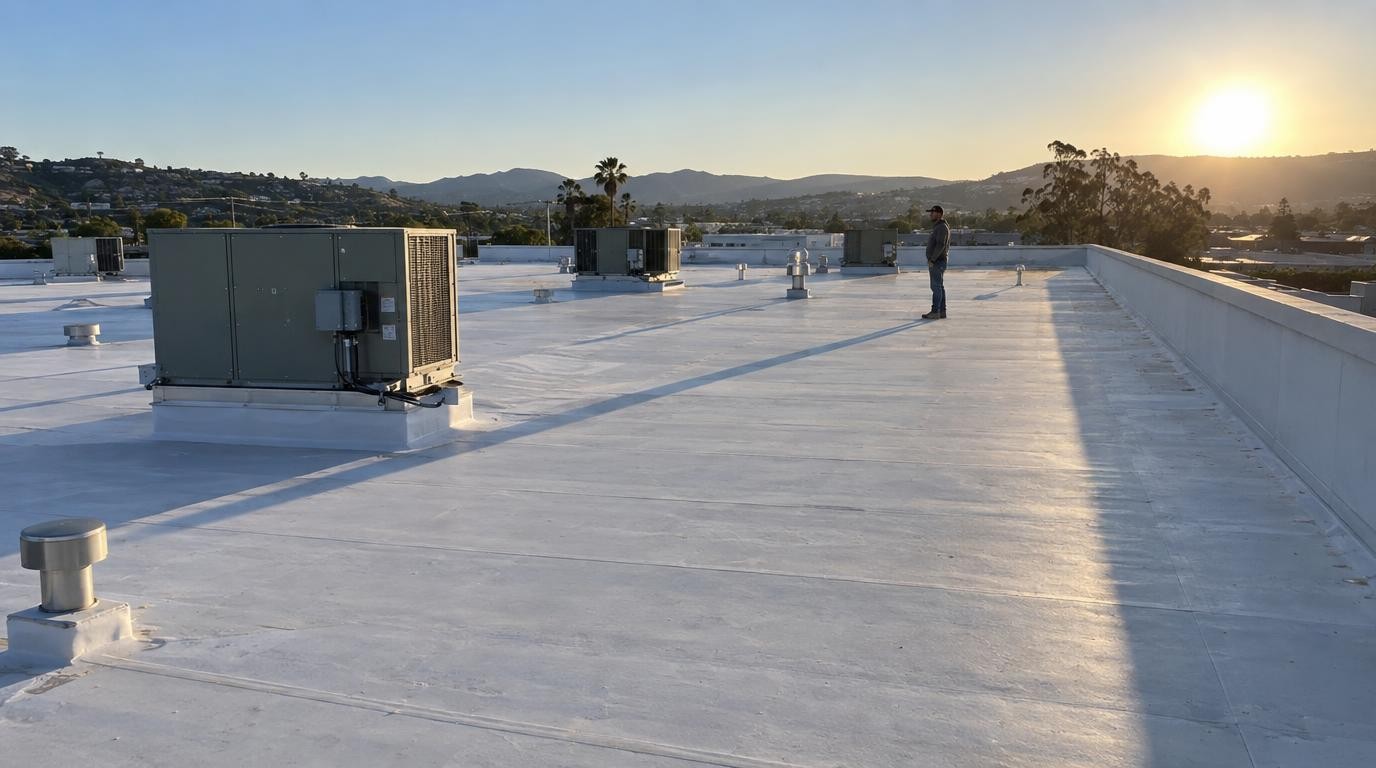
A contractor inspects the membrane surface, seams, flashings, penetrations, and drains before selecting a TPO repair. The inspection looks for an opening as well as signs that water may have affected insulation or that drainage needs attention. A systematic check helps distinguish a localized defect from a roof-system problem.
What do visual inspection and seam probing reveal?
A visual inspection can identify cuts, lifted edges, worn details, and debris around drains. Careful seam probing helps a trained roofer check whether a welded overlap remains bonded. The Western States Roofing Contractors Association’s June 2011 document, TPO Roof Membrane Repair and Maintenance Guidelines, describes visual inspection, seam probing, repair preparation, and maintenance as parts of a systematic approach. It is dated guidance, not a newly issued standard or a substitute for the membrane manufacturer’s instructions.
How does a contractor determine whether moisture or drainage needs attention?
A roofer considers the location of interior stains alongside roof-level findings, checks drains and nearby slopes, and assesses whether insulation or other underlying components may be affected. The extent of that assessment depends on what the inspection reveals. Resolving a drainage or moisture problem may be necessary for a membrane repair to perform as intended.
What can I use to patch a TPO roof?
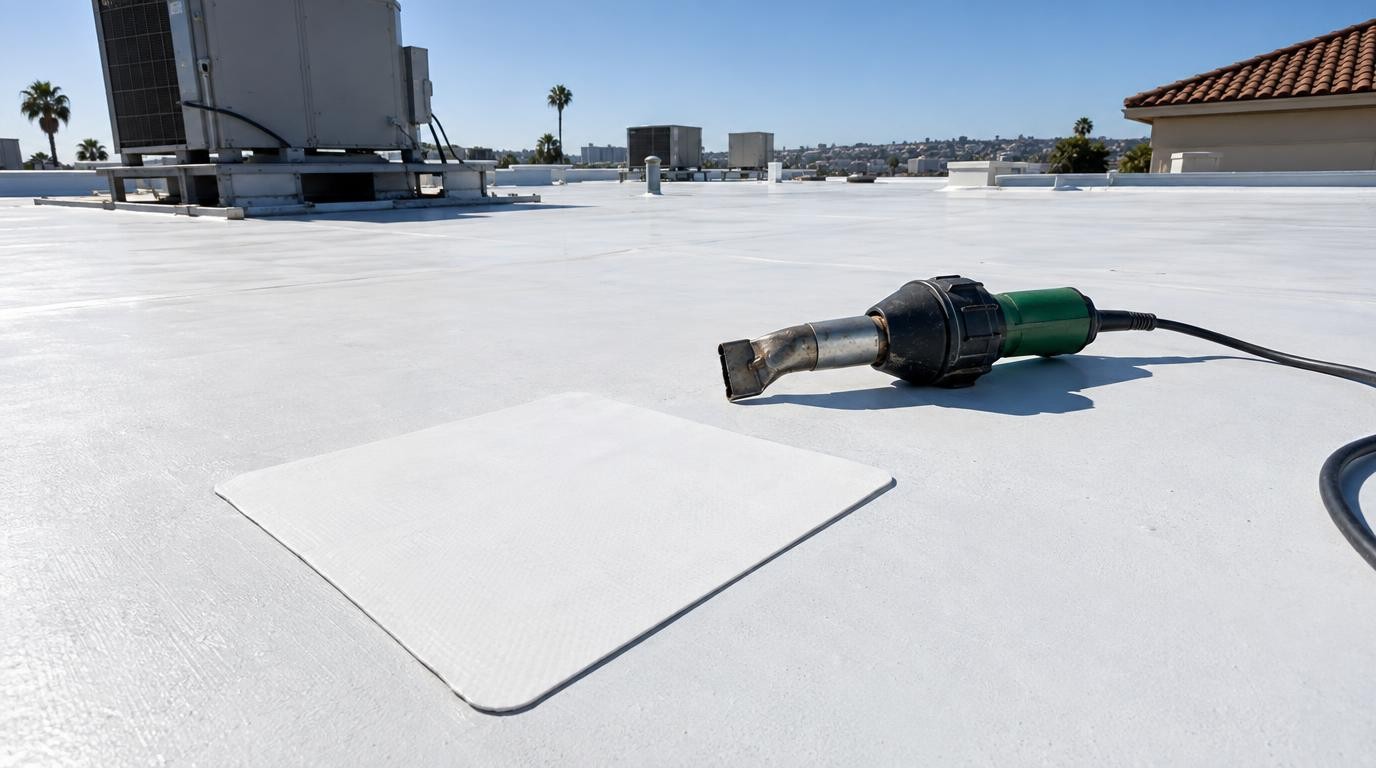
A professional TPO membrane repair commonly uses a compatible TPO patch or manufacturer-approved repair materials. Where the manufacturer specifies welding, the roofer uses controlled hot air to bond the patch to the existing membrane. Generic sealant is not a universal substitute: material compatibility, surface condition, and the location of the damage govern the repair.
Why do patch materials need to match the existing membrane?
A patch must bond reliably to the roof already in place. A contractor checks the membrane and follows the applicable manufacturer’s repair instructions before choosing materials and a method. Repairing a simple puncture may require different work than repairing a seam, edge, or penetration.
Why is cleaning older TPO especially important before welding?
Weathering and surface contamination can interfere with a weld. For older TPO, the Western States Roofing Contractors Association repair guidelines give an example of scrubbing the repair area with an abrasive pad and the membrane manufacturer’s specified solvent. A professional must confirm that the preparation method is compatible with the particular roof and handle cleaning materials and welding equipment appropriately.
What happens during a professional TPO roofing repair?
A professional TPO roofing repair begins with identifying the defect and confirming that the surrounding material is suitable for repair. The roofer then prepares a clean, dry area, applies compatible repair material using the manufacturer-specified method, and checks the finished bond. Work at a seam, flashing, or drain may require more than a puncture patch.
How are the damaged area and patch prepared?
The roofer defines the area to be repaired, removes contamination, and checks that the surface is dry. A compatible patch is prepared to cover the affected area as the applicable instructions require. If adjoining insulation or other roof components need attention, the contractor addresses that condition as part of the repair plan rather than covering it without assessment.
How does a roofer weld and check a TPO repair?
Where hot-air welding is specified, a trained roofer uses controlled heat and pressure, rolls the bonded area, and checks the finished repair for a continuous seal. This is an overview, not a do-it-yourself welding procedure: roof access, heated tools, and cleaning materials call for professional equipment and handling. A repaired seam or detail also needs to be checked in the context of the surrounding roof.
What is the average lifespan of a TPO roof?
There is no single average lifespan that reliably describes every TPO roof. Service life depends on installation quality, membrane condition, exposure, drainage, and maintenance. Roof age and repair history matter when evaluating a leak, but the condition of the surrounding membrane and underlying components is more useful than age alone for choosing repair or replacement.
Which conditions affect how long a TPO roof lasts?
Sun exposure, standing water, foot traffic around equipment, and the quality of seams and flashings can all affect roof condition. Routine checks provide a record of changes that may not be obvious from indoors. For a broader explanation of the system, read our guide to TPO roofing and durability.
When is TPO roof replacement more appropriate than repair?
Targeted repair may make sense when damage is limited and the adjacent membrane remains sound. Widespread deterioration, recurring problems across the roof, or affected underlying components may make a TPO roof replacement assessment more appropriate. An inspection lets the owner compare those paths without assuming that one patch will add a predictable amount of service life. If replacement is needed, a TPO vs EPDM roofing comparison can help weigh sun exposure, seams, and upkeep.
How can maintenance help TPO roof repairs last?
TPO roof maintenance helps a contractor spot new damage and drainage changes before selecting another repair. A building-specific inspection schedule, checks after significant weather, clear drains, and records of past work all support informed decisions. Maintenance cannot guarantee a particular lifespan, but it can help keep a localized issue from going unnoticed.
How often should a TPO roof be checked?
Ask a roofing contractor to recommend an inspection schedule based on the building, roof access, equipment, and repair history. Arrange an additional check after significant weather when conditions may have changed. Property owners can monitor interior areas and view accessible roof areas from a safe location between professional inspections.
Which maintenance tasks help catch new repair needs early?
Keep a record of stains, leak timing, inspection findings, and completed repairs. Have a professional check seams, flashings, and drains, and arrange for debris removal where needed. On a Poway property, attention to sun-exposed surfaces and debris at drains makes routine checks particularly useful.
When should you schedule a TPO roof repair assessment?
Schedule a TPO roof repair assessment when you notice visible membrane damage, a recurring leak, persistent standing water, or uncertainty about repair versus replacement. An inspection can identify the affected area and whether drainage or underlying materials need attention. The recommended work should follow the roof’s observed condition, not a presumed repair.
Gastelum Roofing is based in San Diego and offers TPO roofing services to property owners in Poway. If you can describe where you have seen a stain, leak, or roof change, our team can use those details as a starting point for an evaluation. Contact Gastelum Roofing at 760-295-6593 to request a TPO roof repair consultation.
Frequently Asked Questions
Does a ceiling stain show where a TPO roof is leaking?
Not necessarily. Water can travel beneath a TPO membrane before a stain appears indoors, so the roof opening may be elsewhere. Note where and when the stain appears. A roofer can compare those observations with the condition of the membrane, seams, flashings, and drains to help locate the source.
What information should I gather before calling about a TPO roof leak?
Record where you see stains or visible roof changes and when the leak appears. Photos taken from a safe location can help a contractor focus the inspection. You do not need to walk on the roof: a professional can examine the membrane, seams, flashings, and drainage firsthand.
Will a TPO patch fix water that keeps pooling on the roof?
No. A patch can address a suitable membrane opening, but it will not correct a drainage problem. Water that remains after the weather clears calls for an inspection of drains and nearby slopes. The roofer should also check whether moisture has affected materials beneath the membrane before recommending work.
What should I expect from a completed TPO roof patch?
A properly selected patch should form a continuous bond over localized damage when the surrounding membrane is suitable for repair. A roofer prepares a clean, dry surface, uses compatible materials and the manufacturer’s specified method, then checks the bond. A patch alone will not resolve damp insulation or poor drainage.
Can an older TPO membrane still be welded for repair?
It may be repairable if an inspection finds that the surrounding membrane remains suitable. Older TPO can require careful cleaning because weathering and contamination interfere with welding. A roofer should confirm the appropriate preparation materials and repair method against the membrane manufacturer’s instructions, then check the finished bond.