
Last updated: October 1, 2026
Cleaning moss off a roof safely starts with identifying the roofing material, gently removing loose growth only when the surface permits, and using a roof-compatible treatment according to its label. Avoid aggressive scraping and roof pressure washing; brittle tile, worn shingles, steep slopes, and uncertain roof conditions call for a professional assessment. Gastelum Roofing offers roof cleaning services in San Diego.
How do you clean moss off a roof without damaging it?
Identify the roof material and its condition before choosing a moss-removal method. Loose moss may be brushed away gently if the surface is sound and accessible without walking on fragile roofing. Follow the roof manufacturer’s guidance and any treatment label, and avoid forceful scraping or pressure washing that could disturb shingles, tiles, or roof details.
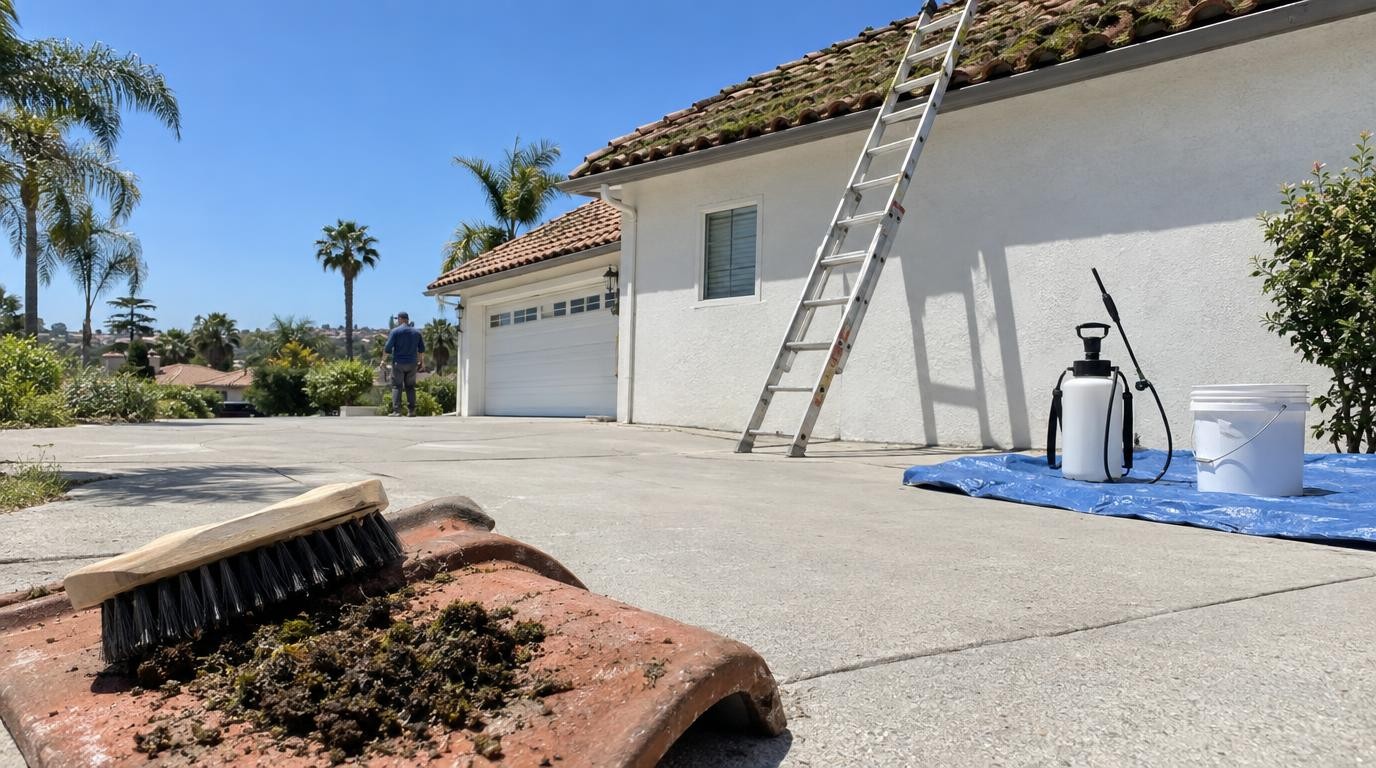
These are principles for choosing a method, not a recommendation to climb onto a roof. If tile feels brittle, shingles look worn, the slope is steep, or the material is unclear, ask for an assessment before cleaning. A roof inspection can also reveal areas that need attention before moss removal begins.
Is it okay to scrape moss off the roof?
Forceful scraping is not a good general method. A stiff edge can disturb asphalt-shingle granules, catch on tile edges, or affect nearby flashing. Gentle brushing may lift loose growth from some sound surfaces, but attached moss should not be pulled away if doing so appears to lift or damage the roofing beneath it.
How can you tell roof moss from algae or ordinary stains?
Roof moss usually appears as raised, textured growth, while algae often appears as flat, dark discoloration. Dirt, runoff marks, and other stains can resemble biological growth, so appearance alone may not identify the cause. Check the surface and roof material before choosing roof moss removal, roof algae removal, or a stain-cleaning approach.
A shaded roof section may have more than one kind of discoloration. Looking closely at where growth begins and whether it sits above the surface helps guide the next step without treating every dark patch as moss.
Does removing a roof stain also remove moss?
Not necessarily. A treatment that improves a flat stain may leave raised moss in place, while brushing away moss may leave discoloration behind. The appropriate method depends on what is on the roof and what the roofing material can tolerate.
What kills moss on a roof naturally?
Household vinegar is sometimes suggested for roof moss, but no homemade treatment is universally suitable for roofing. Acidity, roof-material compatibility, product-label directions, runoff, and nearby plants all matter. Choose a treatment only after checking the specific roofing manufacturer’s guidance and the cleaner’s label rather than assuming a natural ingredient is roof-safe.
Runoff deserves attention even when a cleaner is familiar from household use. Before applying anything to a roof, consider where the liquid will drain and whether landscaping or exterior finishes could be affected.
Does Dawn dish soap kill roof moss?
Dish soap is sometimes suggested for moss, but it is not a substitute for a roof- and material-compatible cleaning product. A household soap may leave residue or require rinsing that the roof cannot tolerate. Check the roofing guidance and product label instead of relying on a homemade mixture.
Is soft wash roof cleaning better than roof pressure washing for moss?
Controlled low-pressure cleaning is generally a better starting point than high-pressure washing for a mossy roof, provided the cleaner and technique suit the roofing material. Pressure washing can dislodge shingle granules or affect tiles and roof details. Soft wash roof cleaning still requires careful product selection, gentle handling, appropriate rinsing, and runoff precautions.
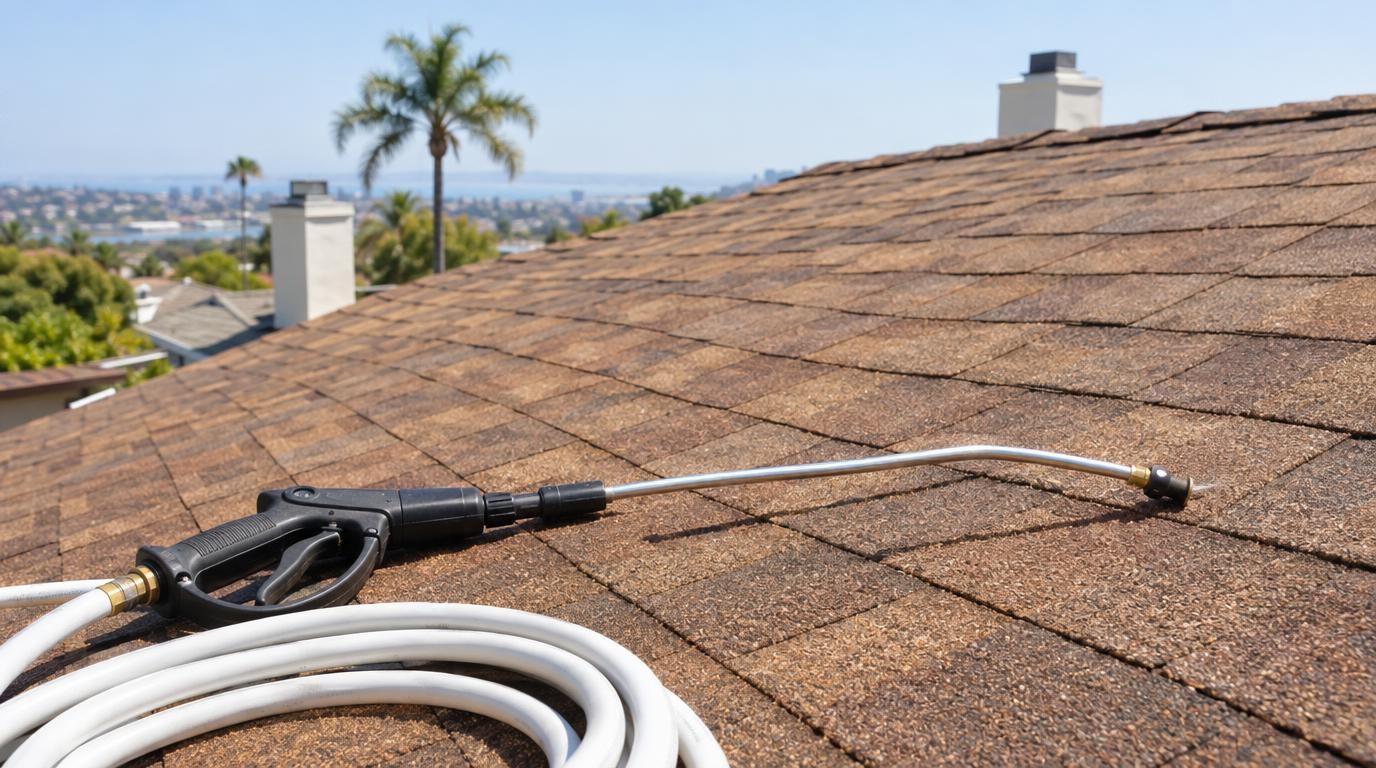
“Soft wash” describes an approach, not a guarantee that every chemical or application is appropriate. A sound plan starts with the roof’s condition and the moss’s location, then considers how loosened growth and cleaner will leave the roof. For more context, see how professional roof cleaning protects a San Diego property.
How does tile roof cleaning differ from cleaning asphalt shingles?
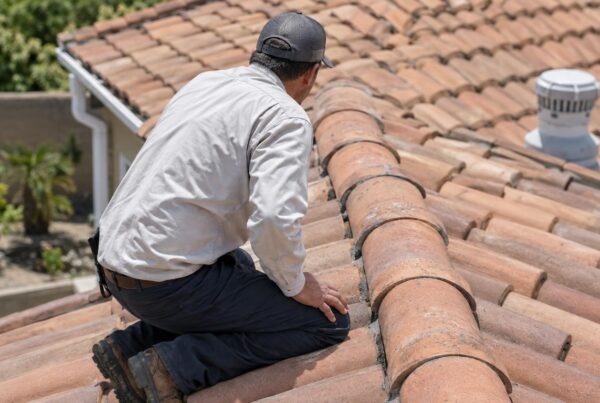
Tile roof cleaning must account for cracked or brittle tiles and the way foot traffic can affect them. Asphalt-shingle cleaning must protect the shingle surface and its granules. Neither material benefits from an aggressive, one-method-fits-all approach; existing wear, flashing, and access should shape the cleaning plan. Metal roof cleaning also calls for a material-specific approach to remove buildup without damaging the finish.
What is the best time of year to remove moss from a roof?
The best time to remove roof moss is when working conditions are mild and dry enough for safe access and the selected product’s label requirements can be met. No single month suits every roof. In San Diego, coastal shade, irrigation overspray, and wetter-season moisture can influence when growth appears and when cleaning makes sense.
Fall can be a useful time to inspect the roof and plan maintenance, but it is not a guaranteed ideal cleaning window. Roof condition and the weather expected during application and rinsing matter more than the calendar.
Should you wait for moss to dry before removing it?
Dry, loose growth may be easier to lift gently, but waiting for moss to dry does not make forceful removal safe. Some treatments have specific surface-moisture and weather requirements. Follow those directions and avoid working on a slippery or fragile roof.
When should a property owner call a professional for roof moss removal?
Call for a professional assessment when roof access is difficult, the slope is steep, tiles or shingles appear fragile, growth is extensive, or the right cleaning method is uncertain. Residential and commercial roofs may also have drainage and flashing details that need consideration before cleaning. An assessment helps match the method to the roof’s condition.
In roofing work, cleaning decisions are most useful when they also account for the condition of the material underneath the growth. Moss removal may improve visibility, but it should not take the place of evaluating roofing that appears worn or damaged.
What should a roofing contractor check before cleaning a roof?
Ask for a review of the roofing material, existing wear, flashing, gutters, drainage paths, and areas where moss holds debris. That review helps determine whether cleaning can proceed gently or whether another roofing service should be considered first.
How can you keep moss from returning after roof and gutter cleaning?
Regular gutter and roof cleaning can reduce the debris and lingering moisture that favor moss growth. Keep drainage paths clear, address irrigation overspray where practical, and arrange inspections appropriate to the roofing material. Maintenance can make conditions less favorable for moss, but no upkeep plan can guarantee that growth will never return.
Pay particular attention to shaded areas where leaves collect or sprinklers reach the roof. Noticing those patterns makes routine maintenance more targeted.
Can trimming nearby branches help limit roof moss?
Trimming branches may improve sunlight and airflow and reduce leaves falling onto the roof. Preserve appropriate clearance around the roofing, and use qualified help for branches that cannot be reached safely from the ground. Shade reduction can help without being a complete solution on its own.
What should you ask a San Diego roofing contractor about cleaning roof moss?
Ask how the proposed method fits your roof material and current condition, how runoff and landscaping will be protected, and whether gutters or underlying roofing need attention. Also confirm whether the contractor performs the appropriate work or recommends another qualified provider. Those answers should give you a clear, material-specific plan rather than a generic cleaning promise.
- Which cleaning method is suitable for the shingles, tile, or other roofing material?
- How will surrounding plants, surfaces, and drainage areas be protected?
- Do gutters, flashing, or worn roofing need attention before cleaning?
- Who will perform the recommended work?
If you are weighing your options for a mossy roof in San Diego, contact Gastelum Roofing for a consultation at 760-295-6593. Our team can help you assess the roof’s condition and discuss an appropriate next step.
Frequently Asked Questions
Will cleaning roof moss also remove dark roof streaks?
Not always. Raised moss and flat, dark discoloration may need different approaches, and some streaks may be dirt or runoff marks rather than algae. Removing loose growth can leave staining behind, while a stain treatment may not clear moss. Identify the buildup and roofing material before choosing a method.
How long will a roof stay moss-free after cleaning?
There is no guaranteed moss-free period after roof cleaning. Shaded sections, trapped leaves, irrigation overspray, and moisture can make growth more likely to return. Keep gutters and drainage clear, address sprinkler overspray where practical, and schedule inspections suited to your roofing material to make conditions less favorable for moss.
Should I wait for dry weather before treating roof moss?
Check the weather and treatment directions before starting. Mild conditions with a surface dry enough for safe access are preferable, but products can have different moisture and application requirements. Dry, loose moss may lift more easily; that does not justify forceful removal. No particular month is ideal for every roof.
Can I use vinegar or dish soap to treat moss on shingles or tile?
Neither vinegar nor dish soap is automatically suitable for a shingle or tile roof. Vinegar’s acidity, soap residue, and any rinsing requirements may conflict with the roofing material or affect runoff. Check the roof manufacturer’s guidance and a roof-compatible product’s label, including directions for protecting nearby plants, before applying anything. A guide to cleaning a shingle roof in San Diego’s coastal climate can help with material-specific methods, safe access, and runoff.
Can moss conceal roof wear that cleaning will not fix?
Yes. Moss can cover areas that deserve a closer look, and clearing it does not address worn shingles, brittle tile, or flashing concerns. Have the roof material, flashing, gutters, and drainage reviewed before cleaning if their condition is uncertain. An inspection can help determine whether other roofing work should come first.
Can walking on tile damage it during moss cleaning?
Yes, foot traffic can affect tile, especially when pieces are cracked or brittle. Do not assume a mossy roof is suitable for walking or brushing simply because growth is visible. If access is difficult or the tiles look fragile, seek a professional assessment to select a cleaning method appropriate for the roof.
How do I protect plants and gutters when cleaning roof moss?
Plan where cleaner and loosened growth will drain before treatment begins. Confirm that the product’s label and roof manufacturer’s guidance permit the method, and discuss protection for landscaping, exterior finishes, gutters, and drainage paths with the contractor. Keeping gutters clear also reduces debris and moisture that can favor future moss growth.