
Last updated: October 13, 2026
EPDM roof installation starts with inspecting the roof and deck, preparing the surface, securing the membrane, completing seams and flashings, and inspecting the finished roof. We assess roof condition, applicable building requirements, and manufacturer instructions before recommending an assembly or deciding between re-covering and a tear-off.
What happens during EPDM roof installation?
Installation generally follows these steps; the approved assembly and manufacturer’s instructions govern the details:
- Inspect the existing roofing, moisture signs, decking, and flashing to decide whether the roof can be re-covered.
- Remove existing roofing if a tear-off is required, repair damaged decking, and prepare the receiving surface.
- Install insulation if specified, then lay out and secure the EPDM membrane by the approved method.
- Seal membrane seams and flash roof edges, drains, penetrations, and transitions.
- Inspect the completed roof and clean the work area.
What is an EPDM roofing system?
EPDM is a synthetic rubber membrane used in suitable low-slope roofing assemblies. The complete system includes more than the sheet: insulation or a suitable receiving surface, an approved attachment method, seams, flashings, and drainage details all affect how the roof performs. A federal Prevention through Design publication identifies EPDM among the membrane materials used on flat roofs.
Gastelum Roofing offers reroofing and re-covering services, but EPDM availability should be confirmed before planning a project around that material.
How is the roof prepared before the EPDM membrane goes down?
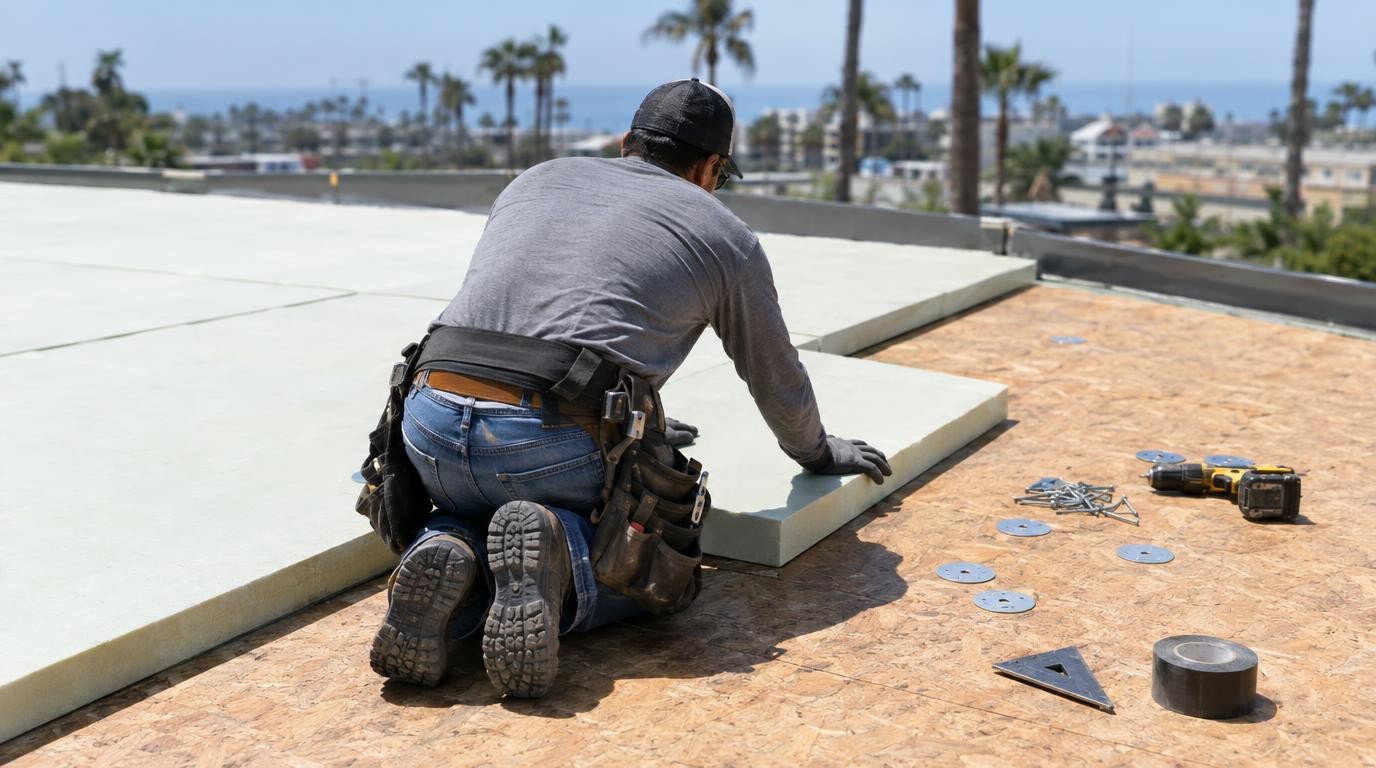
Roof preparation starts by checking the existing layers, moisture signs, deck condition, and flashing. Those findings determine whether roofing can remain or must be removed. Before membrane placement, the receiving surface must be suitable, clean, and dry, while insulation and attachment must follow the selected manufacturer’s approved assembly.
When must existing roofing be removed?
Re-covering requires a structurally sound roof, compatible existing layers, and an assembly that meets applicable building requirements. Trapped moisture, soft or damaged decking, multiple existing layers, or widespread underlying failure generally call for a tear-off instead. Flashings and transitions that cannot be made watertight through re-covering can also make removal necessary.
How are the decking and insulation checked?
The crew looks for soft areas, moisture evidence, and surfaces that will not provide a reliable base for the new system. Damaged decking must be addressed before it is covered. Insulation type, board layout, fastener placement, and attachment pattern are then selected for the approved assembly; there is no universal fastening pattern that applies to every EPDM roof.
Property owners comparing membrane options can start with our guide to flat roofing for San Diego properties.
Do you glue down EPDM roofing?
Some EPDM roofs use adhesive to attach the membrane, but not every EPDM system is glued down. Fully adhered, mechanically attached, and ballasted assemblies secure the membrane in different ways. Attachment adhesive also has a different job from seam-bonding products, so installers must use materials approved for each part of the selected system.
How do fully adhered, mechanically attached, and ballasted systems differ?
- Fully adhered: Approved adhesive bonds the membrane to a suitable prepared surface.
- Mechanically attached: Approved fasteners and components secure the system according to its specified layout.
- Ballasted: Approved ballast holds the membrane in place over a roof designed to support that assembly.
Roof structure, wind requirements, existing conditions, and manufacturer instructions help determine which approach is suitable. None of these attachment methods eliminates the need for properly made seams and flashings.
Is there a top and bottom to EPDM rubber roof?
Installers should not assume an EPDM sheet can be turned over. Approved orientation, surface treatment, and adhesive compatibility depend on the specific membrane. Before laying out or bonding a sheet, the crew should check the manufacturer’s instructions for that product and its associated seam materials.
How are EPDM seams, edges, and penetrations sealed?
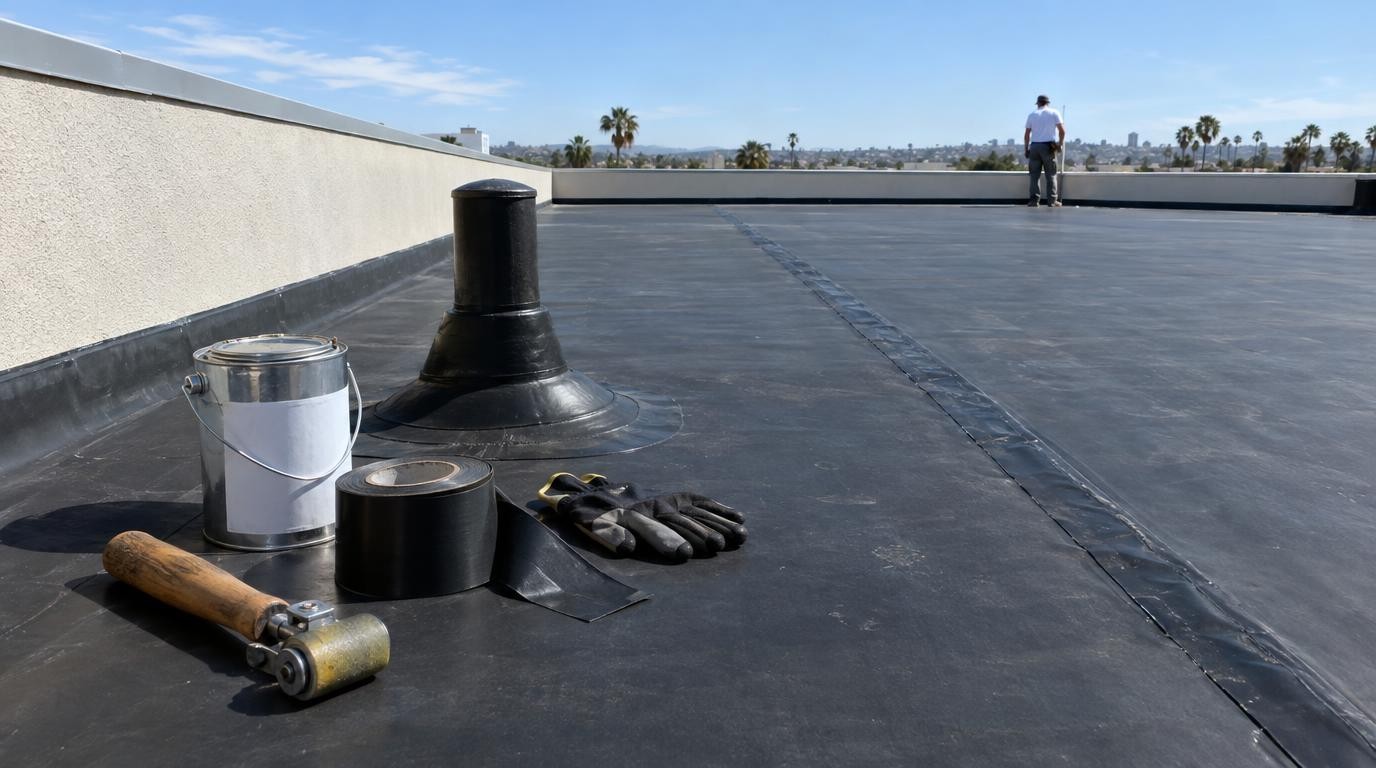
EPDM seams are sealed using the cleaning, preparation, bonding, and pressure-application steps specified for the membrane system. Edges, penetrations, and transitions need compatible flashing details because those locations interrupt the roof’s continuous waterproofing surface. The finished work should be inspected for secure bonds, complete details, and visible defects.
Why does seam preparation matter?
Contamination or an incompatible product can interfere with bonding. Depending on the system, seam work may involve manufacturer-specified cleaning, primer or adhesive, seam tape or another approved bonding method, and pressure applied with the required tools. Performance of tape-bonded seams of EPDM membranes examines tape-bonded seams; the bonding method still needs to match the chosen roof assembly.
How are flashing details checked?
Flashings must connect the membrane to roof edges, walls, drains, and penetrations using details approved for the system. Inspection should look for incomplete bonds, openings, wrinkles that compromise a detail, and places where water may not drain as intended. These checks matter because a well-placed field membrane cannot compensate for an unfinished transition.
Can I install EPDM rubber roofing myself?
A small DIY EPDM project may be possible when a compatible manufacturer system and its instructions suit the application. A residential or commercial roof replacement is more demanding: the installer must evaluate the deck, work safely, attach insulation correctly, complete watertight details, and review applicable building requirements before covering existing conditions.
Which installation decisions call for a roofing contractor?
Deck damage, suspected trapped moisture, existing roof layers, drainage problems, and complex penetrations call for experienced assessment. In roofing work, a detail that looks finished from the ground may still need correction at a seam or flashing. Ask a contractor about experience with the specific proposed EPDM assembly rather than assuming that general flat-roof experience covers every product.
What are the downsides of EPDM roofing?
EPDM can be damaged by punctures, and poorly prepared seams or flashings can allow leaks. Heat absorption and reflectivity depend on the product and roof assembly, so energy performance should not be assumed from the material name alone. EPDM also needs a suitable low-slope design and project-specific building-code review.
Which roofs may need a different roofing system?
If the structure cannot support a proposed ballasted assembly, or an approved attachment cannot be secured to the deck, that EPDM design must change. Drainage that cannot be corrected within the proposed design, or an EPDM assembly that cannot meet applicable wind or California energy requirements, may call for a different roof design or material. Trapped moisture or damaged decking may instead require tear-off and repair; neither finding automatically rules out EPDM afterward. Our guide to choosing a Title 24-savvy roof replacement contractor explains why code review belongs in the planning process.
When is EPDM re-covering possible instead of a tear-off?
We use the inspection findings to explain whether re-covering qualifies and compare the work and tradeoffs of each option:
| Option | What the work involves | What to consider |
|---|---|---|
| Re-covering | Prepare the existing roofing as the receiving surface, install a compatible new assembly over it, and upgrade flashing and waterproofing details. | The old roofing stays in place, so the deck is not fully exposed. Less material must be removed and hauled away. |
| Full tear-off replacement | Remove existing roofing, inspect and repair the exposed deck, then install a new assembly and flashing from the base layer up. | Removal gives the crew access to concealed damage but involves hauling away the old roofing. |
What should property owners expect while the roof is being installed?
Property owners should expect an inspection and eligibility review before installation, followed by surface preparation, assembly-specific roofing work, and a final inspection and cleanup.
How should access and site cleanup be handled?
Discuss building access, material delivery, protected areas, and debris handling before work begins. Duration varies with roof condition, removal needs, weather, and assembly details; our roof replacement timeline guide offers more planning context.
What should the final roof inspection check?
The final review should check seams, flashings at penetrations and transitions, roof edges, drainage, and the condition of the completed surface. The work area should also be left clean. Owners can ask for an explanation of any deck repairs or changes made after the existing roofing was opened.
Frequently Asked Questions
Can re-covering an existing roof stop a leak?
Yes, re-covering can stop a leak if the existing roof qualifies and the leak source is addressed with proper flashing and waterproofing. At Gastelum Roofing, we inspect for trapped moisture and deck damage first. If either has compromised the underlying roof, a full tear-off may be necessary instead.
What if my roof only needs a small repair, not a full EPDM replacement?
If our free inspection finds only minor issues, we recommend practical repairs that can extend the roof’s life rather than a full EPDM replacement.
What should a written roof replacement estimate include?
A written estimate should identify the proposed materials, labor, and project timeline. At Gastelum Roofing, we provide an itemized estimate after evaluating the roof. For an EPDM proposal, also ask which approved assembly is planned and whether the estimate assumes a re-cover or a tear-off, since those depend on inspection findings.
What happens if damaged decking is found after the old roof comes off?
Damaged decking must be addressed before the new roofing system covers it. A tear-off allows the crew to inspect areas that were hidden beneath the old roof and determine what repairs are needed. Ask your contractor to explain any newly discovered damage and how it changes the planned work before installation proceeds.
Does San Diego weather make my roof a good candidate for re-covering?
Not by itself. San Diego’s climate can allow some roofing systems to age more slowly, but UV exposure and occasional heavy rains still wear flashing and sealants. At Gastelum Roofing, we check moisture, decking, existing layers, and flashing before recommending re-covering. Climate cannot establish that an EPDM assembly is suitable for a particular roof.
Does Gastelum Roofing use subcontractors for roof replacement work?
No. At Gastelum Roofing, we complete our roofing work in-house rather than subcontracting it. We are licensed, bonded, and insured, and we insure workers on our projects.
What should you ask before choosing EPDM for your roof?
When reviewing an EPDM proposal, ask for a written scope identifying the assembly, attachment method, flashing details, and whether the work assumes a re-cover or full tear-off. Use the inspection findings to compare those options rather than choosing by membrane preference alone.
For a San Diego roof inspection and a practical discussion of replacement or re-covering, contact Gastelum Roofing at 760-295-6593. Our team can assess the existing roof, explain the available options, and confirm whether EPDM is an option for your property.