
Last updated: October 22, 2026
Roofing materials for flat roofs include TPO and PVC membranes, modified bitumen, and coatings for suitable existing roofs. The best choice depends on the roof’s slope, drainage, deck condition, exposure, and use – not just the material visible from the ground.
What roofing material is best for a flat roof?
No roofing material is best for every flat roof. TPO and PVC provide continuous single-ply coverings, modified bitumen offers a layered asphalt-based system, and a compatible coating may suit an existing roof in sound condition. The right choice starts with measured pitch, drainage, deck condition, sun exposure, and how the roof will be used.
At Gastelum Roofing, we install these systems for homes and businesses. Our flat roofing and low-pitch roofing service begins with an inspection so we can recommend a covering alongside the base layers, seams, flashing, and drainage details it needs.
How do the main flat-roof coverings compare?
What are the best materials to use for covering a flat roof?
These common approaches give owners a useful starting point for comparing proposals:
| Covering | Relevant strength | Installation consideration |
|---|---|---|
| TPO or PVC | Lightweight, reflective single-ply covering | Sheets need carefully welded seams and detailed transitions. |
| Modified bitumen | Layered waterproofing and puncture resistance | The roof needs appropriate base layers and sound lap details. |
| Compatible coating | Can protect a suitable existing system | The existing roof must be assessed, prepared, and compatible with the coating. |
EPDM membranes and built-up roofing are other established low-slope options. Gastelum Roofing’s listed installation systems are TPO, PVC, modified bitumen, and coated solutions; material selection still depends on the complete roof assembly.
How do TPO and PVC differ from modified bitumen?
Unlike the heat-welded seams of TPO and PVC, modified bitumen uses polymer-modified asphalt layers with laps that need careful detailing. Consider expected foot traffic and penetrations alongside sun exposure and drainage when comparing proposals. For a closer comparison of the single-ply options, see our TPO versus PVC roofing guide.
How does roof pitch affect which materials can be used?
A flat roof needs a slight slope to move water toward its drains or outlets. As pitch decreases, the covering and its seams must provide continuous waterproofing rather than relying on water to run quickly over overlapping shingles. Material suitability depends on the measured pitch, applicable California requirements, and the manufacturer’s installation specifications.
FEMA’s low-slope roof systems fact sheet discusses roof components that must work together, rather than prescribing one covering for every building. The solar-ready roof design publication archived by the CDC identifies TPO, EPDM, and PVC as flat-roof membrane options and notes that pitch affects roofing-material and solar-mounting choices.
Which parts of a flat roof matter besides its membrane?
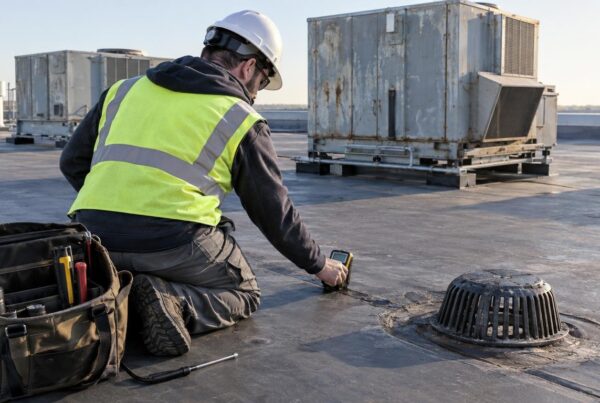
A flat roof performs as an assembly, not as a membrane alone. Framing, connectors and fasteners, the deck, insulation, covering, edges, parapets, vents, drainage, openings, and roof-mounted equipment all affect how the roof carries loads and keeps water out. An inspection should follow those connections across the entire roof.
Why do roof edges, drains and penetrations affect leaks?
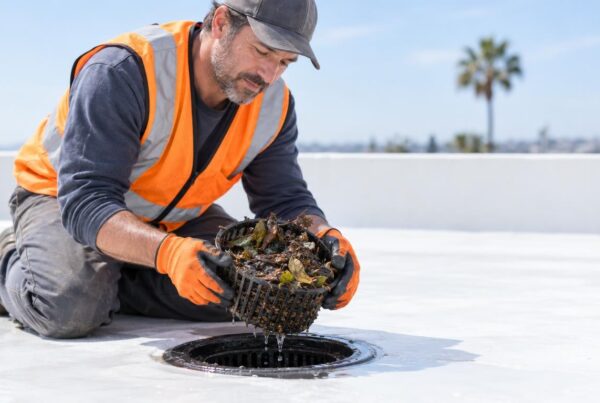
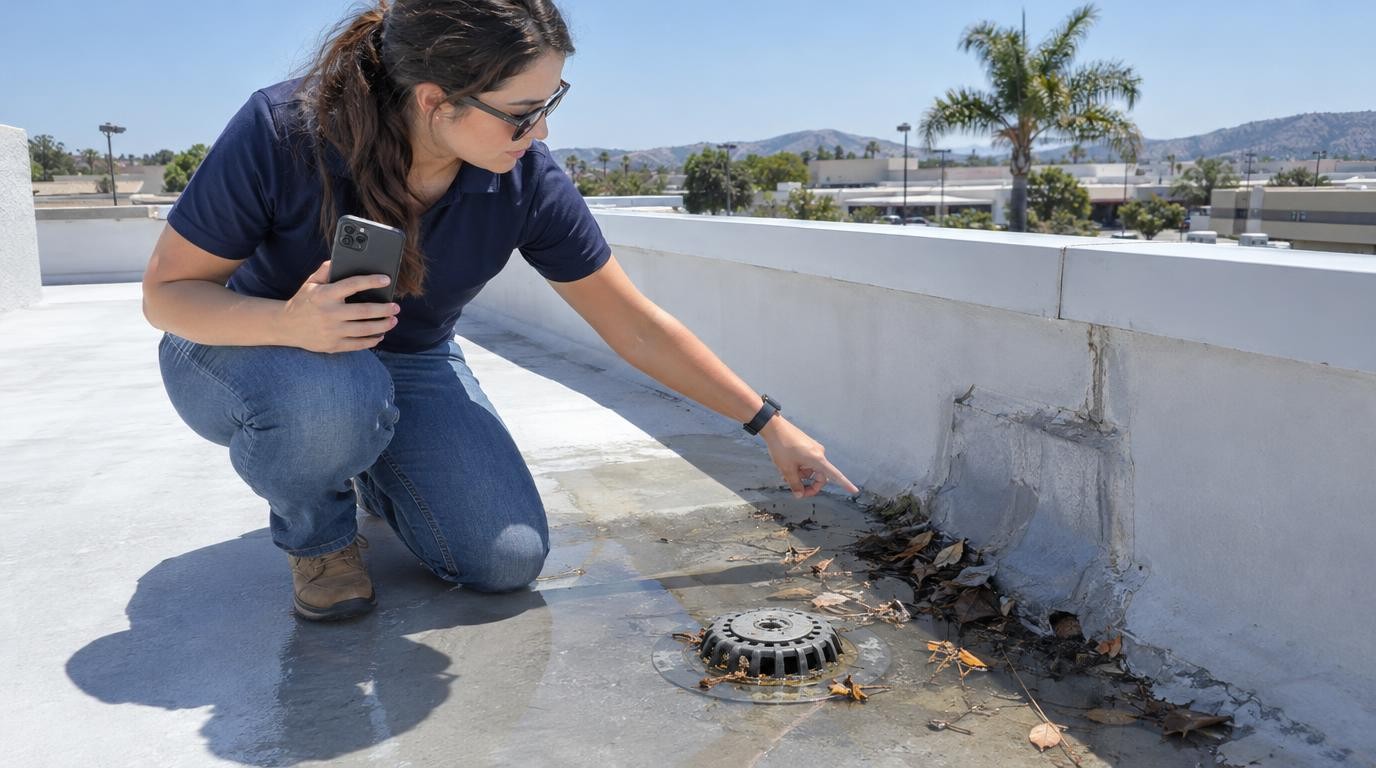
Water can enter where a sound field membrane meets an open edge detail, a poorly sealed pipe, or a parapet. A blocked drain can also leave water standing where the roof was designed to shed it. Checking those locations helps identify whether the problem is localized or part of a broader drainage or assembly failure.
What happens when flat-roof materials are installed?
Our flat-roof installation process follows the roof’s condition and the selected system:
- Inspect the roof, assess drainage, and plan the slope and deck preparation.
- Prepare the deck and install the appropriate underlayment or base layer.
- Install the covering, form its seams or apply the coating, and detail flashing at edges and penetrations.
- Check seams where applicable, flashing, and drainage, then clean up the property.
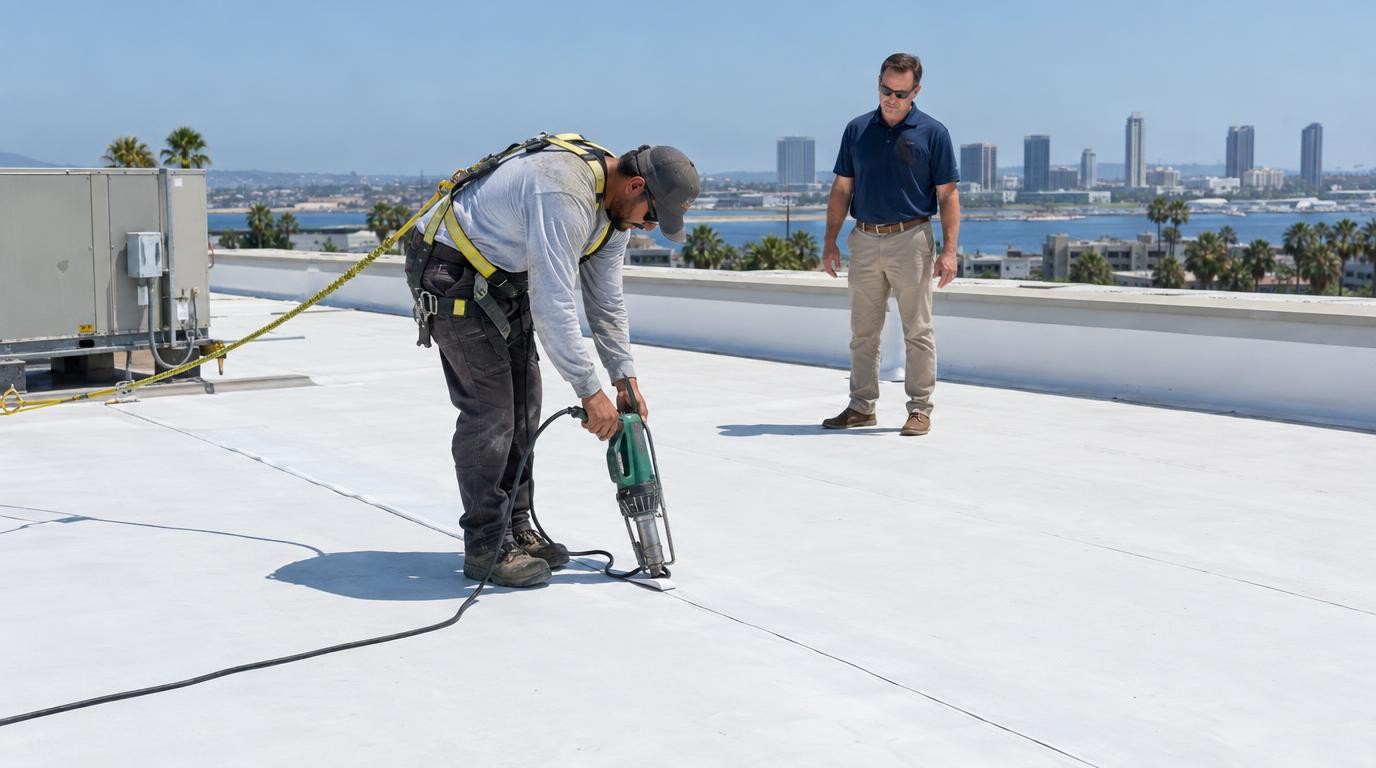
Each step supports the next: a sound deck supports the base layers, while correctly formed seams and flashing keep the waterproof surface continuous around edges and openings. Our TPO roof installation process guide explains how those details come together for a single-ply system.
What are three typical top applications on a flat roof?
- Welded single-ply membrane: TPO or PVC sheets are joined to create a continuous covering.
- Layered modified bitumen: The system builds waterproofing through compatible asphalt-based layers.
- Compatible coating: A prepared, serviceable existing roof receives a coating selected for that substrate.
A coating is not an interchangeable substitute for a new membrane when the underlying roof has failed.
What is the longest lasting material for a flat roof?
No flat-roof material has a guaranteed longest lifespan on every building. Many of the flat-roof systems we install can last 20–30 years or longer with proper installation and maintenance; actual lifespan depends on material type, drainage performance, and sun exposure.
A covering may remain in good condition while a drain, edge, or penetration needs attention. Periodic inspections therefore matter as much as the material’s potential lifespan: they help reveal debris buildup and developing detail problems before those problems affect the wider assembly.
When can a coating or repair work instead of replacement?
A localized repair may work when the surrounding roof remains serviceable and the source of water entry can be corrected. A coating may suit an existing system only after its condition, preparation needs, and material compatibility are assessed. Our guide to flat roof coating explains which types help reflect heat and when an existing roof may be suitable.
At Gastelum Roofing, we recommend practical repairs when an inspection shows they are appropriate. Recurring leaks, blistering, cracked seams, extensive ponding, or widespread membrane wear may instead point toward replacement and drainage correction. Our flat roof repair guide explores how to weigh that decision.
Can a flat roof coating fix an active leak?
A coating alone should not be treated as a fix for an active leak without finding its source. Coating the field surface will not repair a failed drain, wet substrate, open edge detail, or defective flashing. The affected area needs inspection and correction before a coating can be considered as part of a suitable roof plan.
Which material suits a home addition or commercial roof?
A home addition, patio cover, or commercial roof needs a material matched to its slope, condition, exposure, and intended use. Reflective TPO or PVC may fit a design seeking a light-colored membrane; modified bitumen may suit a roof where layered durability is useful. Equipment and solar plans can change the required details.
For a San Diego-area property, including one in El Cajon, rooftop units and mounting points should be considered before the roof design is finalized. They affect access, loads, and waterproofing at penetrations. A California workplace safety investigation archived by the CDC notes that flat-roofed buildings commonly carry equipment accessed by maintenance workers, making safe access an important planning consideration.
What should a flat-roof installation plan include?
Use this checklist when reviewing a proposed installation or replacement:
- Measured pitch, existing deck condition, and any needed slope or drainage correction
- Insulation or base layers and the selected roof covering
- Seam method and flashing at penetrations, transitions, and parapets
- Perimeter edge metal and interfaces with rooftop equipment
- Final inspection of seams, flashing, and drainage
Frequently Asked Questions
Can you put regular asphalt shingles on a flat roof?
No. Regular composition shingles are not a suitable covering for a truly flat roof, where water does not drain quickly enough for a shingle-style system. The solar-ready roof design publication identifies TPO, PVC, and EPDM membranes as flat-roof options. The measured pitch and manufacturer specifications determine which covering fits.
Can solar panels be installed on a flat roof without penetrating the membrane?
Yes, a ballasted solar mount may avoid fastening through the roof membrane, but it is not suitable for every building. Ballast adds weight, so the roof structure and mounting design need review for the added loads. The solar-ready roof design publication notes that ballasted systems on flat roofs may require additional structural engineering.
Will a reflective flat-roof membrane help keep a building cooler?
A reflective membrane can reduce heat absorption and lower roof surface temperature, which may improve indoor comfort during hot weather. At Gastelum Roofing, we install reflective TPO and PVC systems when they fit the roof. The effect inside a building also depends on its insulation, ventilation, exposure, and overall roof design.
Is modified bitumen the same as tar-and-gravel roofing?
No. Modified bitumen uses polymer-modified asphalt in a layered roof system; traditional tar-and-gravel roofing is a form of built-up roofing made with alternating asphalt or tar and roofing felt, with gravel over the top. The roofing safety analysis describes that built-up application. Ask which complete system a proposal specifies.
Does a flat roof need fall protection when workers service rooftop equipment?
Workers servicing rooftop equipment need a plan for safe access and fall hazards, even on a flat roof. The California workplace safety investigation notes that these roofs are commonly accessed for equipment maintenance and recommends that owners consider permanent guardrails at unprotected edges where feasible. Appropriate protection depends on the work and site conditions.
What happens to the old materials when a flat roof is replaced?
For a full replacement, we remove the old roofing materials, inspect the exposed substrate, and address drainage where needed before installing the new system. This lets us identify underlying conditions that a new covering could hide. At Gastelum Roofing, we then complete the roof assembly and check its seams, flashing, and drainage. Our flat roof replacement guide explains when to replace the roof and how to check permit requirements.
What should an itemized flat-roof estimate show?
An itemized flat-roof estimate should make the proposed materials, labor, and project timeline clear. At Gastelum Roofing, we provide those details after inspecting the roof and discussing its drainage needs, performance goals, and the recommended work. Ask for clarification if the scope does not explain whether repairs or replacement are planned.
How can you choose the next step for your flat roof?
Before requesting a proposal, note any interior leaks or drainage problems you have observed, along with plans for rooftop equipment or solar mounts. Those details can help us focus the roof inspection on your concerns.
If you own a home or commercial property in the San Diego area, including El Cajon, contact Gastelum Roofing at 760-295-6593 to request a free roof inspection. We will review the roof’s condition with you and explain the work we recommend.