
Last updated: November 7, 2026
Sealing a metal roof means finding vulnerable joints and roof details, preparing those areas, and applying materials compatible with the metal roof system. It can improve water resistance on an otherwise sound roof, but an active leak needs a diagnosis before anyone covers it with sealant. At Gastelum Roofing, our roof sealing service begins with an assessment of the roof’s condition.
What does sealing a metal roof actually involve?
Sealing a metal roof involves inspecting the roof, identifying vulnerable seams, fasteners, penetrations, flashing, and transitions, then preparing and sealing the details that need reinforcement.
Our team checks whether sealant can adhere to the existing materials and whether the surrounding roof components are sound. We focus on the details that need attention rather than treating every visible seam as a gap to fill.
Where do metal roofs most often need sealing?
Metal roofs most often need assessment at panel overlaps, exposed fasteners, vent pipes, skylights, wall transitions, and flashing joints. These details bring different materials together or interrupt the roof surface. An indoor stain may appear away from the opening where water entered, so finding the source matters more than sealing the spot directly above the stain.
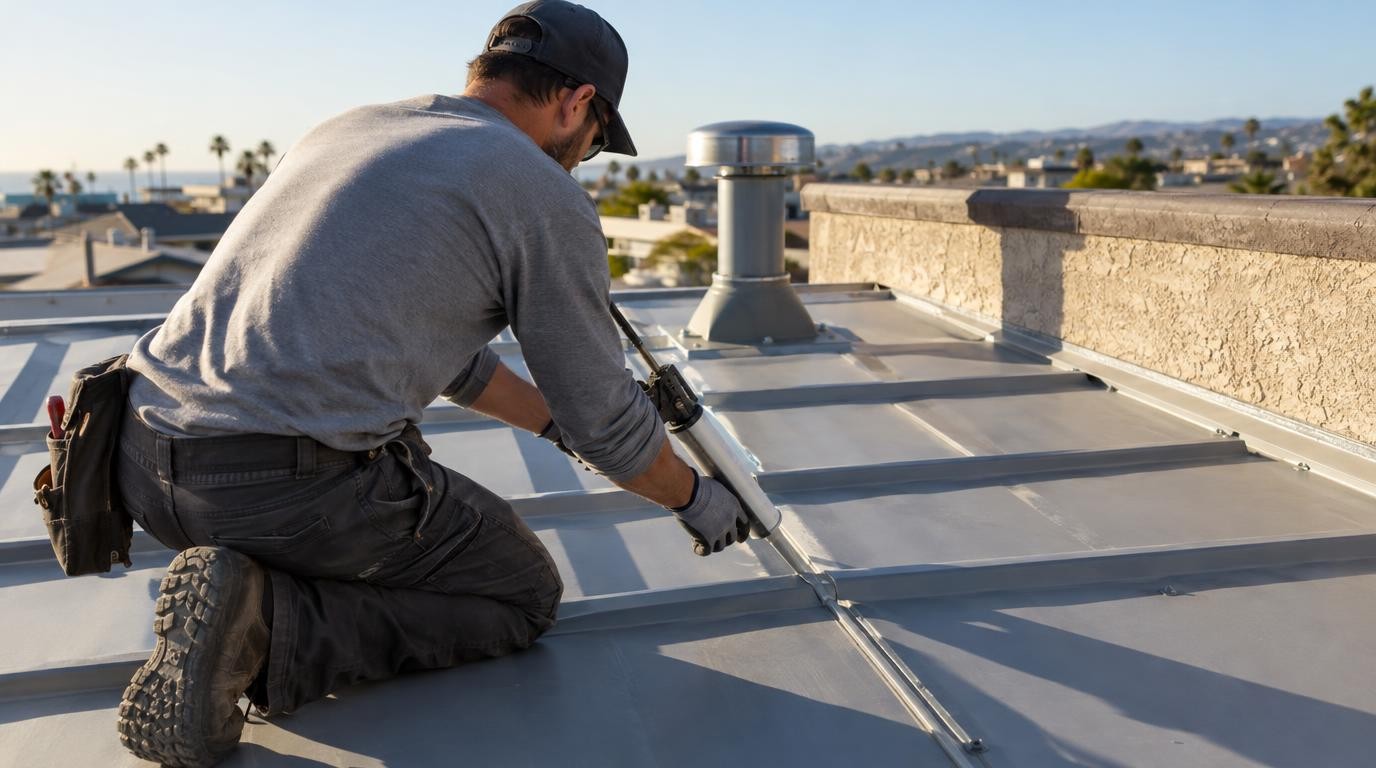
On a corrugated roof, side laps and fastener washers deserve attention together: a sound overlap will not prevent leakage through a deteriorated fastener detail nearby. Valleys and drainage points also need inspection where water concentrates. Designed drainage paths must remain open; sealing every seam indiscriminately can interfere with how the roof sheds water.
What is a good solution for tin leakage?
“Tin leakage” describes a symptom, not a repair method. An inspection can distinguish a failed joint or fastener from corrosion, damaged panels, or faulty flashing. A sound panel with a localized failed detail may be suitable for targeted sealing, while a corroded or damaged panel needs repair or replacement of the affected component.
Which sealants work on a metal roof?
A metal roof needs a roofing-grade sealant selected for its panel system and the specific joint being treated. Joint movement, existing materials, sun exposure, and adhesion requirements all affect whether a proposed sealant is suitable.
The product must be compatible with both the metal and any existing finish or sealant it will contact. We also check whether the roof system calls for a sealed joint or a properly fitted component at that detail.
Can you use the same sealant on every type of metal roof?
No. A standing-seam metal roof has different joints and movement considerations from an exposed-fastener panel roof. The roof system’s specifications should guide which details are sealed and which materials are used; no single sealant is a universal fix.
How is a metal roof prepared and sealed?
- Inspect: Check the panels, joints, fasteners, penetrations, flashing, and drainage to decide whether sealing is appropriate.
- Prepare: Clean and dry the target area so new material can bond, and remove failed or cracked sealant where necessary.
- Seal: Apply compatible roofing-grade materials to the prepared joints, fastener details, and flashing connections identified for sealing.
- Check: Review the completed details and make sure water can still follow its intended drainage path.
How can I waterproof a corrugated iron roof?
Corrugated metal roof waterproofing starts by checking panel overlaps, fastener condition, flashing, and drainage together. After preparation, we select roof-system-compatible materials for the laps or flashing joints that need reinforcement rather than spreading sealant across the entire panel surface.
How are exposed fasteners and roof penetrations sealed?
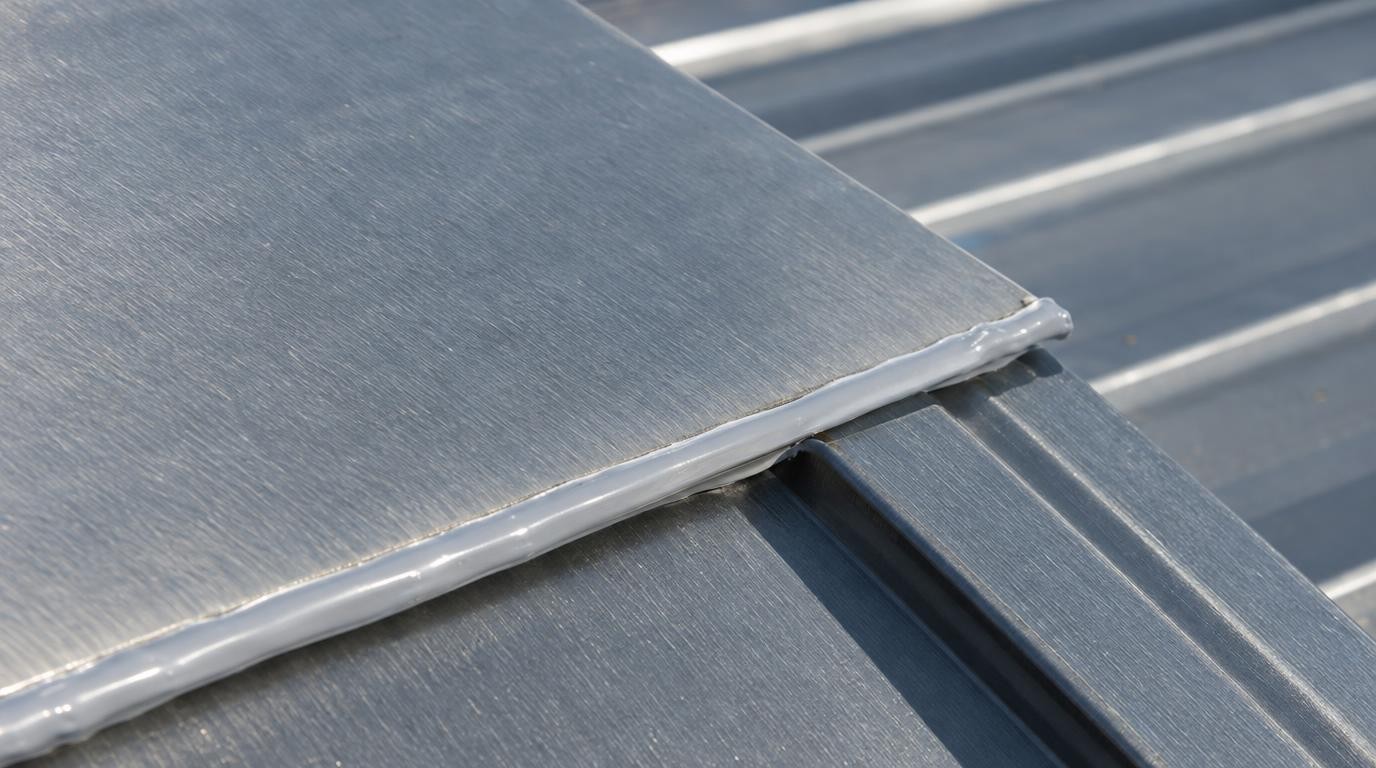
We check exposed fasteners for loose screws and worn washers, and inspect the flashing and adjoining metal at vent pipes and other penetrations. Once failed components have been addressed, we remove cracked sealant, clean and dry the target areas, and re-seal the appropriate fastener and flashing connections with roofing-grade materials compatible with the metal roof system. Our guide to repairing roof flashing leaks explains why the flashing detail matters.
When will sealing a metal roof not stop a leak?
Sealing will not reliably stop a metal roof leak when water enters through damaged panels, corrosion, failed flashing, compromised underlayment, or another underlying defect. Those conditions need the appropriate repair before sealant can reinforce the finished detail. Sealant cannot restore a structurally unsound roof or replace an investigation into an active leak.
Water can travel beneath roofing components before it becomes visible indoors. That is why metal roof leak repair starts with tracing the entry point and checking surrounding materials, not simply applying sealant above a ceiling stain. For more on that distinction, see our guide to finding a roof leak’s source.
How does targeted sealing differ from a metal roof coating?
Targeted sealing and roof coating differ in scope and where they fit:
| Option | Area treated | When it fits |
|---|---|---|
| Targeted sealing | Specific seams, penetrations, flashing joints, and transitions | An otherwise sound roof needing reinforcement at those details |
| Roof coating | A broader roof surface | A compatible roof system needing broader surface protection |
When might an elastomeric roof coating be appropriate?
An elastomeric roof coating may be appropriate when the roof system and its condition support a broader protective application, particularly on a suitable flat or low-slope roof. The coating must be compatible with the roof system, and the surface needs proper preparation for adhesion.
How long does metal roof sealant last?
Metal roof sealant can last for years, but there is no guaranteed service interval for every roof. Product choice, adhesion, roof movement, sun exposure, and the condition of surrounding materials affect performance. Periodic inspections help identify cracking, separation, or worn details before deciding whether roof resealing or another repair is needed.
San Diego roofs face strong UV exposure, seasonal winds, and occasional heavy rainfall. Checking sealant at penetrations and flashing, along with keeping drainage clear, helps maintain water resistance as those conditions wear on roof details.
Frequently Asked Questions
What is the 25% rule in roofing?
People use the “25% rule” to refer to roofing-code provisions that may change repair or replacement requirements when work affects more than a quarter of a roof. It is not a universal rule for sealing a metal roof. Requirements depend on the jurisdiction and project, so we check the applicable local code rather than assuming a 25% threshold applies in San Diego County.
How to waterproof a garage roof?
Waterproofing a garage roof depends on its roof system, not the fact that it covers a garage. On a metal garage roof, we inspect laps, fasteners, flashing, and drainage to identify details suitable for targeted sealing. On a flat or low-slope garage roof, we assess the membrane and drainage to determine whether detail sealing or a compatible coating system fits. For membrane-specific guidance, our guide to sealing a rubber roof explains how to prepare the surface and patch leaks.
Will sealing a metal roof stop condensation underneath it?
No. Sealant addresses exterior openings, while condensation forms when moisture in the air meets a cooler surface. If water appears beneath a metal roof without an obvious leak, the source needs checking before sealing. Condensation may call for changes to ventilation, insulation, or indoor moisture control rather than more roof sealant.
Can you seal a leaking metal roof from inside the attic?
No. Applying sealant inside the attic is unlikely to correct the exterior opening where rain enters, and water may travel before it becomes visible indoors. Have the roof entry point and surrounding components inspected from a safe location.
Do solar panels change how a metal roof should be sealed?
Yes. Solar panel attachments add details that need to be evaluated according to the roof and mounting systems. Some mounts penetrate roofing, while others clamp to standing seams. If water appears near an array, check the attachment and flashing rather than applying sealant indiscriminately. Arrange qualified help instead of disturbing electrical equipment.
When is the best time to seal a metal roof in San Diego?
Before the rainy season is a practical time to inspect and seal a metal roof, provided the roof needs it and application conditions meet the product instructions. Target surfaces must be clean and dry for proper adhesion.
Can I seal a metal roof myself?
You may be able to address a small, accessible detail yourself if you can work safely and follow the roof and sealant manufacturers’ instructions. Do not climb onto an unsafe roof or treat an active leak by guessing at its source.
What should you do before sealing a leaking metal roof?
Before sealing a leaking metal roof, document where and when water appears indoors and avoid unsafe roof access. Arrange a free roof inspection to identify the entry point and determine whether targeted sealing, a repair, or a coating system is appropriate.
We offer roof inspections and no-pressure recommendations in San Diego County. Contact Gastelum Roofing at 760-295-6593 to discuss the leak and arrange an inspection; our team can explain which work fits your roof’s condition.