Last updated: October 1, 2026
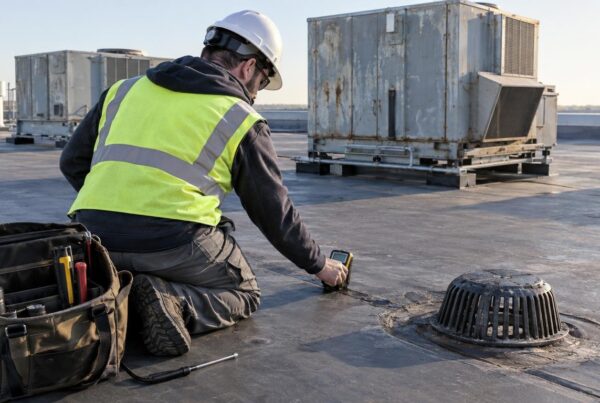
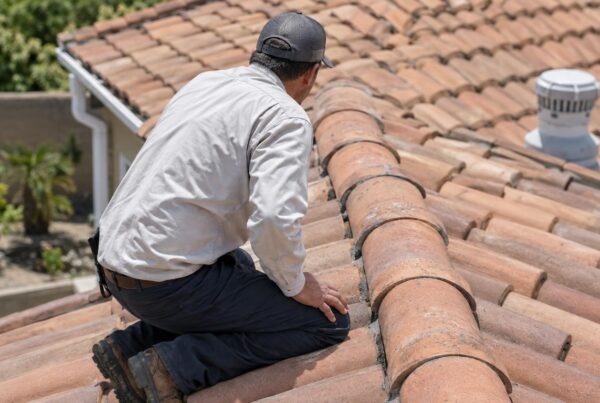
AC leak repair starts with identifying where the water is coming from: an AC condensate drain, rain entering around a roof opening, or another HVAC problem. Gastelum Roofing handles roof-side water entry for San Diego homes and commercial properties through its roof leak repair service; an HVAC professional handles the AC equipment.
What Does AC Leak Repair Mean When Water Appears Near an AC Unit?
AC leak repair means finding the source of water before choosing a repair. Condensate can escape from an AC drainage system, while rain can enter where equipment, piping, or a roof curb meets the roof. Gastelum Roofing repairs roof-side leaks; an HVAC professional evaluates drainage, cooling components, and refrigerant.
The location of a stain alone may not identify its source. Water can travel along framing or beneath roofing before it becomes visible indoors. A roofer can assess the weatherproofing around an AC-related roof opening, while an HVAC professional can check whether the unit is draining as intended.
Can an AC drain, roof opening, or refrigerant problem cause the water you see?
Yes, but those problems call for different work. A condensate drain can release water near an indoor unit. Rain can enter around damaged flashing or a rooftop AC curb. A suspected refrigerant problem belongs with an HVAC professional; visible water should not be assumed to be refrigerant. Identifying the source first helps direct the repair to the right trade.
How Can You Tell an AC Drain Leak From a Roof Leak?
The timing and location of water offer clues, but neither confirms the cause. Water that appears while the AC runs may point toward condensate drainage; water that follows rain may point toward a roof opening. Moisture near an indoor air handler, rooftop unit, or ceiling can still require closer inspection.
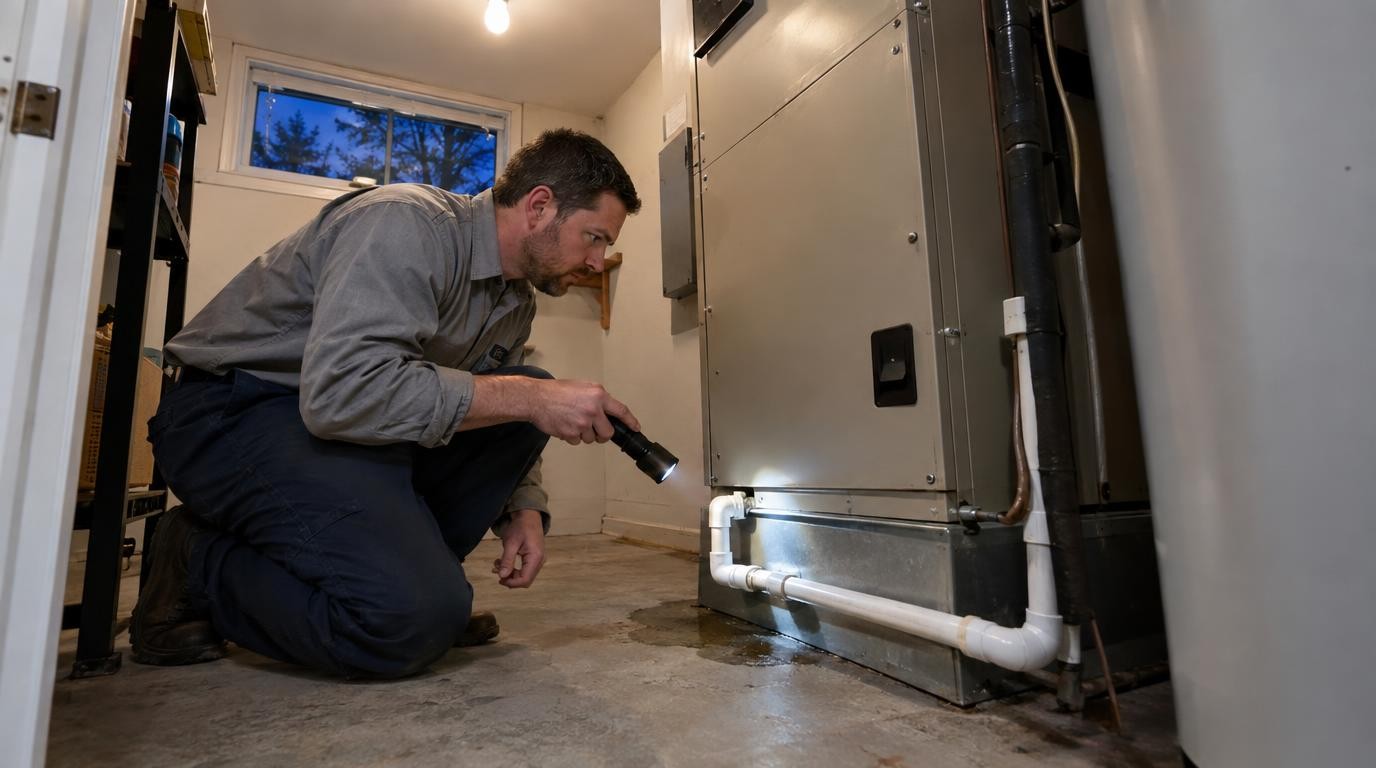
Record what you observe without opening equipment or climbing onto the roof. For San Diego property owners, roof leak detection and repair may involve tracing water beyond the spot where a ceiling stain appears. An HVAC assessment may also be useful when the same area becomes wet during cooling cycles.
Does the water appear during cooling cycles or after rain?
Compare when the moisture appears with when the AC runs and when rain falls:
| Observation | What to have checked |
|---|---|
| Water near the indoor air handler during cooling | Condensate drainage and nearby HVAC components |
| Ceiling moisture after rain | Roofing, flashing, penetrations, and drainage paths |
| Moisture around a rooftop unit under either condition | Both the roof curb and the AC system |
These patterns help a roofer or HVAC technician begin the search; they are not a diagnosis.
How Do Roofers Find and Repair Leaks Around AC Equipment?
Roofers trace water around AC equipment by examining the roofing, flashing, roof curb, line penetrations, and nearby drainage paths. A suitable roof-side repair depends on the condition and type of roof, not merely the visible stain. After repair, the roofer checks the affected area for remaining signs of water entry.
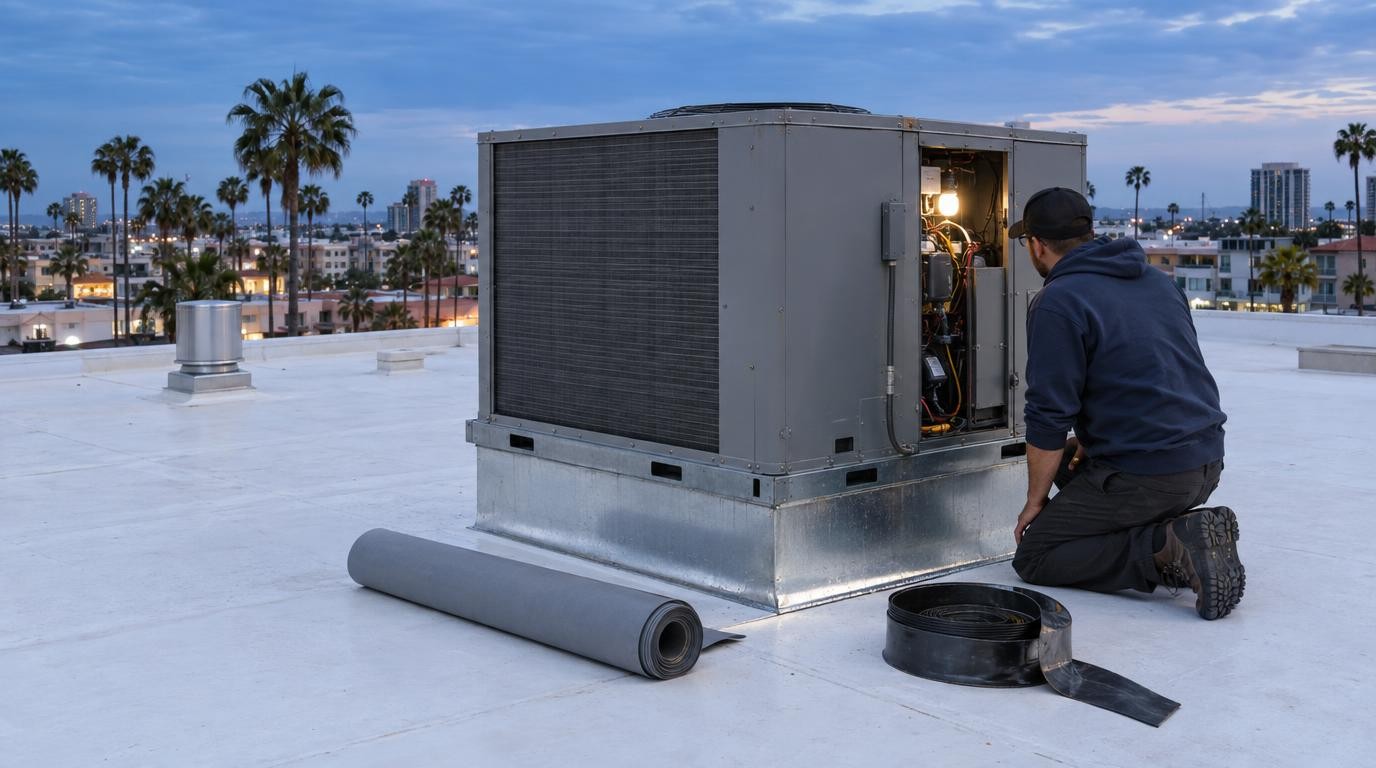
In roofing practice, a wet ceiling below a rooftop unit does not automatically mean the curb is leaking. Water may have entered at a nearby penetration or traveled across the roof assembly. On low-slope buildings, the condition of surrounding waterproofing and drainage also matters; our guide to flat roofing in San Diego explains why those roof details deserve attention.
What happens during a roof inspection around an AC curb or line penetration?
- The roofer reviews where and when water appeared, then examines accessible roofing around the equipment.
- The roofer checks flashing, seams, curb connections, pipe penetrations, and paths water could follow.
- Once the roof-side entry point is identified, the roofer makes an appropriate roof flashing repair or other roofing repair and checks the affected area.
AC drainage, cooling components, and refrigerant remain HVAC work.
When Do the 2026 Federal Refrigerant Leak Rules Apply to AC Systems?
The EPA Emissions Reduction and Reclamation final rule has leak-repair provisions that took effect January 1, 2026. The provisions concern qualifying refrigerant-containing appliances, not ordinary roof water leaks. They establish requirements and repair timelines after a qualifying refrigerant leak is identified; a rooftop water stain alone does not establish that an appliance has a refrigerant leak.
For a property manager, the practical distinction is straightforward: ask a roofer to assess suspected rain entry around the unit, and have an HVAC professional assess a suspected refrigerant leak. Roof flashing repair does not replace regulated refrigerant work.
Does the 15-pound refrigerant threshold include every home AC system?
No. A home AC system does not automatically qualify simply because it uses refrigerant. Under these AIM Act provisions, the 15-pound threshold applies to appliances containing at least that much of a covered refrigerant. Have an HVAC professional check the equipment’s refrigerant charge and applicability, and use an appropriately EPA-certified technician for regulated refrigerant work.
What Should You Do While Waiting for an AC-Related Water Leak Repair?
While waiting for AC-related water leak repair, document when and where water appears, protect nearby belongings if safe, and keep clear of wet electrical areas. Do not access a wet or unsafe roof or open refrigerant lines. Share your observations so the roofer or HVAC technician can investigate the likely source.
If rain appears to be entering around rooftop equipment, arrange a roof-side assessment. If water collects near the indoor air handler during cooling, ask an HVAC professional to check the condensate drain. When the pattern is unclear, both assessments may be useful. Gastelum Roofing’s roof repair guidance can help you describe what you have noticed.
What details can help the roofer or HVAC technician locate the leak?
- Note whether water appears during cooling, after rain, or under both conditions.
- Describe the first place you noticed moisture and whether it reappears in the same place.
- Share photos taken from a safe location, including visible ceiling stains or water near the unit.
Those details give each professional a useful starting point without requiring you to diagnose the leak yourself.
Who Should You Contact About Water Near an AC Unit?
Contact a roofer for suspected rain entry through roofing, flashing, or an AC-related roof opening, and contact an HVAC professional for suspected condensate drainage or refrigerant problems. If the source is uncertain, observations about rainfall and cooling cycles can help guide the next inspection. The right repair begins with finding the source.
If water appears to be entering around a rooftop AC unit or roof penetration, contact Gastelum Roofing in San Diego for a roof leak repair consultation at 760-295-6593. Tell our team where the water appears and what you have noticed about rain and AC operation.
Frequently Asked Questions
Why can a ceiling stain appear away from the roof opening near an AC unit?
Water can move beneath roofing or along framing before it becomes visible on a ceiling. A stain below a rooftop AC unit therefore does not pinpoint the entry point. A roofer may need to examine nearby flashing, seams, pipe penetrations, and drainage paths, rather than focusing only on the roof curb directly above the stain.
How long should I track water near my AC before requesting an inspection?
You do not need to wait for repeated leaks before requesting an assessment. Note whether water appears during cooling, after rain, or under both conditions, and share that pattern with the appropriate professional. Rain-related moisture calls for a roof-side assessment; water near an indoor air handler during cooling calls for an HVAC assessment.
What should I expect after a roofer repairs a leak near a rooftop AC unit?
The roofer should check the affected roof area for remaining signs of water entry after making the repair. The work may involve flashing or another roofing detail, depending on where rain entered and the roof’s condition. A roofing repair does not address condensate drainage, cooling components, or refrigerant, which require an HVAC professional.
Should I arrange both roofing and HVAC inspections if water appears during cooling and after rain?
Yes, both assessments may be useful when moisture appears under either condition near a rooftop unit. A roofer can evaluate the curb, flashing, penetrations, and surrounding roof, while an HVAC professional can check whether the AC drains properly. Timing offers a starting clue, but it cannot confirm which system needs repair.
What details should I provide when reporting water around an AC unit?
Share when the water appears, where you first noticed it, and whether it returns to the same spot. Mention any connection to rain or cooling cycles, and provide photos taken from a safe location. These observations help a roofer or HVAC technician trace the source without requiring you to access the roof or open equipment.
Can a roofer fix water coming from an AC condensate drain?
No. An HVAC professional should evaluate water coming from an AC condensate drain and check the associated equipment. A roofer handles rain entry through roof-side details such as flashing, curbs, or line penetrations. Because water may travel before becoming visible, identifying its source matters more than the stain’s location.
Does a water stain near a rooftop unit mean the 2026 EPA refrigerant rules apply?
No. A water stain does not establish a refrigerant leak or trigger refrigerant leak-repair requirements by itself. An HVAC professional can assess the equipment’s charge and whether the rules apply.