Last updated: October 7, 2026
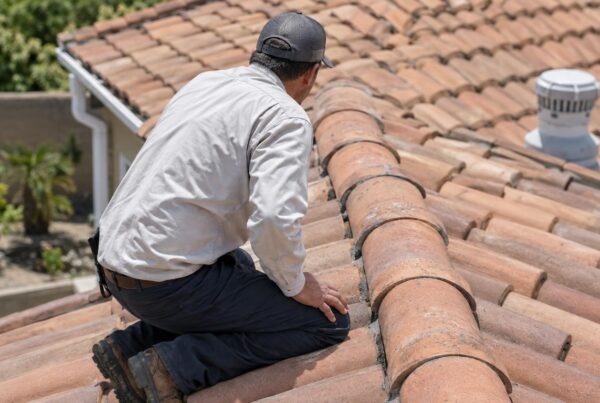
A clay tile roof is a water-shedding roof made from fired earthen-clay tiles installed over underlayment and flashing. For a Carlsbad homeowner, the appeal includes a distinctive appearance and potential heat-management benefits, but the condition of the complete roof system matters as much as the tiles. Gastelum Roofing offers tile roofing services for installation, repair and replacement.
What Is a Clay Tile Roof, and How Does It Work?
Overlapping tiles guide rain down the roof; they are not a watertight barrier on their own. The tiles provide the visible, durable surface; the materials beneath and around them manage water that gets past the tiles. Both layers need attention when evaluating an existing roof.
What are clay roof tiles made of?
Clay tiles are molded from earthen clay and fired until hard. Rolled and interlocking shapes create different roof profiles, while unglazed tiles retain a natural clay appearance and glazed tiles offer other finishes. Tile choice affects both the look of the home and the details needed for installation.
What keeps water out beneath the tiles?
Underlayment protects the roof deck when water gets beneath the tiles, while flashing helps direct water away from vulnerable areas such as roof edges and penetrations. Clay tiles shed most rain but are not watertight on their own, so a roof assessment needs to check those components even when the tiles appear sound from the ground.
How Does a Clay Tile Roof Affect Indoor Heat?
A clay tile roof can help manage heat, but lower indoor temperatures or reduced cooling energy use are not guaranteed. The result depends on tile finish, roof design, underlayment, attic ventilation, insulation and local conditions.
Can a clay tile roof reduce cooling demand?
Clay’s thermal mass can delay some heat movement through the roof. Air moving beneath tiles may also help limit heat buildup near the roof deck. Neither mechanism establishes a fixed cooling benefit for every home: a well-insulated attic, for example, changes how much roof heat reaches living spaces. In roofing work, we assess the whole assembly rather than treating the tile material as a stand-alone cooling solution.
What did the California Energy Commission study examine?
The report on additional energy-saving benefits of tile roofing, filed with the California Energy Commission, addresses how tile roofs may affect energy use. A Lawrence Berkeley National Laboratory study of a cool tile roof on a Central California home addressed measured temperature and energy performance in a specific setting. Those studies help explain why roof design is worth considering, but neither provides a reliable savings promise for a particular Carlsbad home without evaluating its roof and insulation.
Are Clay Tile Roofs Good for Coastal Conditions?
Clay tile can be a good fit for coastal Carlsbad homes, but exposure to sun and salt air is only part of the decision. The roof also needs appropriate waterproofing, fastening and structural support for the selected tile.
Are clay tile roofs good?
Clay is worth considering when a homeowner wants a durable tile profile suited to a warm coastal setting. The practical question is whether that profile works with the home’s structure, roof condition and desired appearance. Our guide to tile roofing for San Diego homes offers more context for weighing those factors.
How do clay tiles handle salt air and fire exposure?
Fired clay is well suited to salt-air exposure, but coastal air can still affect metal components, making flashing and other roof details important to inspect. Clay itself resists fire; homeowners should confirm any Class A classification for the particular roof assembly rather than assume it applies to every clay tile installation. A study of roofing assemblies exposed to continuous firebrand assault observed firebrand penetration beneath tile assemblies, underscoring why the complete assembly matters.
How Many Years Do Clay Tile Roofs Last?
At Gastelum Roofing, we use 40 to 50 years or longer as general guidance for a properly installed and maintained tile roof system, while individual clay tiles can last more than a century. These are not guarantees: installation quality, exposure and maintenance affect when roof work is needed.
What can wear out before clay roof tiles do?
Underlayment can reach the point where it needs replacement while many clay tiles remain intact. Flashing can also develop defects at roof transitions. An inspection can determine whether those components can be repaired locally or whether broader work is needed beneath the tiles.
What Are the Disadvantages of a Clay Tile Roof?
The main drawbacks of a clay tile roof are its weight, the possibility of broken or displaced tiles, the need to maintain waterproofing beneath the tiles, and a typically higher upfront investment than asphalt shingles. Clay tile’s durability and long service life may improve its value over time, but the outcome depends on the condition of the complete roof system.
Can every roof support clay tile?
No. The roof structure must be evaluated against the weight of the specific product and the existing building. At Gastelum Roofing, roofing products weighing more than 6 pounds per square foot typically call for structural investigation before installation. A structural review helps establish whether a proposed clay tile roof is suitable or whether a different tile option should be considered.
Can a cracked clay tile cause a leak?
Yes. A cracked or displaced tile can expose the underlayment to more water; a leak becomes more likely if that waterproofing or nearby flashing is worn or damaged. The visible crack may not reveal the full path water has taken. Our guidance on roof leak repair explains why finding the entry point matters before choosing a repair.
How Does Clay Tile Compare With Concrete Tile?
Clay and concrete tile both offer shaped roofing surfaces, but they differ in material and finish. Clay is molded from earthen clay and fired; concrete tile is molded from a colored sand-and-cement mixture. Neither is automatically the better choice. Roof structure, desired profile, finish and site conditions should guide the comparison.
What styles and finishes can each tile offer?
The main appearance options are easier to compare side by side.
| Feature | Clay tile | Concrete tile |
|---|---|---|
| Material | Fired earthen clay | Molded, colored concrete |
| Profiles | Rolled or interlocking shapes | Varied profiles, including rolled-tile and lower-profile looks |
| Finish | Unglazed or glazed | Colored, sometimes with a decorative coating |
When might concrete tile be a suitable alternative?
A concrete tile roof may suit a homeowner seeking a particular color or profile that works with the roof’s structural capacity. We install both clay and concrete tile, so the choice can begin with the home’s existing structure and the finish the homeowner wants. Product-specific weight and installation requirements still need review before either option is selected.
What Happens During Clay Tile Roof Installation?
Our clay tile installation process addresses structural capacity, waterproofing and compliance with applicable California building requirements.
How are the roof structure and waterproofing prepared?
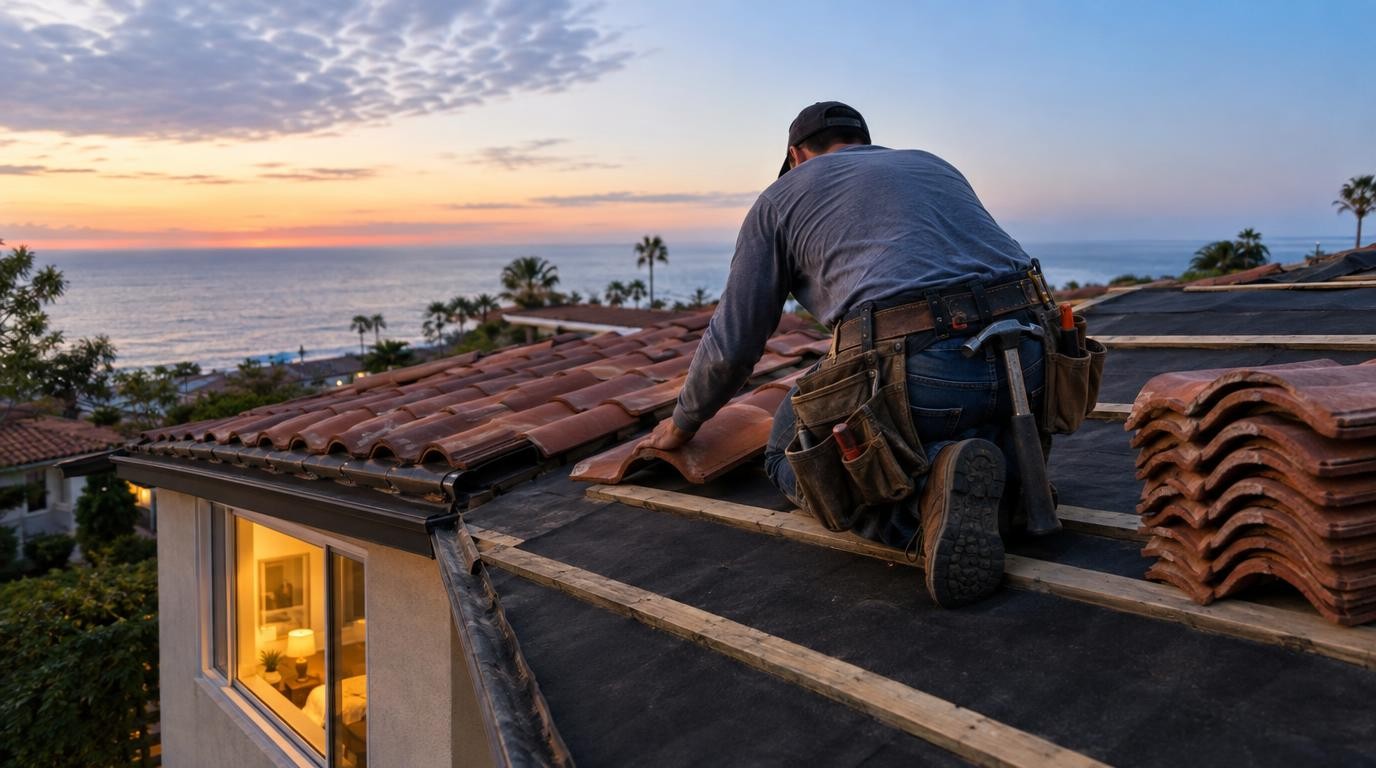
We prepare and install a tile roof in this order:
- Inspect the existing roof structure and discuss the proposed tile.
- For replacement, remove the old materials and inspect and prepare the deck.
- Install underlayment and flashing at vulnerable roof details.
- Place the selected tiles in compliance with applicable California building requirements.
- Inspect the finished roof as a complete system, including where tiles meet flashing, then clean up the property.
When Does a Clay Tile Roof Need Repair or Replacement?
A clay tile roof needs assessment when tiles crack or shift, flashing shows defects, underlayment wears, or water appears inside. Localized problems may be suitable for tile roof repair; widespread damage or aging waterproofing may call for tile roof replacement. An inspection establishes which parts remain serviceable before that decision is made.
How often should a clay tile roof be inspected?
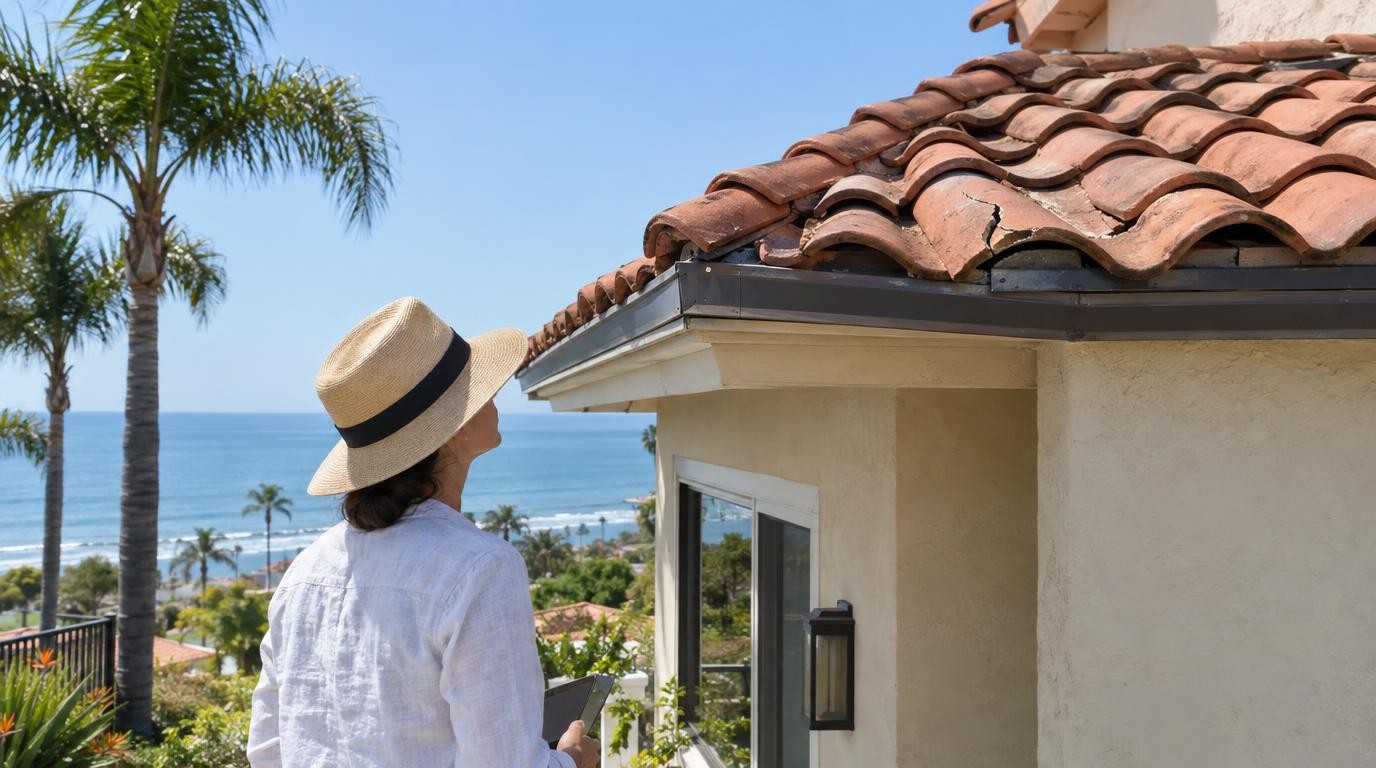
Periodic inspections are appropriate, but there is no fixed interval that suits every roof. After seasonal rain or high winds, look from a safe location for visibly cracked or displaced tiles and signs of water entry; a roofer can check flashing and underlayment more closely. Our roof inspection guide explains what a professional assessment can examine.
Can a leaking tile roof be repaired without full replacement?
Often, yes, if the leak is localized and the surrounding roof remains serviceable. We look for a practical repair that can extend roof life, including attention to the tile, flashing or waterproofing involved. When deterioration is broader, replacement may provide a more appropriate way to restore the roof system.
Frequently Asked Questions
Can you walk on a clay tile roof to check for damage?
Homeowners should not walk on a clay tile roof to check for damage. Tiles can crack underfoot, and working at height creates a serious fall hazard. Look for displaced tiles from a safe location, then have a roofer inspect areas you cannot see safely, including flashing and underlayment.
Do light-colored clay tiles keep a home cooler than dark tiles?
Light-colored tiles generally absorb less sunlight than dark tiles, but color alone does not establish how cool a home will be. A tile’s tested solar reflectance and the roof’s ventilation, underlayment and attic insulation also matter. Compare specific products and the complete roof assembly rather than relying on appearance alone.
Can existing clay tiles be reused when the underlayment is replaced?
Yes, some existing clay tiles can be reused if they remain sound and can be removed without damage. Replacing underlayment requires access beneath the tiles, so a roofer must assess their condition, the fastening method and whether matching replacements are available for any tiles that break during the work.
What kind of fasteners and flashing should a coastal clay tile roof use?
A coastal clay tile roof should use fasteners and flashing specified for its tile system and exposure conditions. Salt air can affect metal parts even when the clay tiles remain sound. The installation plan should specify corrosion-resistant, compatible metal components; attachments suited to the roof’s wind exposure; and waterproofing at edges and penetrations.
Can clay tile be installed on a low-slope roof?
Clay tile can be installed only if the selected product and complete roof assembly are suitable for that roof’s slope. Minimum slope and any additional waterproofing requirements depend on the product and installation method. At Gastelum Roofing, we check roof pitch and manufacturer requirements before recommending clay tile for a particular home.
What should a clay tile roof installation estimate include?
A clay tile roof installation estimate should identify the proposed tile and itemize materials, labor and the project timeline. At Gastelum Roofing, we provide an itemized estimate after assessing the roof and discussing your goals. Ask whether deck repairs, underlayment, flashing and any needed structural work are included or require further inspection.
Can improving attic insulation help if I already have a clay tile roof?
Yes, improving inadequate attic insulation can reduce heat transfer into living spaces even when a home already has a clay tile roof. Attic air sealing and ventilation also affect heat management. An assessment can help identify which improvements make sense; replacing tiles alone does not guarantee cooler rooms or reduced cooling energy use.
What Should You Do Before Choosing a Clay Tile Roof?
Before choosing a clay tile roof, have the existing roof and its structural capacity assessed, then discuss the condition of its waterproofing. That inspection can clarify whether new clay tile installation, concrete tile, targeted repair or replacement fits the home. The right choice depends on the actual roof, not appearance or tile age alone.
If you are considering tile roofing for a Carlsbad home, contact Gastelum Roofing for a no-pressure roof inspection and a discussion of the available options. Our team serves the San Diego, California area; call 760-295-6593 to arrange a consultation about your roof.