Last updated: October 10, 2026
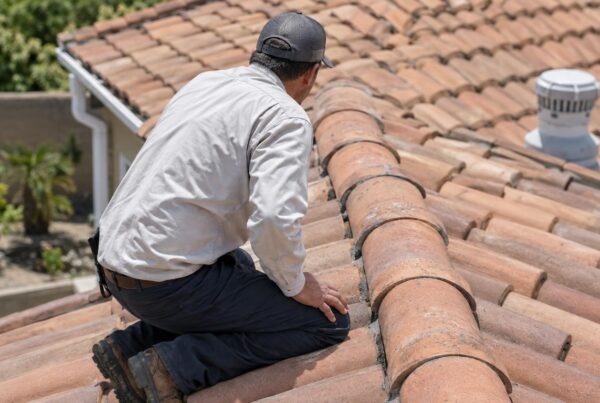
To repair roof flashing, first find where water enters the roof – not just where a stain appears indoors. A secure, undamaged joint may need resealing, while loose or damaged flashing may need replacement and repair of the roofing around it.
Can roof flashing be repaired?
Yes. The condition of the flashing and nearby roofing determines whether the work calls for resealing a joint, replacing flashing, or addressing a wider roof problem.
When can a sound flashing joint be resealed?
Resealing may be appropriate when the flashing is firmly attached, its shape still directs water away from the joint, and the sealant is the failed component. The roofer must also check that water is not entering through nearby roofing. At Gastelum Roofing, our Leak Repair service begins with locating the true entry point so the repair addresses the cause rather than the visible stain.
When does damaged flashing need replacement?
Flashing that has lifted, corroded, cracked, or lost its proper overlap may no longer shed water as intended. In that situation, adding sealant over the exposed surface can leave the opening beneath it untouched. A CDC evaluation of roof leaks and indoor environmental conditions identified damaged flashing and caulking where roofs met walls and recommended consulting a roofing specialist about repair or replacement.
Which types of roof flashing protect common leak points?
Different flashing details protect different paths water can take: step and continuous flashing serve roof-to-wall joints, chimney flashing surrounds a chimney, valley flashing channels water where roof planes meet, and drip edge protects roof edges. Vents and skylights need flashing fitted to their openings. On low-slope roofs, the membrane, seams, drains, and penetrations also shape the repair.
How do step and continuous flashing protect wall joints?
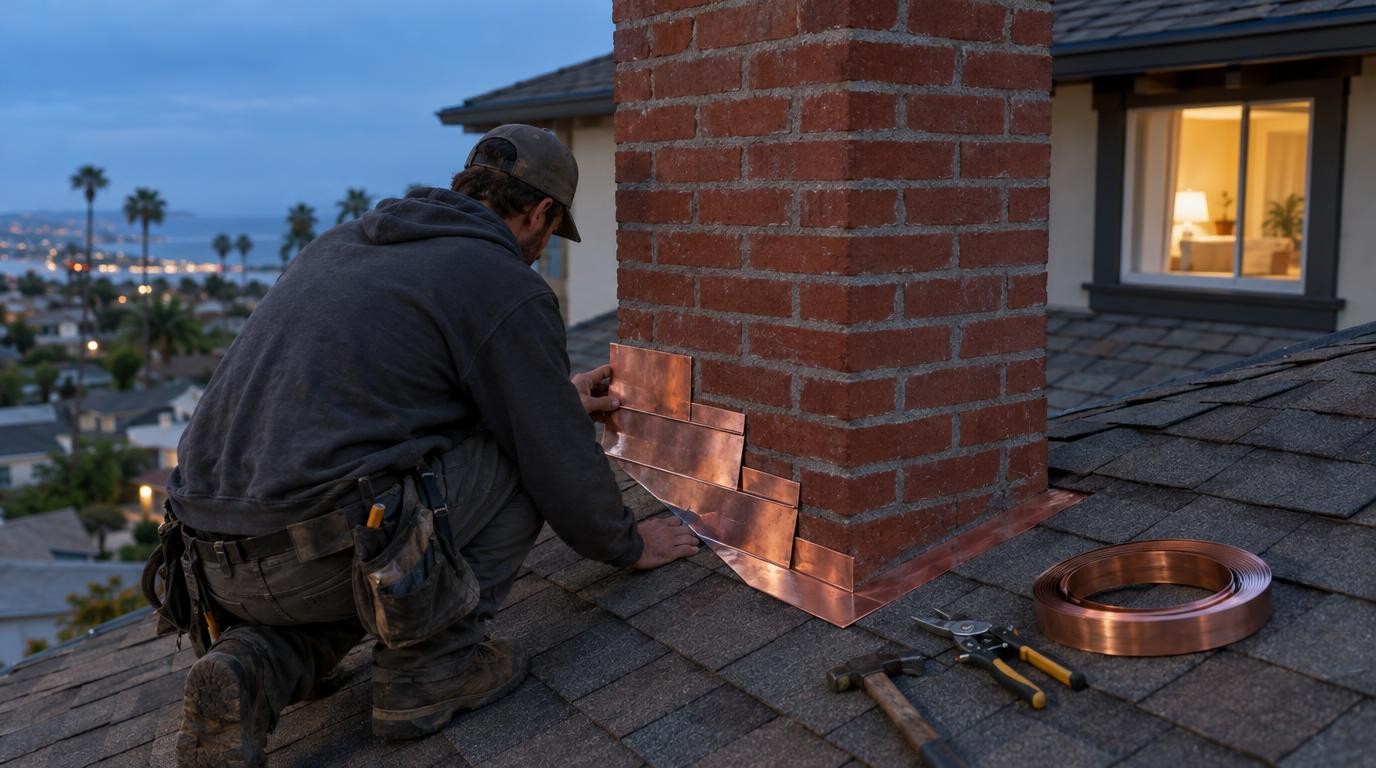
Step flashing uses overlapping pieces at a shingle-to-wall intersection so water can move down over the shingles rather than behind the wall joint. Continuous flashing covers a longer joint with a continuous metal section. The arrangement must work with the roofing and wall’s water-shedding layers; Building Science Education’s roof-wall flashing guidance also explains the role of kick-out flashing in directing runoff away from the wall.
How does chimney flashing keep water out?
Chimney flashing protects the junction between the chimney and the roof, where water can enter along several sides. A chimney leak repair may involve the flashing, its sealed joints, or adjacent roofing.
What do valley and drip-edge flashing protect?
Valley flashing helps carry runoff through the channel where roof planes meet. Drip-edge flashing guides water away from the roof edge. Because both details depend on the roofing around them, a repair must account for damaged shingles, tiles, or underlying materials as well as the exposed metal.
How do vent and skylight flashing protect roof openings?
Vent and skylight flashing bridge the gap between an opening and the surrounding roof covering. If water appears near either feature, the inspection should include the flashing, seals, opening, and nearby roofing. Skylight leak repair and vent flashing repair are not necessarily the same job, even when their interior stains look similar.
What changes around flashing on a low-slope roof?
A low-slope roof relies on its membrane and drainage details as well as flashing. Seams, drains, penetrations, and transitions are important inspection points. A loose edge at a penetration may call for a different method than a damaged membrane seam, so the roof system and affected detail determine the repair.
How does a roofer confirm flashing is the source of a leak?
A roofer compares interior moisture signs with roof details to identify where water first enters. The inspection also checks nearby roofing and other possible leak sources rather than assuming that the flashing nearest an indoor stain has failed.
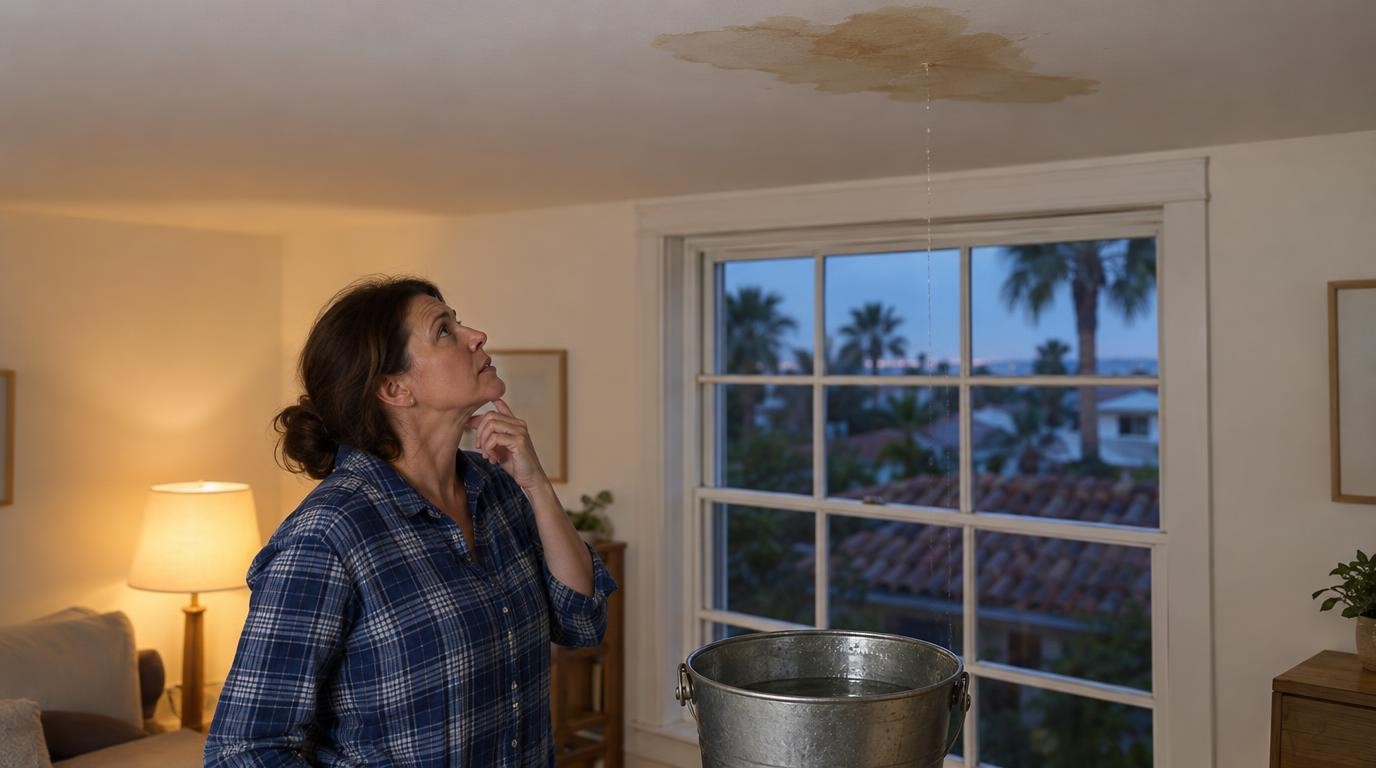
Why might an interior stain be far from the roof opening?
Water may enter at a roof transition and travel along underlayment or other concealed surfaces before it drips indoors. Gastelum Roofing’s guide to roof leak repair in San Diego provides further context for recognizing leak signs, but a stain’s position alone cannot identify the opening that needs repair.
Which nearby roof details should be checked before repairing flashing?
The roofer should inspect cracked sealant, vents, skylights, chimneys, valleys, wall transitions, and the roofing beside them. On a low-slope roof, the check also includes membrane sections, seams, and drains. Finding a broken tile or worn underlayment beside apparently intact flashing can change the recommended fix.
How do professionals repair damaged roof flashing?
We locate where water enters the roof, determine whether a sound joint can be resealed or damaged flashing and nearby materials need repair or replacement, then check the finished repair for watertightness. The method depends on the roof material: For the broader repair process, learn how to repair a roof leak by tracing its source before choosing a fix.
- Inspect interior symptoms and roof details to locate the entry point.
- Provide an itemized estimate of the work, materials, and expected timeline.
- Reseal a sound joint or repair or replace damaged flashing and nearby roofing as needed.
- Check the finished repair and drainage, then clean up the work area.
What happens when only the flashing seal has failed?
After confirming that the flashing is secure and undamaged, the roofer cleans and prepares the joint before applying a sealant compatible with the roof materials. The purpose is to restore the joint without concealing a loose piece of flashing or an opening elsewhere.
What happens when the flashing or nearby roofing is damaged?
The roofer repairs or replaces the affected flashing and addresses damaged shingles, tiles, underlayment, or membrane sections as needed. In our roofing work, the relationship between the flashing and the surrounding water-shedding layers matters as much as the visible opening. A tile roof and a low-slope membrane roof therefore require different repair methods.
How is the repaired area checked for watertightness?
During the final watertightness check, we look for gaps, displaced materials, and water paths that could bypass the repair. The aim is a detail that sheds water as part of the roof system, not merely a sealed surface.
Can you replace flashing without replacing the roof?
Yes. A localized flashing failure can often be repaired without replacing the whole roof, although nearby roofing may need to be lifted or replaced to integrate new flashing correctly. The options depend on what the inspection finds:
| Option | When it may fit | Work involved |
|---|---|---|
| Reseal a joint | The flashing is secure and undamaged, but its sealant has failed. | Prepare and reseal the joint with a compatible product. |
| Repair or replace flashing | The damage is localized and surrounding roofing is sound. | Repair or replace the flashing and restore affected nearby roofing. |
| Broader repair or roof replacement | Leaks recur, roofing is near the end of its life, or underlayment failure is widespread. | Address the wider damage or replace the roof, depending on its condition. |
When is a targeted flashing repair enough?
A targeted repair may be enough when an inspection finds a specific failed detail and sound roofing around it. Replacing the affected flashing and restoring its connections to nearby materials can resolve the opening without changing unaffected areas. The repair scope should follow what the inspection finds.
When might the rest of the roof need attention?
If leaks keep returning or the surrounding materials are deteriorating, replacing one flashing detail may not address the broader problem. We offer roof repair when damage extends beyond the flashing and a wider repair is appropriate. Gastelum Roofing checks for worn underlayment and other damage before recommending a broader repair or replacement.
Can I replace roof flashing myself?
Yes, you can replace flashing yourself if you have the roofing skills to fit it into the roof’s overlapping, water-shedding layers and can use appropriate fall protection. Even a dry roof presents a fall hazard, especially near an unprotected edge. If you cannot do the work safely and correctly, hire a roofer; a surface patch may miss concealed damage or the actual leak entry point.
Why can glue-and-nails patches fail at flashing joints?
Glue or exposed fasteners may cover the spot you can see without restoring the overlaps that carry water away from a wall or opening. The patch can also leave a damaged shingle, tile, underlayment, or membrane section untouched. Effective repair starts with diagnosis and uses materials suited to the roof system.
What should you do if your roof is leaking during rain?
Move belongings away from the drip and contain water indoors where you can do so safely. Avoid climbing onto the roof while it is wet: the CDC’s roofing safety guide describes a wet-roof slip hazard and says perimeter protection is necessary when working near the edge of a flat roof without a parapet. For an active leak, our team can assess whether temporary water diversion or immediate sealing is appropriate before a permanent repair.
When should you schedule a flashing inspection in San Diego?
Schedule a flashing inspection if you notice signs of a leak, particularly ahead of seasonal rain in San Diego, where sun exposure, wind, and occasional heavy rain can test vulnerable roof transitions. We inspect shingle, tile, and low-slope roofs and recommend work based on the identified leak source.
Which leak signs call for prompt attention?
New staining, active dripping, damp insulation, and musty odors all warrant a closer look because moisture may be traveling beyond the visible sign. Tell the roofer where and when you noticed the problem; those observations can help guide the inspection without assuming the stain sits directly below the opening.
Why check vulnerable roof details before seasonal rain?
An inspection before seasonal rain gives a roofer an opportunity to identify failing sealant, displaced flashing, or damage at penetrations and transitions while the area can be examined carefully. Our San Diego roof inspection guide explains what a broader roof review can include. The appropriate repair still depends on the condition found at the suspected leak point.
Frequently Asked Questions
Is a roof flashing inspection free?
Yes. At Gastelum Roofing, we offer free roof inspections to assess the roof’s condition and trace suspected leak paths. We check flashing and nearby roofing before recommending work. If a repair is needed, we provide an itemized estimate rather than assuming every water stain calls for new flashing.
What if the leak returns after a flashing repair?
Contact us for another inspection rather than adding sealant over the repaired area. We’ll check the flashing, nearby roofing, and other possible entry points. A recurring leak may come from a different opening or indicate wider roof deterioration.
Could a ceiling stain be caused by condensation instead of roof flashing?
Yes. Condensation or a leak from equipment above the ceiling can cause staining that resembles a roof leak. A CDC building evaluation recommends checking equipment above stained ceiling tiles for leaks or condensation. We trace the moisture source before recommending a flashing repair.
Do I need to replace wet insulation after a flashing leak is repaired?
Not necessarily. A CDC-hosted NIOSH docket document advises drying porous building materials wetted by leaks within 48 hours. CDC guidance on damp buildings calls for repairing or replacing moisture-damaged materials. Have wet insulation assessed promptly: material that is damaged or cannot be dried adequately may need replacement. Repairing the flashing does not dry the space beneath it.
Is it safe to use a ceiling light beneath a roof leak?
No. If water is reaching a ceiling light or other electrical fixture, keep clear and do not operate it. Arrange for a qualified electrician to assess the electrical hazard and a roofer to stop the leak. A CDC building evaluation documented roof water entering a light fixture.
Can a flashing leak cause peeling paint in an older home?
Yes. Water intrusion can damage painted surfaces, and deteriorating lead-based paint in an older home may present an additional hazard. CDC lead-safe housing guidance recommends promptly correcting leaks to help prevent paint deterioration. Fix the water entry first, then have damaged paint assessed and repaired using appropriate lead-safe practices.
What is the right next step for a suspected flashing leak?
If you have noticed a possible flashing leak at your San Diego home, contact Gastelum Roofing at 760-295-6593 to arrange a roof inspection. We can trace the leak and explain the repair we recommend for the affected roof.